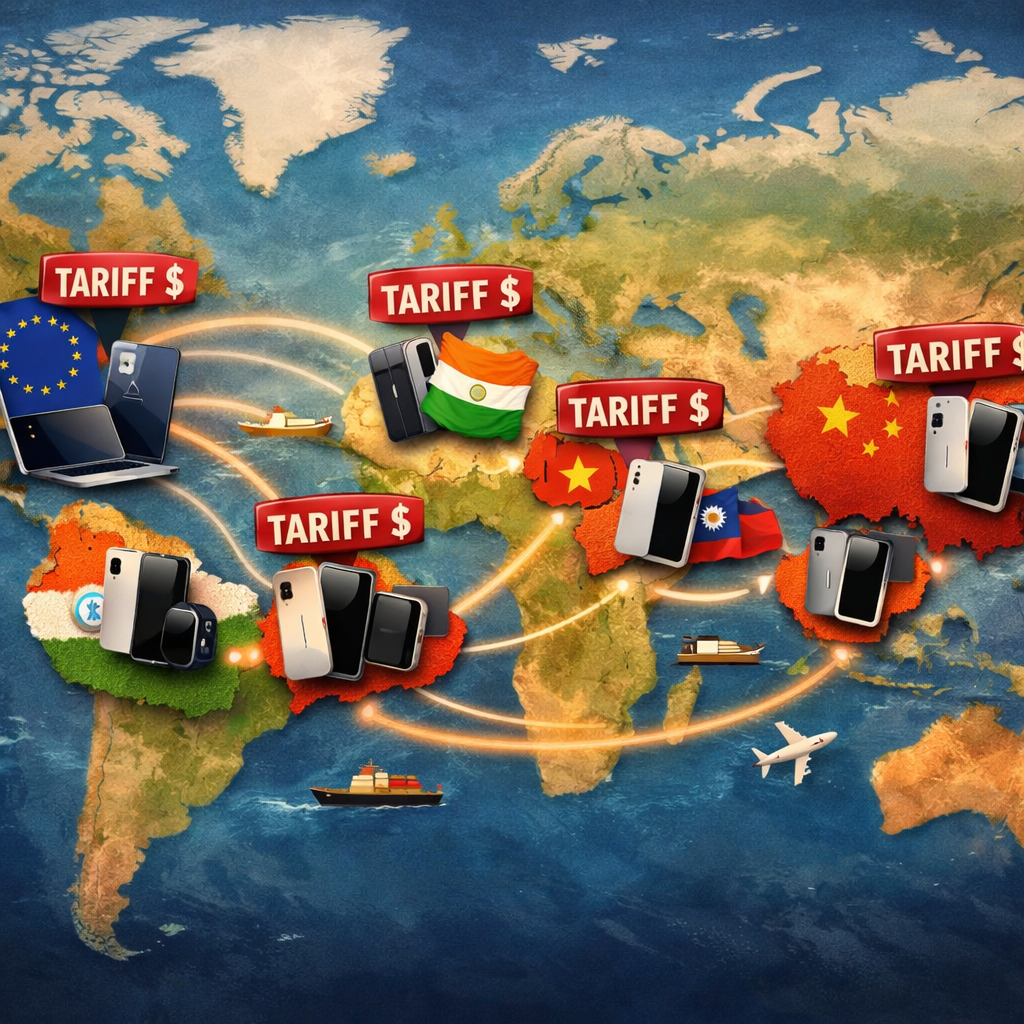
Apple is facing another potential blow to its supply chain as new U.S. tariffs proposed under the Trump administration target key manufacturing hubs for iPhones. The tariffs would apply to imports from 14 major partners—including China, Taiwan, India, members of the European Union, and more—on the grounds that these countries have enabled excess industrial capacity detrimental to U.S. manufacturers. The impact could ripple through the electronics industry, with Apple particularly exposed due to its global assembly and sourcing footprint.
Scope of the Proposed Tariffs
The new tariff plan identifies 14 trading partners whose exports might be hit. The list includes Bangladesh, Cambodia, China, the EU, India, Indonesia, Japan, Korea, Malaysia, Singapore, Switzerland, Taiwan, Thailand, and Vietnam. For most of these countries, the proposed tariffs would be new duties. China stands out: an additional 20% would be levied on top of the existing 25% tariff already in place from earlier trade conflicts. Meanwhile, EU exports could face a 15% ceiling rate under the new regime.
Apple’s Vulnerability and Producing Partners
These tariff measures strike at many of Apple’s core manufacturing locations. China remains central to Apple’s production network, but India has become increasingly important—assembling both iPhones and other devices bound for the U.S. Taiwanese contract manufacturers, such as TSMC, produce critical components like chips. Countries like Vietnam, Malaysia, Singapore, and Thailand also contribute to production of accessories, watches, iPads, Macs, or parts thereof. The newly proposed duties on these countries push up costs for Apple across multiple fronts.
Some electronics categories have been excluded from certain tariffs—smartphones and laptops from reciprocal tariffs, for example, along with semiconductors and related equipment in certain cases. These carve-outs can offer temporary relief amid broad tariff pressure.
Apple’s financial disclosures suggest the company already absorbs substantial cost burdens from earlier tariffs—such as the 20% IEEPA tariff on imports with China listed as the country of origin. The new tariffs risk layering additional duties onto key components and final assembly coming from India, Taiwan, Vietnam, and the EU. Depending on the classification of individual goods and existing exclusions, the incremental cost could span double digits in percentage points.
Potential Fallout and Strategic Implications
If enacted, these tariffs could force Apple to re-evaluate supply chain allocations, especially for devices assembled or sourced outside the U.S. Any increased costs might not be fully absorbed by Apple—some would likely be passed on to consumers, especially for iPhones, Macs, iPads, and watches. Additionally, the interplay between U.S. legislative oversight and forthcoming trade investigations (e.g., under Section 232) could reshape long-term tariff exposure.
These actions emerge in a broader trend: the U.S. pushing back against subsidies, state-backed industrial overcapacity abroad, and what it views as unfair trade practices. Similar measures have prompted negotiations, temporary truce periods, and carve-outs—but also regulatory uncertainty for companies like Apple that rely on complex global sourcing.
The proposal from the Trump administration does not specify exact implementation dates in all cases, but given past precedent, there could be lead time before duties take effect—yet companies will need to plan now.
Analytical lens: These new tariffs threaten to send Apple searching for smarter supply chain hedges. With production already shifting toward India and Vietnam, the company may accelerate any move away from China, while lobbying for more product exemptions. For consumers, it could mean steeper prices or slowing feature rollouts as Apple decides where to absorb cost. What to watch: the official tariff schedules, whether electronics or specific device lines escape the latest round, and how Apple’s next financial reports reflect these added pressures.