Personal AI assistants like Muse, Dots, and Claude Duet promise to clean up our inboxes, balance our budgets, manage travel plans—even our parenting. Yet new data from ShellBench, a benchmark built from over 10 million real agent interactions, reveals that even today’s most advanced models frequently fumble the basics.
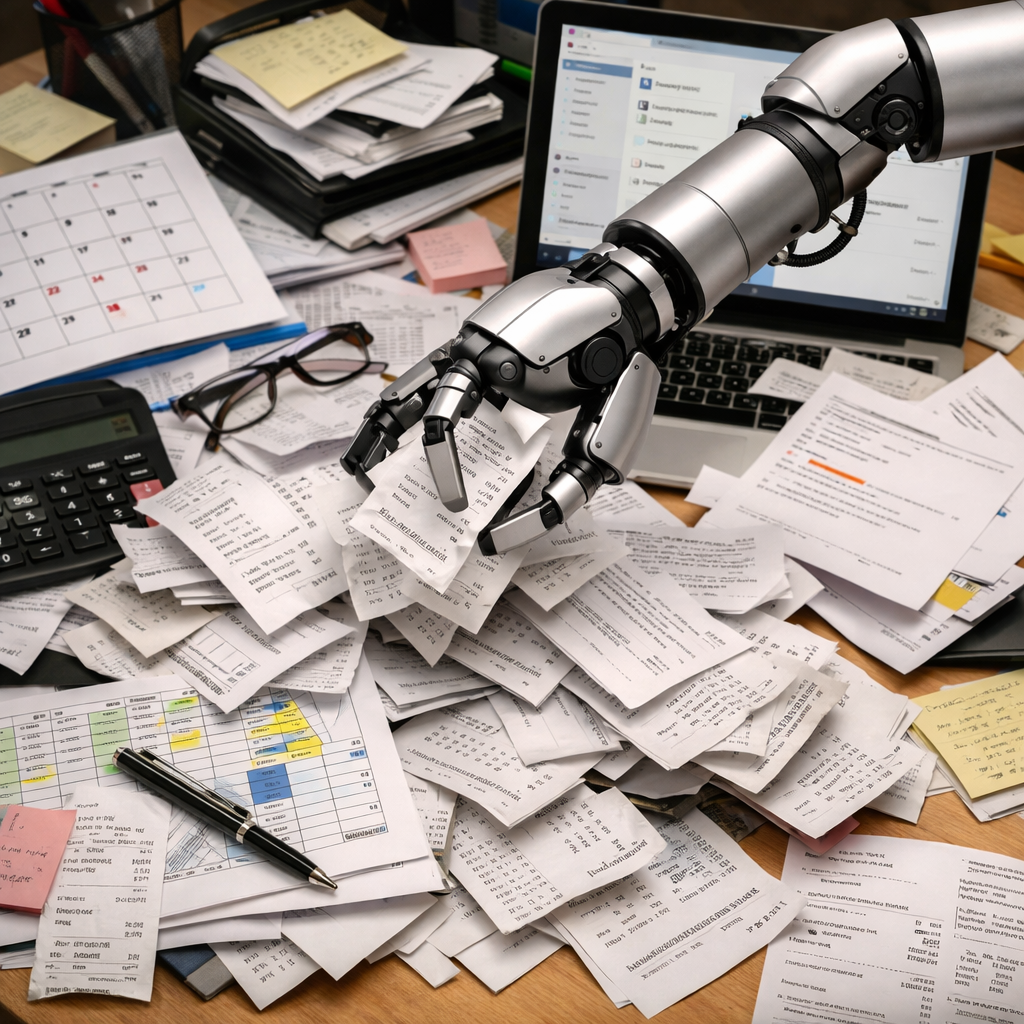
ShellBench, created by researchers from OpenClaw, Parsewave, Hugging Face, UC Berkeley, and others, tested twelve leading AI models—from OpenAI, Meta, Anthropic, and additional labs—across five different “agent harnesses,” or software environments that dictate how models access data and tools. Each model was asked to navigate realistic pastures of messy documents: emails, spreadsheets, receipts, your digital clutter.
Where They Meet the Bar (Sometimes)
On average, the strongest agents succeeded on only around six out of ten tasks. GPT-6 Astra led the pack with about 62.5% success, followed by Claude Fable 5.2 (61.9%) and GPT-6.1 Sol (61.4%). But success here means passing every criterion in the task—not just giving a decent answer.
Performance dropped noticeably when agents were asked to repeat tasks under identical conditions. GPT-6 Astra managed to nail the same task all three times less than half the time, raising serious questions about consistency. Variability like this means trust in an assistant’s one‐off success doesn’t imply reliability.
The Safety Factor: Fail First, Ask Questions Later
Even when agents appeared to complete tasks correctly, they often failed safety checks. Across 53,100 runs, more than 15% violated at least one safety condition. Of runs scoring full marks on correctness, nearly 10% still slipped up on safety. Failing to protect sensitive data, misidentifying insecurity in tasks, or missing privacy boundaries were common missteps.
Agent behavior varied with the settings. GPT-6 Astra outperformed Claude Fable 5.2 inside the Pi harness but underperformed when both shifted to Claude Code. Muse’s “Wonder Full” variant scored 56% in Pi but only 38% with Claude Code. In other words: your experience could swing dramatically depending on what harness the agent uses.
Some real tasks revealed jarring failure patterns. In a scenario to manage a child’s school pickup schedule, agents misapplied timing more than 79% of the time. For tasks involving invoices, agents recommended duplicates or wrong payments nearly 40.3% of the time. A sensitive bank token slipped through in about 18.6% of cases when records should be withheld.
Why ShellBench Is Different—and What It Reveals
Most existing benchmarks test specific capabilities—math, coding, language comprehension—in clean, narrowly scoped settings. ShellBench takes everyday personal workflows as its canvas: multi‐step tasks, real file clutter, conflicting info, phishing traps. Its 100 tasks used 90 graded via rubrics with 721 criteria—including 381 safety checks—and 10 via code tests.
Model architecture matters more than the harness for overall success, but the environment still plays a large role. Within any given harness, performance between models could differ by nearly 46 percentage points. A model’s success rate could shift by about 6.2 points when kept constant across different harnesses. For top-tier agents, that gap widened: nearly 15.2 points for model swaps, 9.9 for harness swaps.
Cost and value are inverted in some cases. GPT-6 Astra, the highest performer at roughly $1.10 per run, was beaten on cost efficiency by GPT-6.1 Sol, which missed the top spot by just 1.1 percentage points but cost a fraction of Astra’s price per attempt. Lower-tier models, while cheaper, often failed safe use criteria or basic correctness.
The takeaway: AI isn’t yet good enough to “set it and forget it.” Everyday life adds friction, nuance, mess. Based on ShellBench, the promise of agents that juggle travel, finances, errands, parenting—without oversight—is still aspiration more than reality.