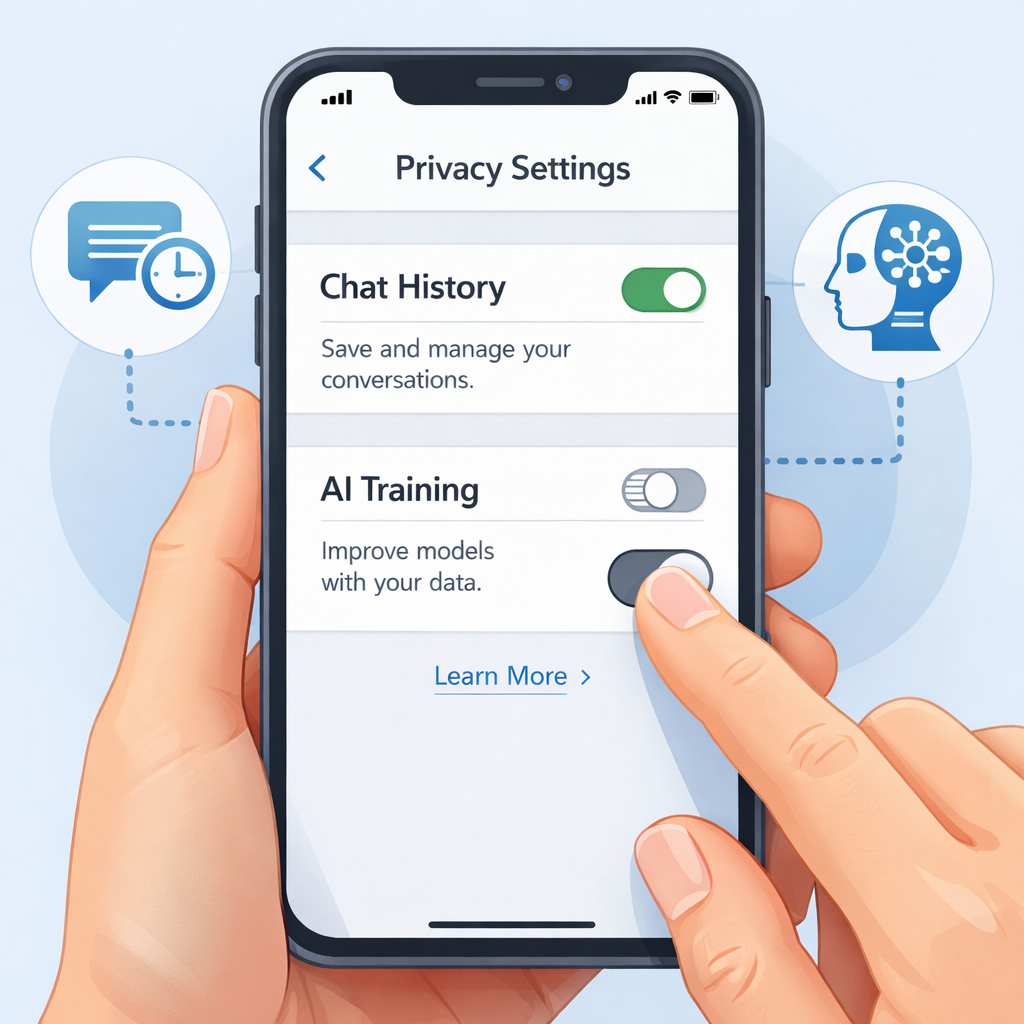
Google has added new privacy controls to its Gemini app, allowing users to maintain their chat history while opting out of having their conversations used for AI model training. This change separates two linked settings that were previously bundled under one option.
What’s changing with Gemini’s history settings
Previously, Gemini featured a single “Keep Activity” setting that handled both how long chat history is stored and whether those chats are used to train Google’s generative AI models. Now, the company is splitting this into two distinct preferences. The first is a “History” toggle, which keeps track of how long your conversations are saved. If this is turned off, future chats are retained only briefly—enough for Chrome browser context and short-term protections—before being removed. Case in point: chat context lasts about 24 hours, whereas other retention periods extend to 72 hours under certain protective measures.
The second setting, separate from “History,” allows users to decide whether chat content—including attachments—can be used for training Google’s AI. This option is enabled by default. When this training flag is turned off, text and attachments are excluded from future model training, though some additional data types, such as audio or live video screenshares, still require explicit user opt-in.
How this rollout works
The update is now being rolled out broadly. On Gemini web, users can find a “Gemini History” option in the settings gear menu, which links to the Activity settings where the new toggles live. If “Keep Activity” is already disabled, both new settings will default to off. Google has sent notices to users by email about the change, saying that the new controls will be fully in place over the coming weeks.
Originally launched as a combined setting, this adjustment gives users more nuanced control. The “History” toggle still allows conversations to assist with things like user feedback and maintaining functionality, even when long-term storage is disabled. Meanwhile, opting out of AI training means content won’t be used to improve Google’s models.
This update addresses a common complaint: that retaining chat history has always meant consenting to data being used for model training. With the new setup, Google users can retain history without automatically feeding data into AI training pipelines.
What’s not changing: certain data—such as audio and video interactions—still require separate opt-ins to be included in training. Google is keeping those policies firm to ensure user choice remains clear on what data contributes to model development.
This adjustment is part of a broader trend toward more transparent and user-centric AI privacy controls, coming amid growing regulatory and user scrutiny of how tech companies handle personal data. As generative AI becomes more embedded in everyday tools, control over what gets used for model training is increasingly seen as a key trust factor for users.
Looking ahead, what matters now is how intuitive these controls prove in practice, and whether Google follows through on clear prompts and protections around non-consented data. Additional scrutiny will likely come from privacy regulators, who demand clarity on what data is used, for what purpose, and for how long. For users, the hope is this move marks not just a cosmetic change, but a genuine shift toward putting control of AI learning where it belongs—with the user.