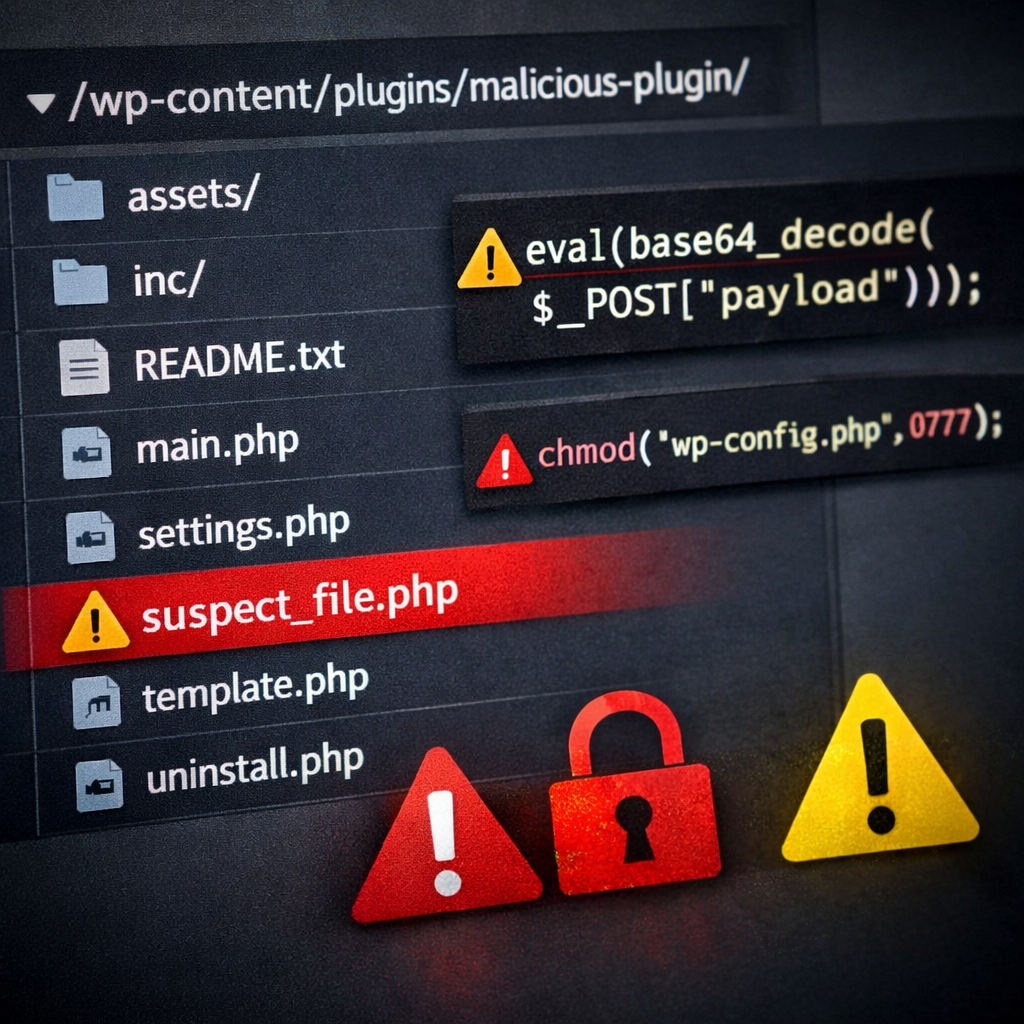
Security researchers uncovered remote-control backdoors in nine versions of six different WordPress plugins from WP Connect, discovered on November 22, 2026. The malicious code allowed attackers to harvest password hashes, execute arbitrary commands, and seize full control of affected websites. The plugins were removed from public distribution that night, though there’s no confirmation yet that any sites were actually breached. Combined, the six plugins boasted over 3,600 active installations, meaning the exposure was real even if exploitation hasn’t been confirmed.
Affected Plugins and How the Backdoor Worked
The plugins corrupted by this breach include:
- Air WP Sync — Airtable to WordPress versions 2.9.1-2.9.4
- WP Sync for Notion — Notion to WordPress version 1.7.4
- Add-on Brevo for Gravity Forms version 2.6.3
- Add-on for Contact Form 7 to Airtable version 2.5.4
- Add-on for Contact Form 7 to Notion version 1.6.4
- Orders Sync to Airtable for WooCommerce version 1.0.2
These compromised versions all included a newly added PHP file disguised as a legitimate analytics or updater module. This backdoor module was present across all six plugins (with an earlier version spotted specifically in Air WP Sync 2.9.1). It operated during routine site requests, while a fallback mechanism used WordPress’s scheduled task system (WP-Cron) to perform checks every 30 minutes.
Capabilities of the Malicious Module
Once installed, the backdoor could:
- Send site information (URL, WordPress version, server user, past command outputs) to a remote server.
- Receive and run arbitrary PHP code without any WordPress login.
- Disable TLS certificate verification, opening the door for man-in-the-middle risks.
- Execute shell commands, manipulate files, read or modify database tables.
- Extract user credentials including usernames, email addresses, and hashed passwords.
- Plant web shells or schedule hourly tasks to run rogue code; removing the plugin might leave parts of the backdoor intact.
Response, Detection, and Severity
The malicious plugin versions were prevented from being distributed via WordPress.org thanks to a release hold, and WordPress’s automated detection (codenamed Gandalf) identified the threat alongside Wordfence’s PRISM system. Experts noted that commits came from the developer’s own account, meaning a trusted source was hijacked to inject the malicious code; WP Connect confirmed its account had been compromised, though the exact method remains unknown.
The vulnerability has been cataloged as CVE-2026-135202, marked critical with a CVSS score of 9.8. No patched or safe versions covering the affected releases were available at the time the issue was made public.
Signs Your Site May Be Compromised
Indicators of compromise include finding a PHP file in wp-content/plugins/.../includes/airwp-online.php, unexpected scheduled tasks such as airwp_tick or airwp_persist_tick, or unfamiliar database entries prefixed with airwp_. Outbound communication with suspect domains (like the defanged tascredit-pay[.]com), odd user agents mimicking bots like GoogleBot, or unexpected PHP files in the uploads directory are also red flags.
This incident underscores why even trusted developer accounts aren’t immune when sophisticated threat actors gain access. It reinforces the need for automated review of plugin updates, vigilance from site administrators, and careful monitoring of active installations.
What this means going forward: WordPress site owners should immediately check plugin versions, scan for listed indicators, and ensure their site’s clean-up includes any hidden remnants. Plugin developers and WordPress.org need to redouble protections for developer accounts and strengthen review systems. For the wider ecosystem, this breach highlights how one compromised trusted source can ripple across many sites, leaving multiple vectors for attack if detection lags behind distribution.