Apple’s roadmap for 2027 is beginning to emerge clearly: the company is hiring for autonomous AI features, preparing an upgraded iPhone Air 2 with dual cameras, and planning a MacBook Neo 2 debut around March. Each signals how Apple is sharpening both its software ambition and hardware refresh cycle.
Agentic AI in the Works
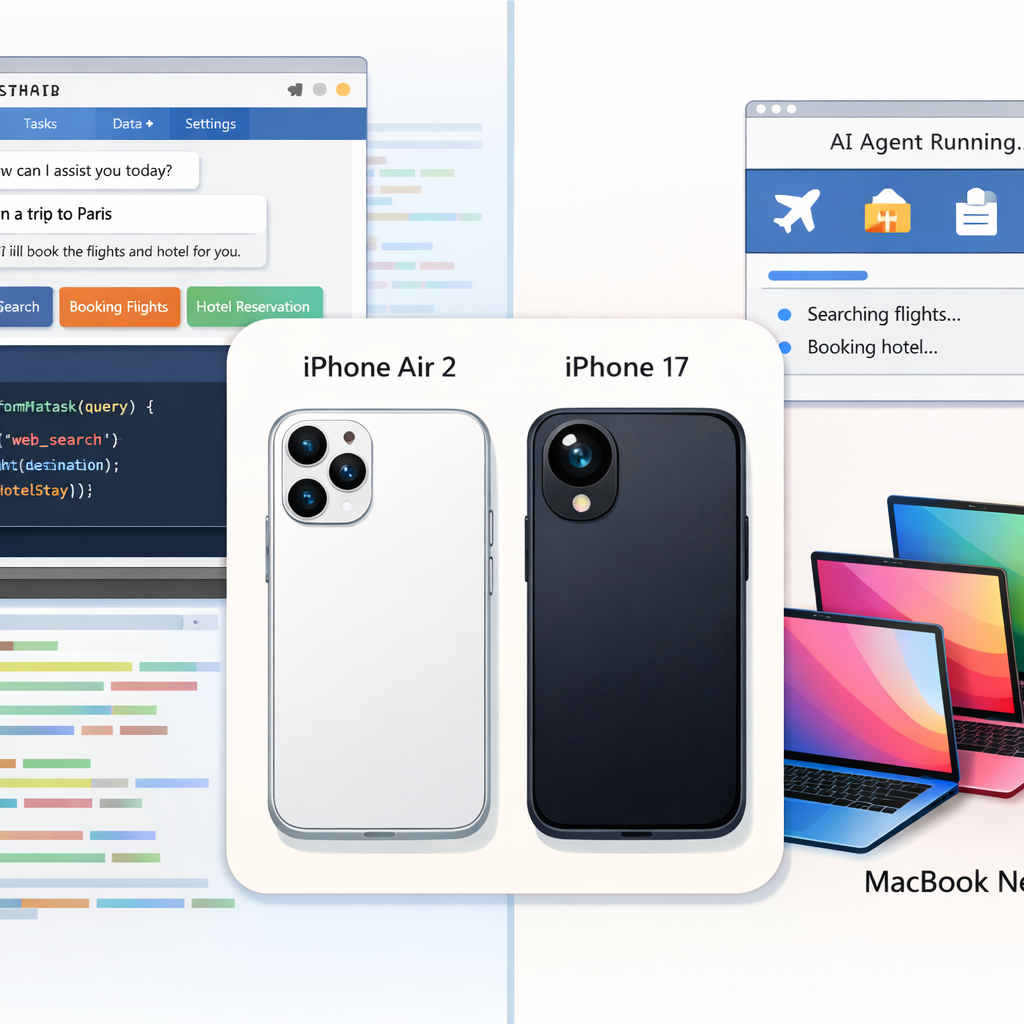
Recent Apple job listings suggest the company is laying the groundwork for agentic AI capable of multi-step tasks. According to these postings, Apple aims to build agents that can browse the web, work across apps, execute commands, write and debug code, and coordinate with sub-agents—all privately and with the polish Apple holds itself to. One senior engineering manager role—focused on “Agentic AI – Proactive”—outlines goals for this new type of AI. Analysts believe Apple could begin introducing these tools in earnest sometime in 2027.
Hardware Rumors: iPhone Air 2, Neo 2 & Color Refreshes
Leaked dummy models suggest that the upcoming iPhone Air 2 will be upgraded with a dual rear camera setup—previously, the Air line had just one lens—as well as design tweaks like a horizontal dual-camera plateau and possibly a larger battery and thinner frame. Meanwhile, the standard iPhone 18 unit appears largely unchanged in its exterior features.
The MacBook Neo 2 is also slated for a spring launch, likely in the iOS/macOS 27.4 cycle (around February-March). It is expected to get a spec bump—moving from Apple’s A18 Pro chip and 8 GB RAM to an A19 Pro chip with 12 GB—and reportedly frequent color updates. With past adjustments raising the Neo’s price already, some expect its next version may cost more, though not dramatically so; rumours suggest another $50 raise could be in play.
Other rumored spring devices include the A19-based budget iPad, the OLED iPad Air, iPhone 18, iPhone 18e, and revised iPad Pro models. The iPhone Air 2 is expected to arrive in that same first half of the year.
This all points to a clear pattern: Apple is aligning its major product launches and OS updates around the iOS/macOS 27.4 release, using it as the anchor for both hardware upgrades and introducing new AI capabilities.
Why this matters: Apple’s bet on agentic AI could shift its services from reactive (you ask, it acts) to proactive (anticipatory help), putting it in closer competition with OpenAI, Meta, Google, and others already shipping multi-task agents. On the hardware front, refreshing the Air lineup with dual cameras and boosting specs in the Neo path might help address consumer gaps—and justify premium pricing. However, balancing innovation, cost, and user demand will be key. What we’ll be watching closely: how Apple delivers on privacy and usability when proactive agents ship, and whether 2027 brings significant surprises beyond upgrades we’ve already heard.