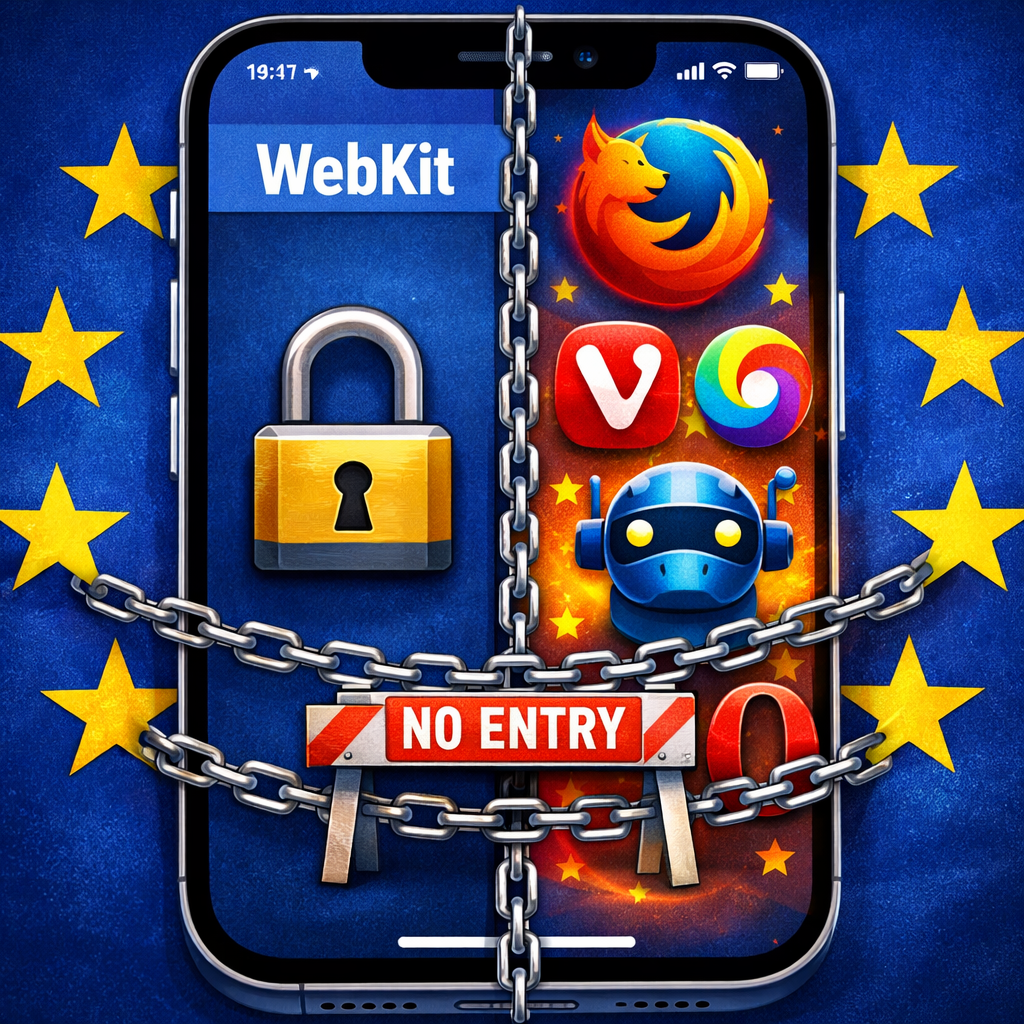
A coalition of up to 55,000 European businesses, publishers, digital rights groups and browser makers is pushing the European Commission to take legal action against Apple. They allege Apple is undermining competition by keeping technical and legal constraints on alternative browser engines in iOS that make real use impossible—despite the obligations of the EU’s Digital Markets Act (DMA). The group includes Mozilla, Shopify, Vivaldi, Y Combinator, plus industry bodies like the European DIGITAL SME Alliance and News Media Europe.
Rules On Paper, Obstacles in Practice
The DMA, which came into force in early 2024, requires Apple to allow iOS and iPadOS users in the EU to choose non‐WebKit browser engines. Apple formally updated its guidelines: browsers can request entitlements—Web Browser Engine for full browsers, Embedded Browser Engine for in‐app browsers—to support alternative rendering engines. But the coalition argues that more than two years on, no browser vendor has succeeded in switching their existing EU user base from WebKit to anything else.
Mozilla describes Apple’s requirements as impractical. One major hurdle: instead of updating their existing Firefox app, Mozilla would need to build a second, separate Firefox for iOS just for markets allowing non‐WebKit engines. Users would then have to download it separately and manually migrate data—bookmarks, history, passwords—from the original app. That friction, Mozilla says, effectively prevents many users from switching.
What Apple Says and What’s at Stake
Apple maintains that these technical and security requirements are necessary. The company states that browsers that want to use alternative engines must comply with privacy and security standards, including prompt fixes for vulnerabilities, and must be approved through the entitlement process. The rules are designed to protect users from threats stemming from untrusted web content.
The coalition argues that Apple’s conditions are more than just strict—they’re designed in ways that make switching so burdensome it’s nearly outlawed in practice. With WebKit still dominating, apps that would otherwise compete with native iOS apps never gain full feature parity. That diminishes the ability of browser‐based web apps to compete fairly.
Call to Action
In an open letter addressed to the President of the European Commission, Ursula von der Leyen, the coalition urges authorities to formally investigate Apple’s compliance with the DMA and order the removal of what they see as the remaining barriers. Signatories emphasize that the DMA already empowers the Commission to enforce these rules strictly.
Meanwhile, data from Mozilla show that while daily Firefox usage on iOS in the EU has roughly doubled since the browser choice requirement took effect, Firefox still runs on WebKit—the underlying browser engine—because switching to the Gecko engine under Apple’s terms hasn’t yet occurred.
What lies ahead: European regulators must decide whether to accept Apple’s setup as sufficient, or to issue a formal non‐compliance decision. For developers, publishers, and rights groups, the fight is over whether open competition and genuine browser engine choice will become more than regulatory window dressing.