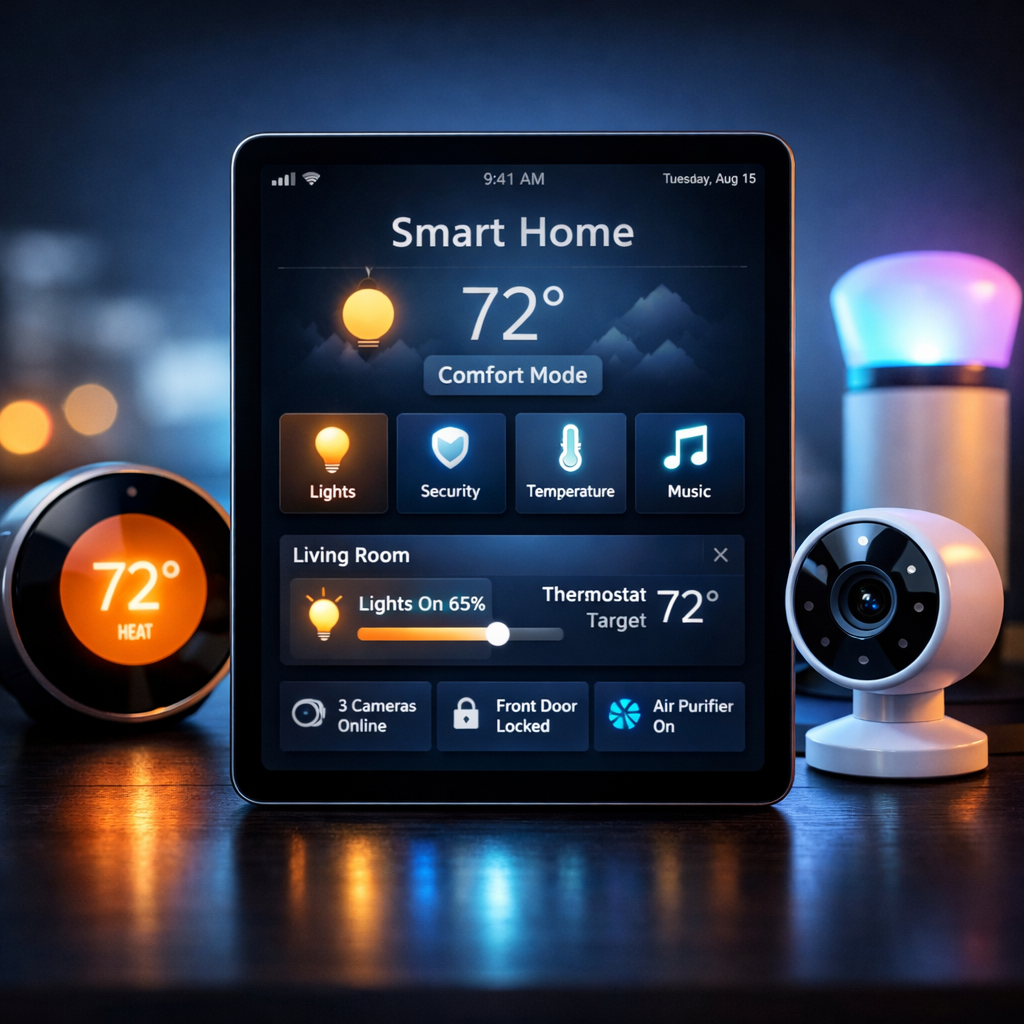
Google is phasing out the Nest app and folding its features into Google Home. While some rough patches remain, the revamped Home app delivers more than Nest ever could on its own. By integrating third-party devices, refining the user experience, and layering in smarter automation, the difference is now hard to ignore.
Lifting the Curtain: What Google Home Does Better
The Nest app had limited reach—it handled only first-party cameras, thermostats, and related Nest gear. Google Home, by contrast, pulls all smart home tech into one place. Whether it’s lighting, security, plugs, or fridges, if it plays nice with Google Home or the Matter standard, it’s now more likely to work seamlessly in your smart ecosystem.
Nest users had clung to its simplicity and clarity, especially for adjusting settings on Nest devices. Now, much of that control has made its way into the Home app. Google has been migrating essential Nest features into Home over time—camera control, thermostat functions, and protection alerts. The key for many has been the ability to automate routines across devices—something Nest alone never fully supported.
Rough Edges and Trade-Offs
That said, the transition isn’t without its flaws. Some features Nest handled better: changing Wi-Fi on a Nest Cam still requires a reset when using the Home app, whereas it was simpler in Nest. And for some, the depth of settings in Home feels overwhelming compared to Nest’s minimal-focused layout.
Still, for most long-time Nest users, these tend to be smaller annoyances. The balance seems to be shifting: the benefits of unified control, broader compatibility, and newer AI-powered features generally outweigh the costs.
Where This Fits in the Big Picture
Google has been nudging users toward Home for years. The last few puzzle pieces—Nest Protect support, earlier Nest thermostats being retired—signal that the Nest app is about to be officially replaced. This coupled with Matter support means many manufacturers are now building devices with Home integration in mind, not Nest exclusivity.
Design-wise, Home has made strides: the customizable home screen, organized sections for devices and automations, and a cleaner overall interface offer a feel closer to what Nest users appreciated—just now more expanded and flexible.
Bottom line: Nest had its strengths—it did fewer things, but those well. Google Home is now doing all of them, better together with third-party support and smarter routines. The overall experience is stronger, even if a few legacy conveniences are lost in translation.
Analytical take: This shift marks Google’s full embrace of a unified smart home platform. As older Nest users adapt, the ecosystem grows stronger—especially with Matter and improved UX. But Google will need to keep refining Power-user settings and simplifying transitions to prevent loyal Nest fans from feeling left behind. What matters now is momentum: can Google Home stay stable, seamless, and inclusive enough to become the smart-home hub everyone wants?