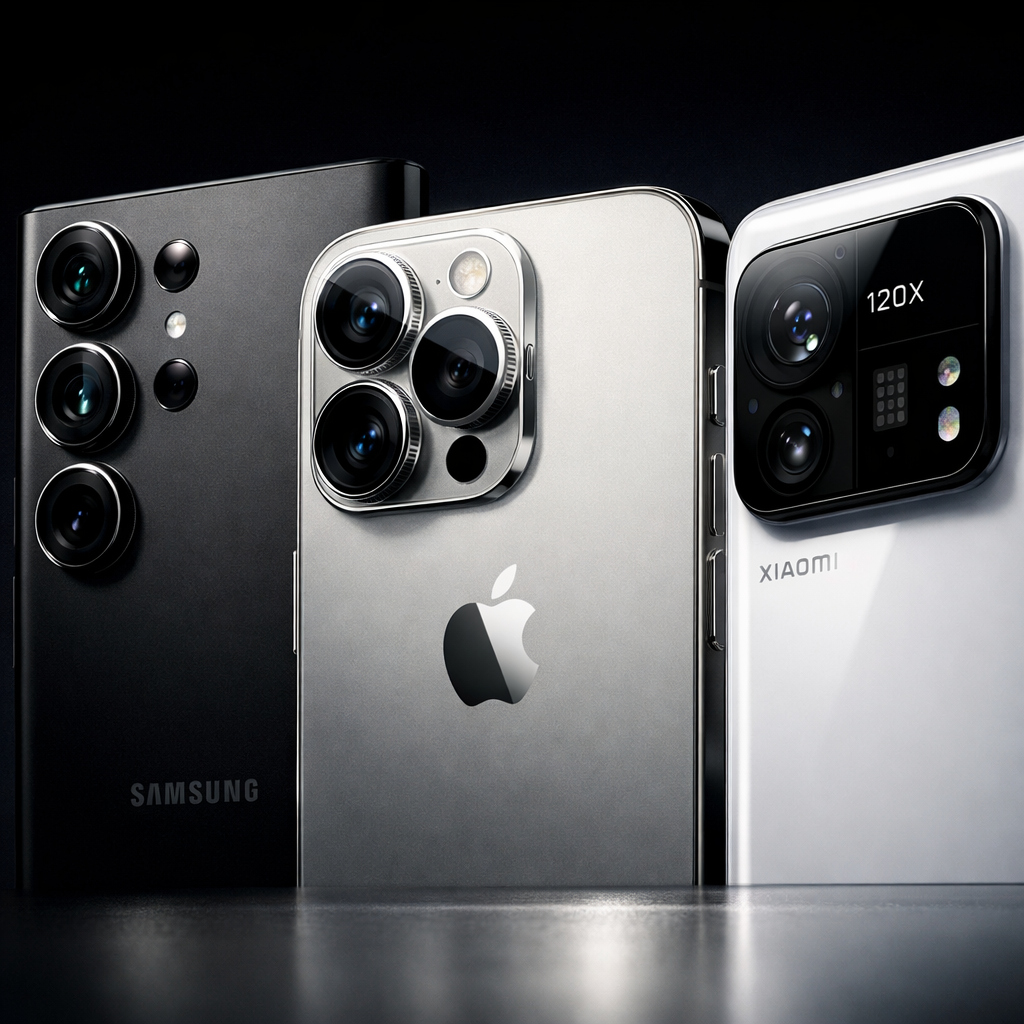
Samsung’s upcoming Galaxy S27 Ultra has ignited another round of criticism over design leaks portraying a major revamp—namely, a camera housing that could be mistaken for Apple’s. A newly surfaced dummy unit video aligns closely with earlier renders suggesting a shift toward a raised camera island, diverging sharply from Samsung’s prior designs.
Render leaks and recent mock-ups have bolstered the notion that Samsung is taking cues from the iPhone 17 Pro and 18 Pro lineup. The focal point is a raised camera island that protrudes significantly, with lenses rising above the surface—echoing Apple’s lens-heavy aesthetic rather than Samsung’s traditional balanced vertical bar. A source posted what appears to be an unboxing video in recent days that underscores these similarities, though some inconsistencies hint the clip may be AI-generated. Still, it reinforces a design narrative that’s gaining traction online.
Similarly, competitors like Xiaomi and Honor have already shown off devices—such as the Xiaomi 18 series and Honor Magic 9 Pro—that incorporate nearly identical camera island styles. Unlike Samsung and Apple, Xiaomi’s take tends to flatten the island to better protect the lenses and reduce wobble when placed on surfaces. For Samsung, the new arrangement could alleviate long-standing complaints about how the vertical camera bar created usability issues with accessories like magnetic chargers.
User Outcry & Design Expectations
Fans on social platforms have been vocal in rejecting the purported Redesign. Many express nostalgia for the Galaxy S10’s signature horizontal bar and are dismayed by what looks like convergence toward Apple’s look rather than a distinct Samsung identity. Frustration centers on both the aesthetic shift and functional compromises—in particular, protruding lenses that could lead to instability or damage.
While leaks suggest the raised camera island aims to resolve accessory compatibility issues—especially with Qi2 and magnetic mounts—viewers aren’t convinced. What they wanted was less an Apple-like clone than a refreshed Samsung build that still retains its own design language.
What’s at Stake
If these rumors hold true, Samsung is walking a fine line. A design overhaul on this scale could offer functional gains, especially around lens protection and accessories. But it also risks diluting what has long marked Samsung’s Galaxy series as unique. With competitors already adopting similar forms, there’s pressure to stay distinctive.
Fidelity in final materials, camera performance, and whether the video proof is genuine will ultimately determine how this plays out. The leaks provide compelling directionality but don’t confirm details—Samsung could still be iterating or even pivoting before launch.
Analytically, this design debate raises questions about innovation versus conformity in flagship phones. Samsung appears to be engineering new solutions, but fans clearly care not just about utility—also identity. The Galaxy S27 Ultra’s redesign might help solve some long-standing accessory problems, but it could cost Samsung part of what makes the brand feel distinct. What Samsung does next will reveal whether they’re adapting to customer needs or leaning into trend sameness—and either path could reshape how the flagship market perceives originality moving forward.