Security researchers are warning of a malware delivery operation dubbed ROMULUS ClickFix, which is distributing a previously unseen Remote Access Trojan (RAT) capable of full system control, surveillance, and remote file access. It’s notable for using sophisticated DLL sideloading tactics and social engineering lures to bypass protection mechanisms.
How the Attack Chain Unfolds
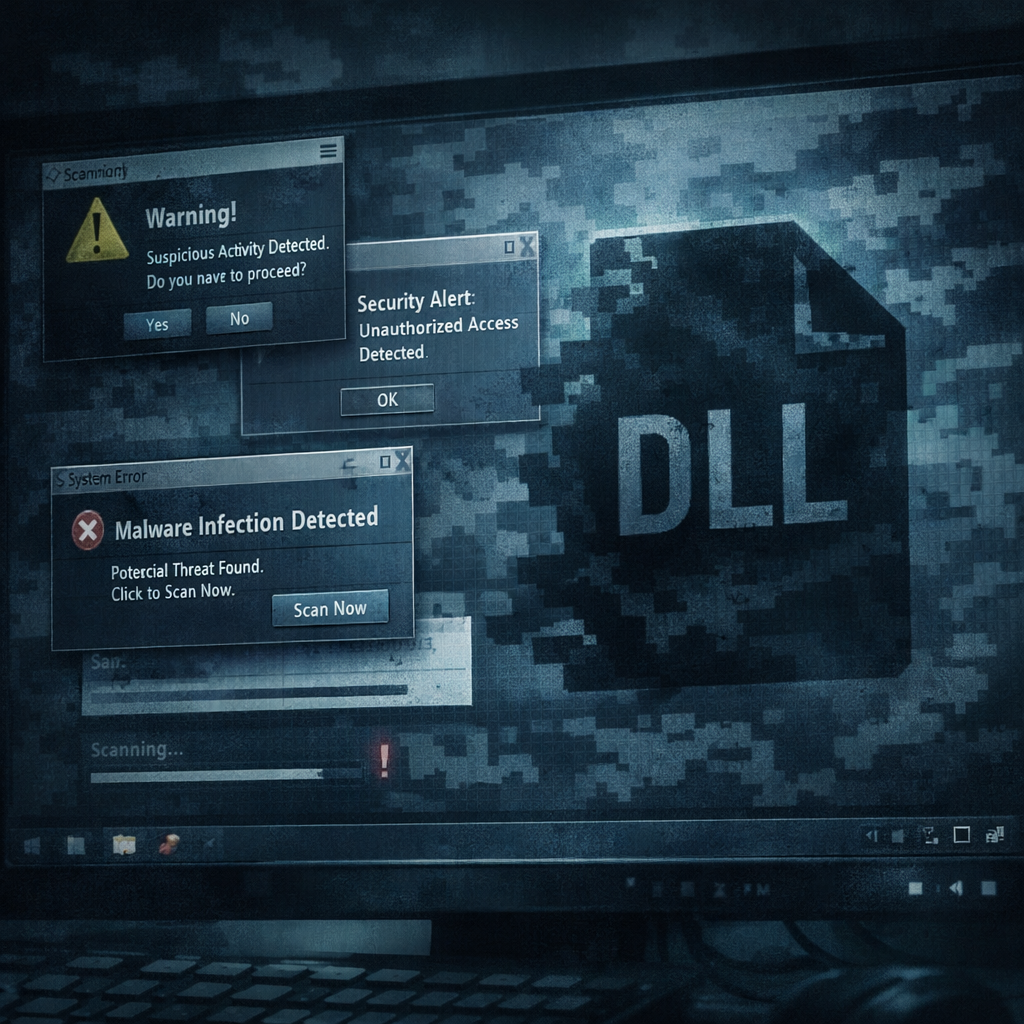
The attacks start with ROMULUS, a service that offers malware deployment through ClickFix-style temptation links or compromised webpages. Through ROMULUS, threat actors deploy both CNCMachineRMS and LegionLoader via separate infection routes, with CNCMachineRMS being the new RAT at the center of concern. One campaign pushes a malicious MSI installer named “IconEdit2Turb.msi,” masked as a legitimate tool via a fake Stardock app title. That installer tricks Windows into executing it with msiexec.exe, then it exploits DLL sideloading to load an embedded malicious DLL that drops shellcode. That shellcode installs the RAT. The very same RAT has been delivered in earlier lure-based attacks using ChatGPT’s Custom GPTs.
Once CNCMachineRMS infiltrates a system, it grants attackers full remote desktop capabilities—screen streaming, camera and mic capture—alongside file browsing, system surveys, and on-demand new payloads. Communication with the attacker’s infrastructure is tunneled through secure channels using DNS over HTTPS.
Diverse Lures and Broader Strategy
ROMULUS doesn’t work alone. Its campaigns use multiple tactic threads. One targets compromised sites (over 70,000) to serve JavaScript that triggers fake Cloudflare CAPTCHAs via a Polygon smart contract, which then delivers malware. Others stage fake review or verification pages—like Zillow listings or fake “Download Claude” Mac portals—to push RATs or malware‐stealing tools. Some campaigns even use phone contact, directed Google Ads or typosquatted domains to exploit trust and system legitimacy, often mimicking known brands or using familiar Microsoft utilities to mislead users.
Another striking shift is the rise in persistence and stealth: fake plugin uploads to WordPress sites, executing remote JavaScript, or hiding executables inside image files (steganography), later reconstructed on endpoints. These tools are designed for long-term control, data theft (credentials, wallets, seed phrases) and lateral movement inside compromised networks.
This escalation tracks with broader trend lines: what began as simple script drop or loader delivery via ClickFix morphs into multi-stage infections involving DLL sideloading, signed binaries, fake apps and exploit of built-in OS tools. The attackers also increasingly rely on DoH and other covert command-and-control mechanisms to evade detection.
The discovery comes from research by experts at Blackpoint Cyber, Huntress, Forescout, and others, all of whom are charting these attack variants in detail. They emphasize that while delivery methods shift, underlying malware architectures—esp. CNCMachineRMS—show patterns that allow defenders to tie together related attacks.
From a risk standpoint, organizations and individuals need to watch for executable files masquerading as legitimate tools, prompt-like interactions that ask for commands to be run in Terminal/PowerShell, DLL sideloading (especially with signed binaries), and suspicious behaviors following ad clicks, email lures, or unexpected verification prompts.
This development underscores a dangerous evolution in threat actor behavior. ROMULUS ClickFix is no longer just about sneaking malware past users—it shows a shift toward full system control, spying, and long-haul persistence. Defenders must adapt threat detection to include unconventional entry points (like fake verification or CAPTCHA prompts), and novel persistence vectors (DLL sideloading, steganography). Tracking shared traits of malware like CNCMachineRMS could be the key to spotting them before damage is done.