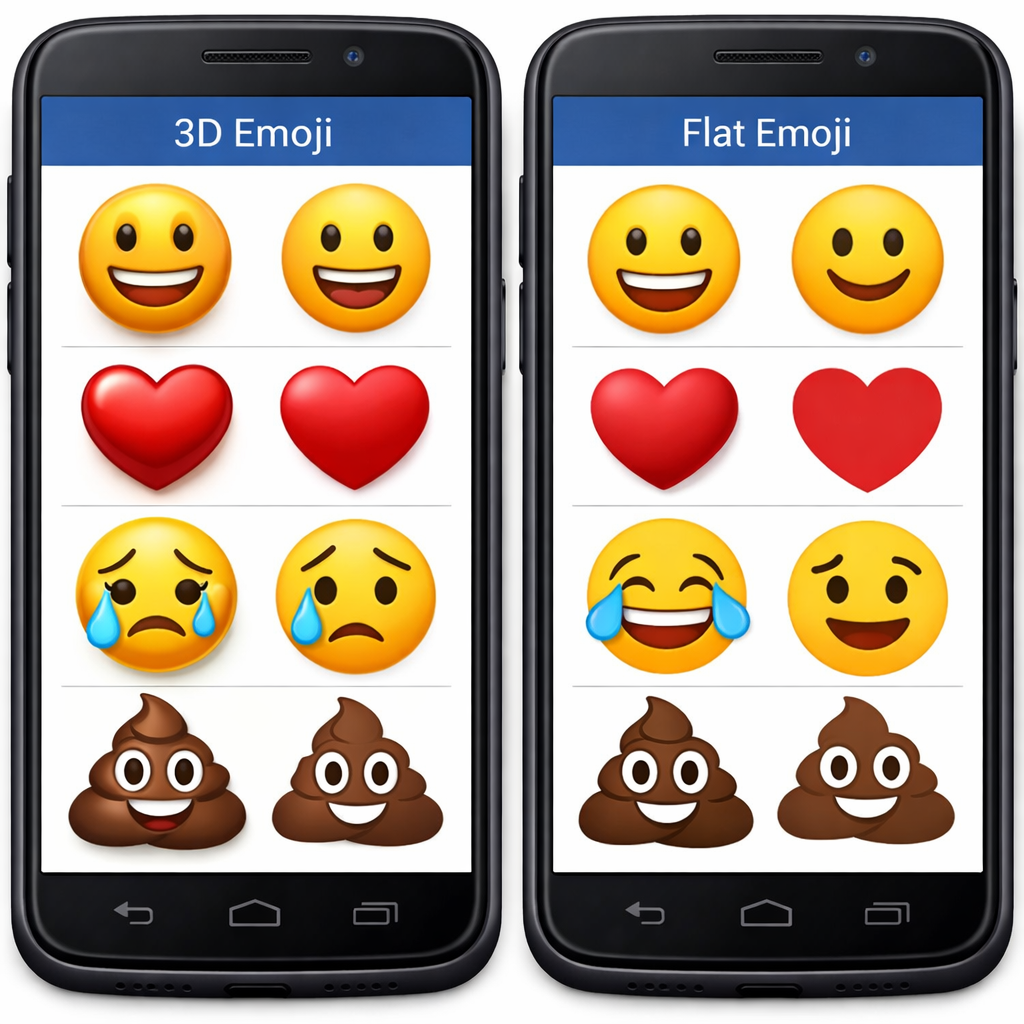
Google’s new 3D emoji set for Android phones brings high-resolution, bitmap-based characters—with texture and dimension unheard of in traditional flat vector emoji. But Android users might be surprised by just how beefy their device needs to be to support these fancy new icons.
Minimum specs: it’s not lightweight
To use Google’s 3D emoji, your phone must run Android 17 or newer. The device also needs to come from a manufacturer that is getting system updates or Google Play Services support. Beyond that, there are two hardware hurdles that some phones won’t surpass: at least 6 GB of RAM, and total storage of at least 128 GB with 10 GB free. Without meeting those last two requirements, the new emoji won’t work smoothly—if at all.
These requirements stem from how Google has changed the emoji rendering system. Older emoji on Android relied on scalable vectors, which maintain clarity at any size. The 3D emoji are bitmaps—pre-rendered images—which means they get soft or pixelated when scaled up or zoomed in. That texture and richness come at the cost of larger file sizes and greater memory demands.
What counts—and who’s out
Even if your phone checks the RAM and storage boxes, it still must satisfy a few more criteria. First, you need a supported brand that is keeping its software up to date. Second, your phone needs to have sufficient storage space available—not just a large total, but at least 10 GB free.
Note: Samsung phones are excluded from the 3D emoji rollout. That’s because Samsung uses its own proprietary emoji font—so system-wide updates to Google’s emoji set won’t reach those phones. The same exclusion applies to messaging apps that use fonts other than the system’s. Without using the default system font, those apps won’t display the 3D emoji.
If everything checks out, the 3D emoji are pushed to devices automatically—once they’re charging and connected to Wi-Fi. There’s currently no user-side option to force the update.
Google first announced the 3D emoji back in May, and the design first appeared on the Pixel 11 in August. The feature has since spread to compatible older Pixel devices as well.
Why this matters: Emoji are a universal language in digital life. With this redesign, Google is taking them beyond flat icons towards something more expressive. But the hardware thresholds—especially RAM and storage—could leave many phones behind. If your device is around 4–8 GB of RAM or has only 64 GB storage, chances are you won’t qualify.
Looking ahead: The real test will be whether Google can optimize 3D emoji enough to drop the barriers. If they could make the file sizes smaller or allow partial downloads, that might broaden access. Until then, premium or newer high-end devices will dominate this colorful edge of Android’s UI.