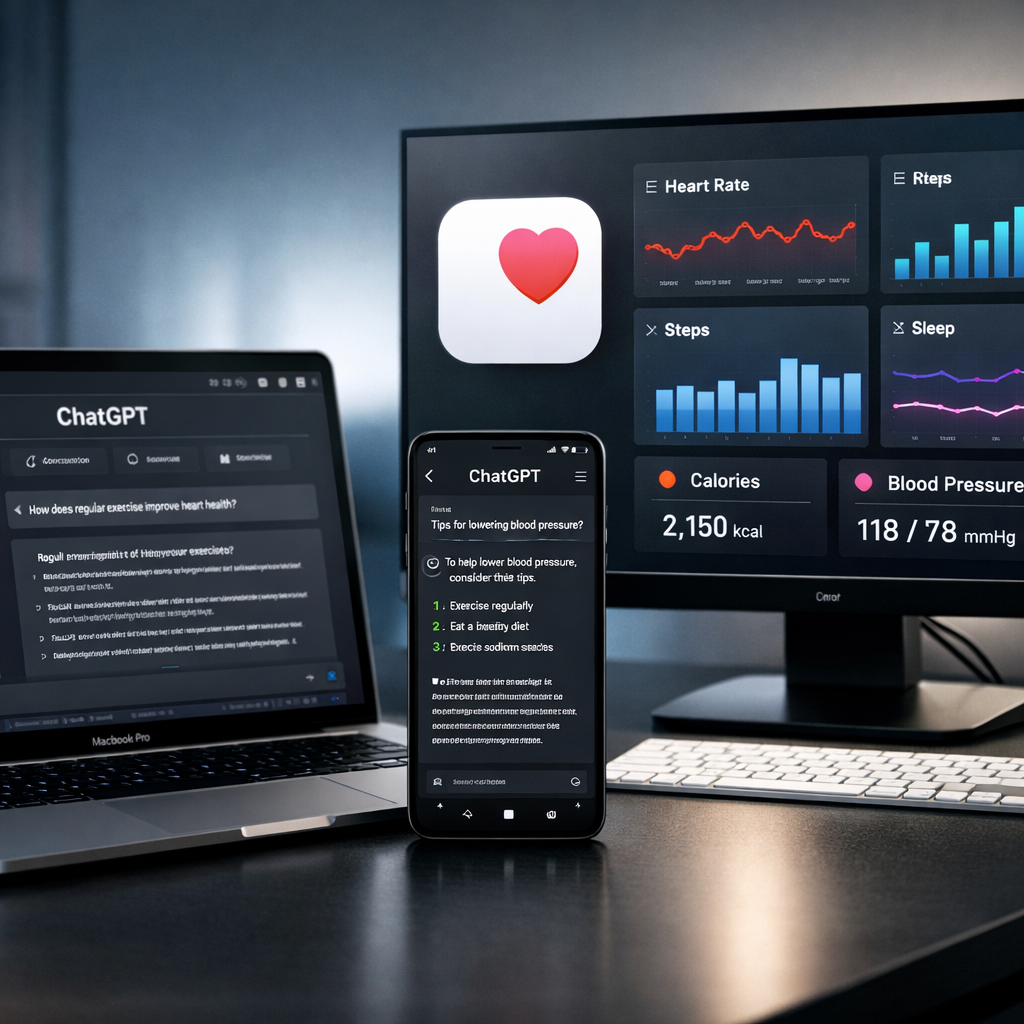
OpenAI’s ChatGPT Health feature has just taken a big step forward in platform coverage. Once restricted to iPhone, iPad, and the web in the U.S., the health feature is now rolling out to the desktop app (including the Mac app), Android devices, ChatGPT Dots, and ChatGPT Sites. This marks the first time ChatGPT Health is directly integrated into desktop and proactive assistant platforms.
What’s Changing
With this expansion, users in the U.S. can use ChatGPT Health in more places. Alongside its current availability on mobile and web, the feature will now be usable on the full ChatGPT desktop client (spanning Mac and likely other operating systems), as well as on Android. The update also includes integration with ChatGPT Dots—the assistant’s proactive feature that surfaces useful info—and ChatGPT Sites, extending health tools to more corners of the app.
As before, users can opt to link ChatGPT with Apple Health and supported medical records. This connection powers personalized responses: for example, ChatGPT can analyze routine patterns like sleep and workouts, and provide insights on how exercise at different times might impact sleep. Previously, those insights were only available through the mobile or web versions.
How This Moves the Needle
This rollout mirrors a prior expansion with ChatGPT Finances, which similarly started out limited to iOS, iPadOS, and the web before arriving on the Mac app. Including Mac in the Health rollout levels up parity across platforms, meaning users tapping into health-related advice won’t need their phones or rely on the browser.
Health insights now being accessible through desktop apps and proactive tools like Dots significantly lowers the barrier for people who work primarily off laptops or desktops. It also aligns with broader trends: as AI assistants take on more personalized roles—be it in finance, diagnostics, or lifestyle—having consistent, cross-device access becomes critical.
The update has already gone live. Users can immediately start using Health on the newly supported platforms. For example, desktop users can start comparing their morning versus evening workouts and how those affect their sleep. Android users and those with Dots/Sites access will also see the same interfaces and analysis tools appearing in their versions.
This change raises familiar questions: how rigorous are the medical record integrations, what privacy protections are in place, and how well these suggestions will hold up across different health contexts? OpenAI’s documentation still points toward user consent for both medical record and Apple Health integrations. Calibrating expectations—that these tools are informative rather than diagnostic—remains key.
This update shows AI assistants deepening their role in health. No longer just tools for generic queries, they now offer tailored insights tied to real personal data and daily habits. The wider platform support makes Health more useful across workflows—regardless of whether someone spends their time on mobile or in front of a desktop.