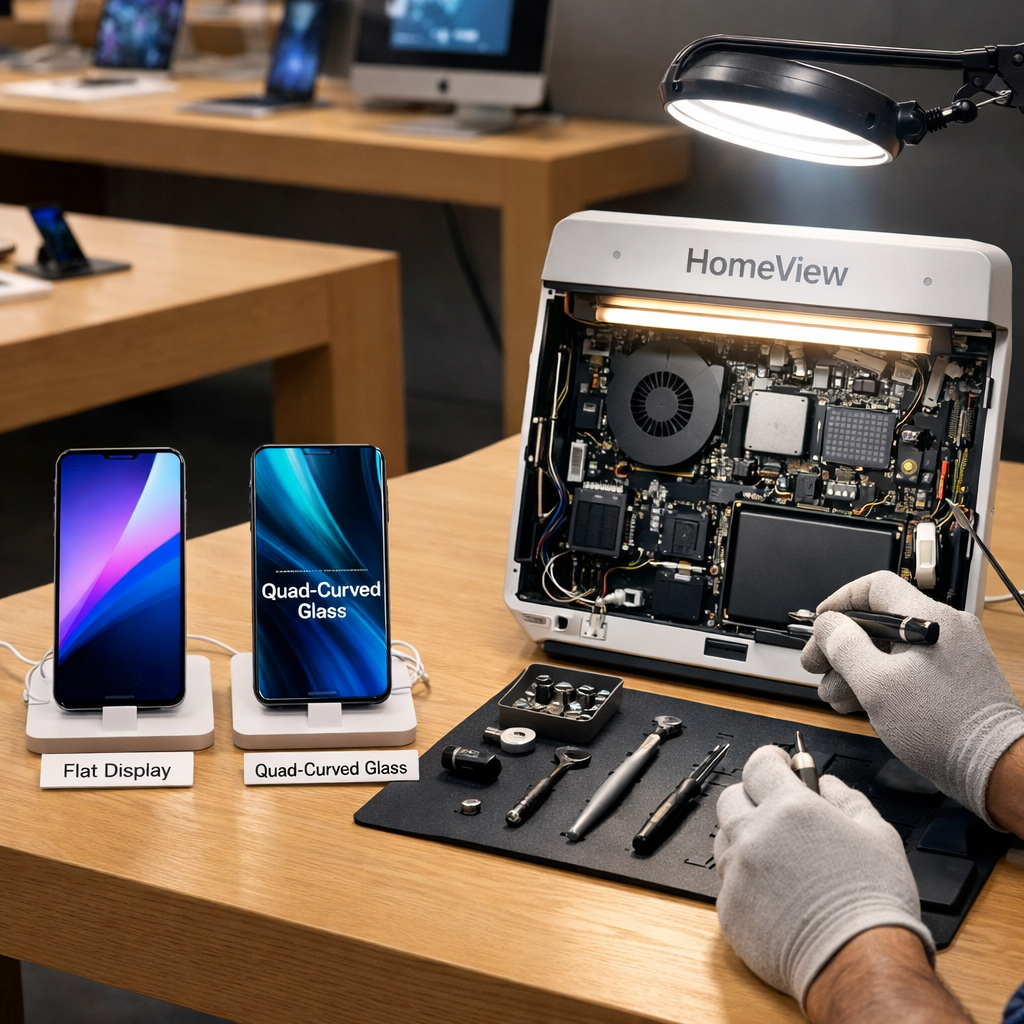
Apple is pushing ahead with significant internal changes and ambitious product designs as it heads into its 20th anniversary year. A veteran leader is taking over a key financial division, while leaks suggest the iPhone’s upcoming redesigns may be its most radical yet. At the same time, new hardware like the Apple HomeView is drawing scrutiny over repairability concerns.
New Leader for Apple Pay & Wallet
Corey Fugman has been named the head of Apple Pay and Wallet, succeeding Jennifer Bailey, who stepped down earlier this fall. Fugman, a longtime Apple executive who joined in 2000, has held leadership roles across Apple Card, Apple Cash, and most recently served as Senior Director overseeing the Pay and Wallet unit. He now reports to Eddy Cue. Bailey will remain with Apple in an advisory capacity during the transition.
Four Prototypes for the 20th-Anniversary iPhone
Leaker Ice Universe reports that Apple is experimenting with four prototype designs for its 20th-anniversary iPhone (often referred to as the “iPhone 20”). Two models are said to feature flat glass exteriors, while the other two utilize glass that curves along all four edges. These curved versions are being developed with bezels around 1mm, creating a near borderless visual effect when viewed straight on.
The curved-glass prototypes have been in development for roughly three years, going through several revisions. Early designs reportedly had more pronounced curvature, which have since been toned down. It’s not yet clear which design styles will end up in the final products or which features will differentiate the Pro and non-Pro versions.
Apple HomeView Under the Microscope
The newly released HomeView smart display is facing criticism from independent teardown experts. The device is heavily glued in many areas, including the display, speakers, and the logic board, making repairs difficult. Internal components are often secured with adhesive even before other fasteners, raising concerns about durability and maintenance.
Additionally, there are notable internal differences between the wall-mounted and tabletop versions. The wall-mounted HomeView uses a wider logic board and has smaller speakers compared to its tabletop counterpart. While some components — including the USB-C port and passive radiators — are relatively accessible, speaker connectors and display cables are tightly routed, making disassembly a risky process.
These shifts reflect a company in the midst of redefining both its leadership and its product philosophy. Fugman’s elevation shows Apple doubling down on financial services at a time when Pay and digital wallets are central to its revenue strategy. Meanwhile, the design explorations for the anniversary iPhone are the boldest in years, bridging glass engineering, aesthetics, and manufacturability challenges. And with HomeView, Apple may need to balance sleek design with customer-friendly repair standards. What to watch next: whether the final iPhone designs lean toward flat or quad-curved glass, how Fugman’s strategy shapes Apple’s financial services, and whether Apple responds to repairability pressures for devices like HomeView.