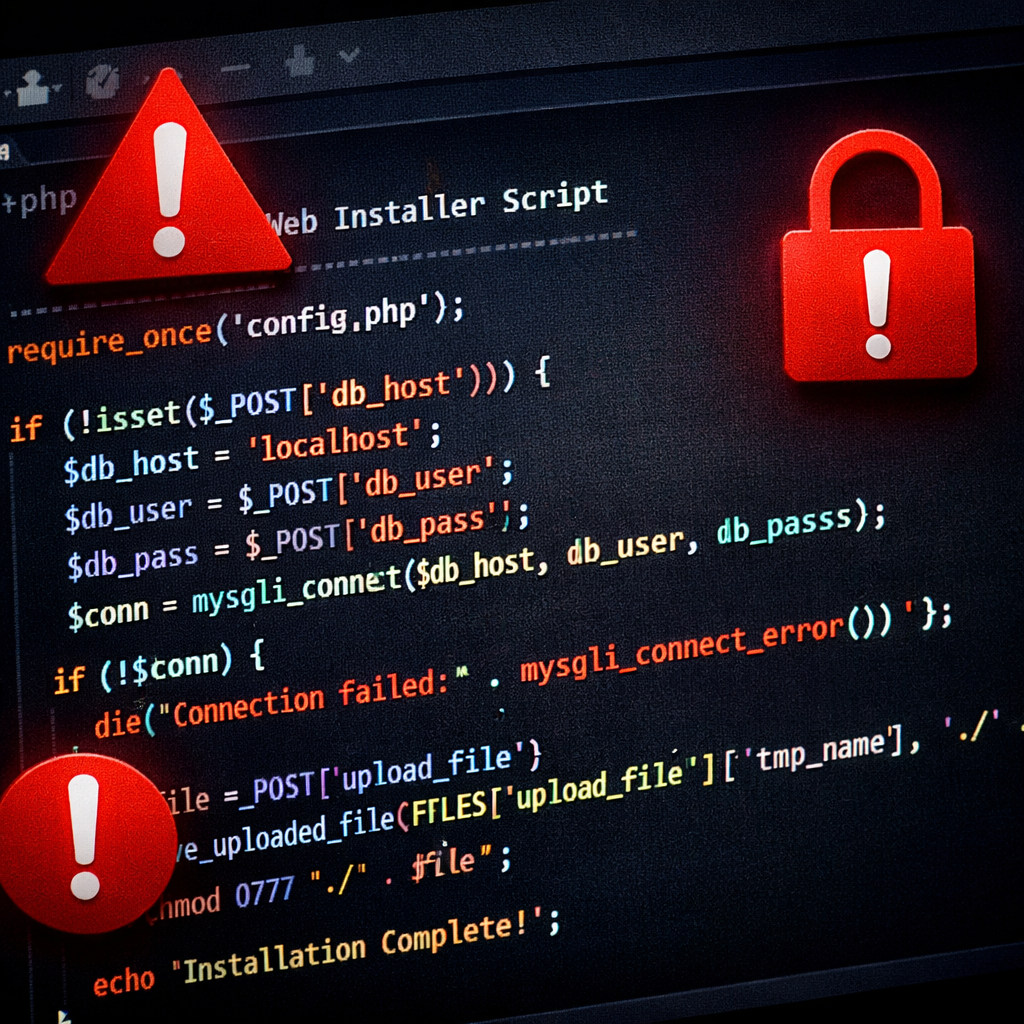
Drupal has released security patches to fix a critical vulnerability (CVE-2026-132165) in its core installer script that under certain configurations enables attackers to take over a site without authentication. The issue stems from the installer file, /core/install.php, remaining accessible after setup—its default .htaccess rules do not block external requests by default.
What is the Vulnerability?
Drupal’s security team assigned this flaw an “critical” rating, scoring 18 out of 25 on its risk scale. The installer script, which ships with every Drupal core, remains present even after installation and can be accessed unless explicitly blocked. Attackers who can run it under certain conditions could attempt to reinstall the site. This may lead to remote code execution or full site takeover when settings files like settings.php are writable or permissions can be altered.
Scope, Affected Versions & Remediation
All versions prior to 10.6.22 are impacted, as are 11.0.0 prior to 11.3.22 and 11.4.0 before 11.4.13. These releases have now shipped fixes addressing the problem. Users are urged to update to the following patched versions:
- Drupal 10.6.x → 10.6.22
- Drupal 11.3.x → 11.3.22
- Drupal 11.4.x → 11.4.13
Beyond updating, sites should block access to the installer script altogether. Options include adding web server deny rules, using .htaccess directives, or removing install.php and maintaining its removal using Composer scripts. Drupal Steward service users are already protected from known exploit paths, but updates are still crucial in case new attack vectors are discovered.
End-of-Life Versions & Community Impact
Drupal versions 11.2.x and earlier, 10.5.x and earlier, and all branches 8 and 9 have reached end-of-life and do not receive patches. As of early November, almost 30% of reporting Drupal sites—154,485 out of 528,430—were running unsupported versions. Additionally, the project’s security coverage for minor versions will shrink from 12 to 8 months, starting in 2027.
The vulnerability was discovered by Anthropic’s OSS Scanner—a tool launched in October to detect flaws in open-source projects. It automatically sends maintainers proof-of-concept exploits and candidate fixes. While no active exploitations have been reported, the risk is considered significant. Earlier last month, a similarly severe remote code execution flaw was patched, underscoring ongoing threats even in well-maintained platforms.
What this means for Drupal site operators is clear: patch promptness isn’t optional. This flaw illustrates how leftover installer scripts can become attack vectors if not neutralized post-setup. Vigilance with version updates, file permissions, and access controls is essential—not just for Drupal, but for any CMS. Administrators should audit their existing setups, enforce installer restrictions immediately, and plan upgrades to stay within supported, secure branches as Drupal’s maintenance windows shorten.