South Korea-based policy and security professionals have been the targets of a sophisticated malware campaign orchestrated by a hacking group tied to North Korea’s notorious Kimsuky. The attackers exploited a free online note-sharing platform, aNotepad, to control infected machines and swap out malware payloads on demand—without altering phishing emails or servers. Instead, they simply edited a shared public note, which all compromised systems subscribed to. Researchers at Genians Security Center (GSC) named the latest payload NodeLinkRAT, following earlier use of XenoRAT.
The Multi-Stage Attack Unfolded
The operation began between September 12 and 18, 2026, when attackers sent spearphishing messages posing as senior aides to a National Assembly member. The lure? A request to return an “honorarium payment” form. The initial email came without an attachment. When the victim chased it down, a follow-up email delivered a ZIP file via the webmail service’s large-attachment interface.
Inside the ZIP: a shortcut file masquerading as a Hangul (HWP) document. Thanks to Windows hiding the true file extension, victims saw only a “.hwp” file. Launching this file triggered cmd.exe, which in turn spawned a hidden PowerShell session. Scripts were obfuscated—plain-text references to “curl” or “iex” never appeared. From there, the attack chain fetched code from a free web host and ran it entirely in memory.
Notes as the Command-and-Control Switchboard
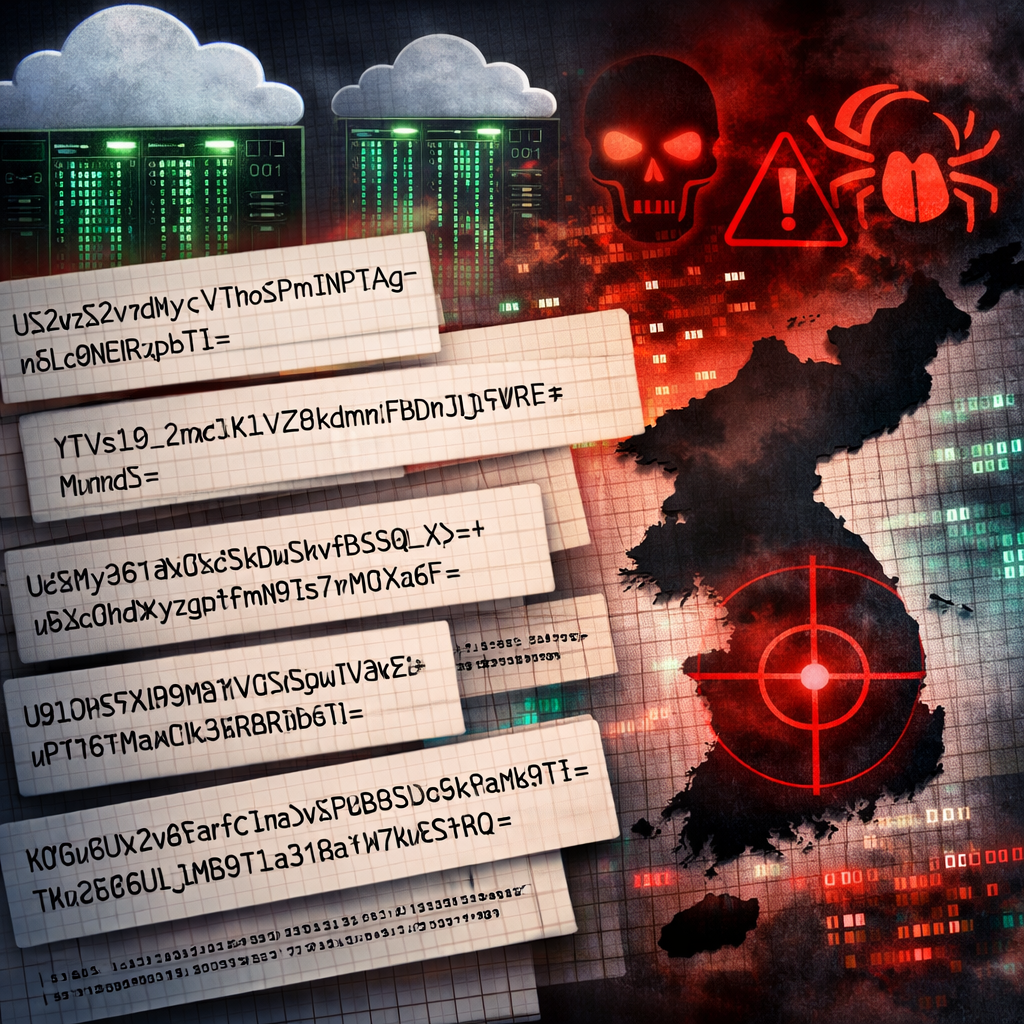
Once in, the malicious scripts set up a scheduled task called CommonMaintenanceHost that ran every 38 minutes. Each cycle fetched Base64-encoded data from an aNotepad page, demarcated by special markers—allowing the attackers to loop in new commands or tools at will. While this inner-workings loaded, a decoy form—the same honorarium document victims expected—also appeared, collecting banking info and account numbers.
Evolving Malware & Attribution Clues
Between June and October 2026, GSC traced a shift in payloads. Mid-June saw a XenoRAT variant posing as “Updater.exe” reach out to a command-and-control server at 103.81.116.10. By September, payloads had turned into data gatherers—collecting details like antivirus software names, system configuration, running processes—and uploading results to Dropbox then MEGA. Later, documents and images were exfiltrated via public hosting services.
October introduced NodeLinkRAT. This tool brought in a full Node.js runtime, installed npm packages, and ran a file dubbed teamview.js (named to mirror TeamViewer) from a Music folder. It connected to C2 server 207.148.112.166 on port 3000 via Socket.IO. It supports commands, remote file browsing, uploads/downloads, folder compression and theft, and live screen capture. Encryption uses AES-256-GCM, but the key was hardcoded to a predictable string—making decryption trivial if the traffic is intercepted.
Although GSC ties the campaign moderately to the Kimsuky group, they acknowledge that public infrastructure and similar tactics could mask copycat activity. Evidence includes shared infrastructure like DropBox accounts and servers in the same subnet as prior attacks. Shared assembly identifiers and custom encryption keys across multiple XenoRAT variants also strengthen the link.
Defensive Measures & Indicators
Blocking aNotepad, Dropbox, or MEGA wholesale is impractical given their legitimate uses. Instead, defenders are urged to monitor behavior patterns: look out for LNK files within archives that trigger PowerShell and curl.exe via cmd.exe; scheduled tasks named to appear benign (like “Maintenance”) running at odd intervals; scripts pulling public notes and executing in memory; and Node.js being installed in unexpected locations. Victims should enable file extensions to be visibly displayed, avoid opening unsolicited zip attachments, and maintain logs of early-stage execution, as LNK files tend to self-delete after launch.
Listed indicators include multiple MD5 hashes of earlier-stage binaries, several C2 IP addresses (e.g., 103.81.116.10, 207.148.112.166), and domains used for hosting decoys or exfiltrated files.
Why this matters: this campaign demonstrates a shift away from static phishing attacks toward dynamic, on-the-fly control through public platforms, making detection harder and attribution more complex. It underscores the urgent need for behavior-based defenses and more nuanced threat intelligence. Watch for similar abuse of legitimate services, increasingly blurred lines in malware delivery, and attackers leaning into scheduled tasks and runtime-code-fetching tricks as going-under-the-radar becomes their new standard.