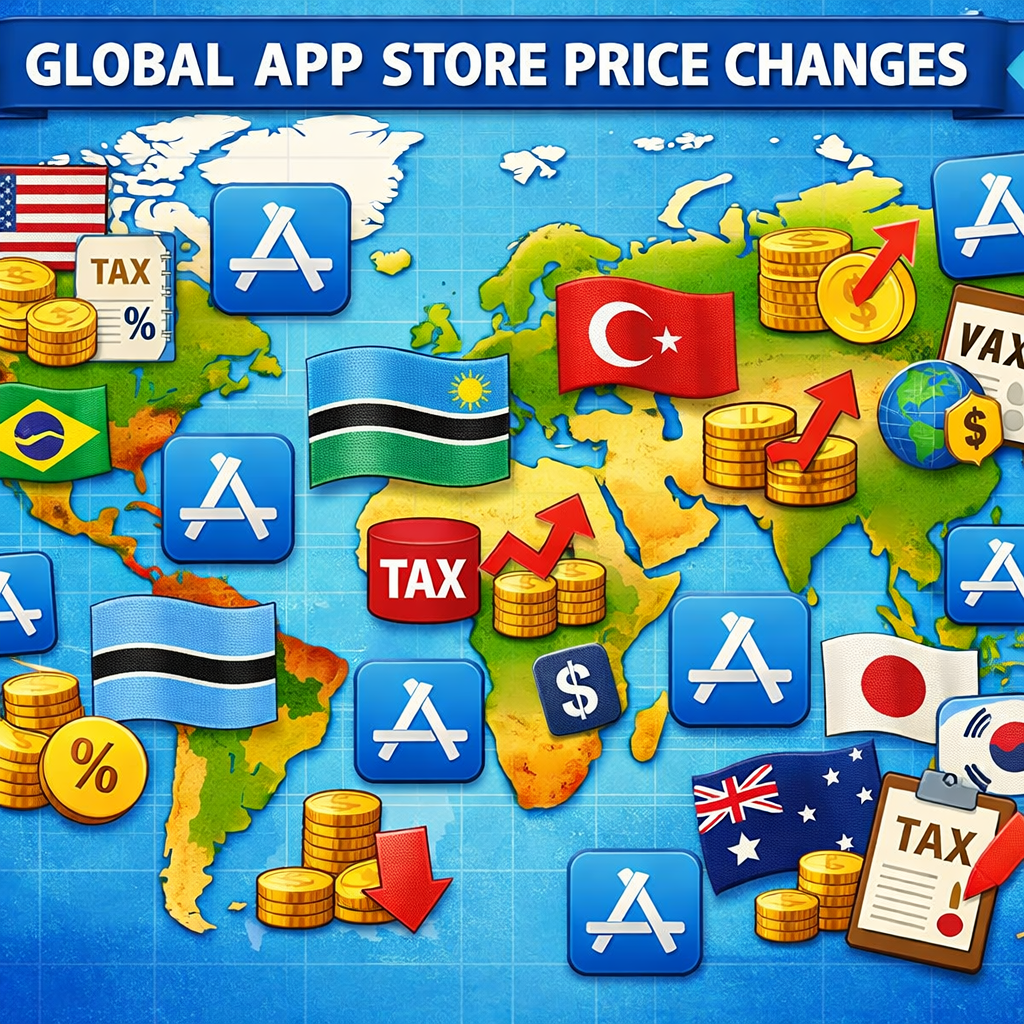
Apple is adjusting App Store pricing for apps and in-App Purchases in five countries effective December 3, 2026, citing foreign exchange shifts and tax updates. The changes span Botswana, Colombia, Egypt, Rwanda, and Türkiye, and align with newly introduced tax rules in several African nations. In addition, California will implement sales-use taxes next year on certain digital categories like Software-as-a-Service (SaaS), affecting what consumers pay. These changes aim to balance tax compliance with pricing transparency.
Global Tax Updates & Storefront Price Changes
As of today, Apple’s developers will see their proceeds adjusted in four countries where new tax policies have taken effect. Botswana has introduced a 14% value-added tax (VAT), while both Cameroon and Côte d’Ivoire now impose a “Significant Economic Presence” (SEP) tax at 3%. Rwanda is also bringing in an 18% VAT. In Botswana and Rwanda, Apple will update its legal agreements to reflect its role in collecting and remitting these taxes.
Beginning December 3, Apple will apply automatic pricing updates—driven by tax changes and currency fluctuations—in five storefronts: Botswana, Colombia, Egypt, Rwanda, and Türkiye. Developers using Apple’s automatic pricing tool should expect price adjustments. Storefronts that are base storefronts, subscriptions that auto-renew, or those where developers manually set prices will remain unaffected.
California Tax Rule Changes for SaaS & Digital Services
Starting January 1, 2027, Apple will begin collecting sales and use tax in California on apps and in-App Purchases for categories including SaaS, App Store Software, Software Training Material, Dating, and Boosting. While the pre-tax pricing on the U.S. storefront won’t change, the total amount customers pay—once tax is added—could go up. Apple emphasized that developers’ net proceeds will not be impacted by the new rule.
Developers can now select a new “SaaS” attribute within various App Store tax categories through App Store Connect, helping ensure their products are categorized correctly under the updated tax regime.
These changes reflect Apple’s response to evolving global tax norms and currency volatility. For customers and developers alike, this means being more attentive to local price shifts and tax responsibilities in coming months.
Why this matters: As countries tighten digital tax laws and exchange rates fluctuate, companies like Apple are forced to update policies across multiple regions. For developers, categorizing their apps correctly (e.g. marking their category as SaaS) will be essential to avoid mis-taxation. Consumers should review charges more closely—especially in affected storefronts and service categories—because even if sticker price stays, tax can raise the final cost. Going forward, watch for more countries following suit and Apple rolling out further tax category refinements.