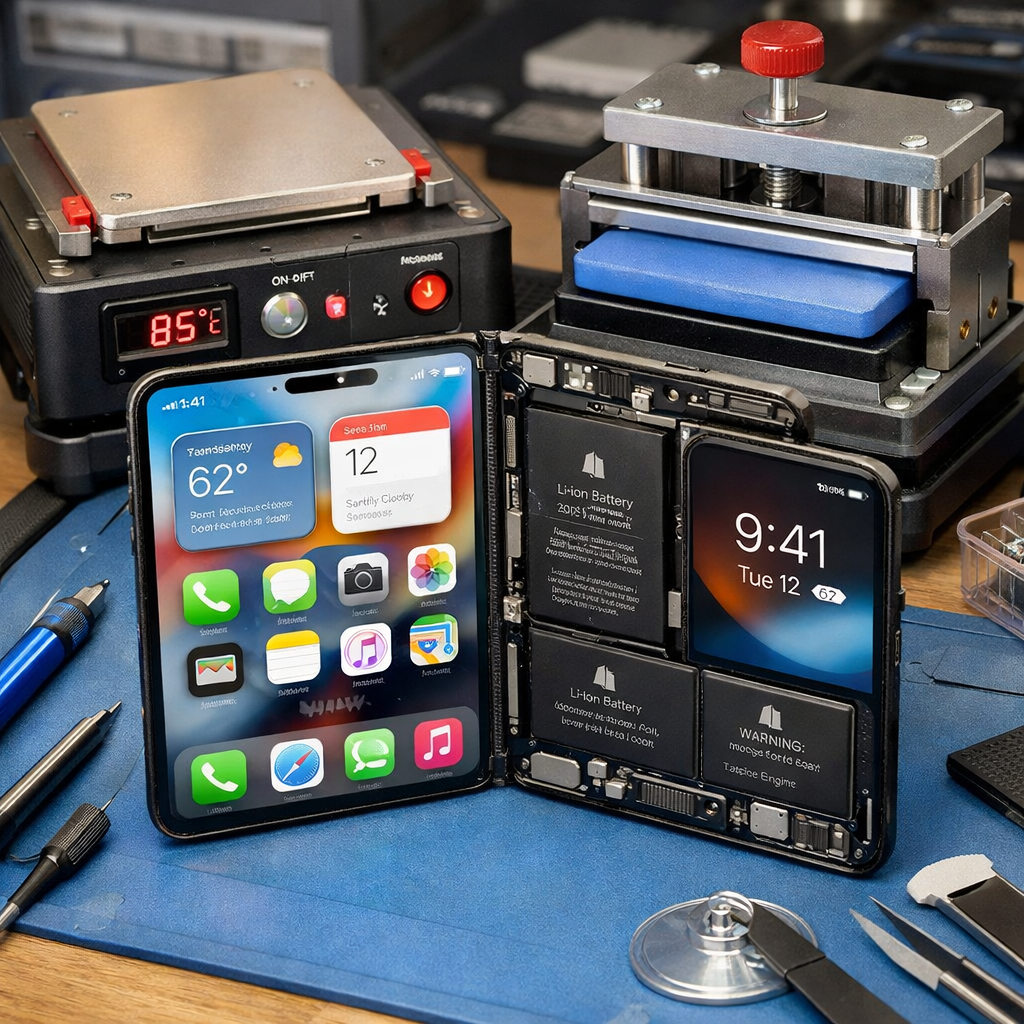
Apple has started selling genuine parts for the new iPhone Duo through its Self-Service Repair program. The option is now available in the U.S., Canada, and across Europe. These components and specialized tools can be used by skilled individuals to fix their own devices, following Apple’s official repair guide for the Duo. The move opens up DIY repair for more people, offering an alternative to visiting Genius Bar or Apple Authorized Service Providers.
What’s included, what it takes to repair
The Self-Service Repair Store now lists essential parts such as the outer display, inner display, both batteries (one behind the back glass and one behind the outer display), the cover layer over the inner screen, USB-C connector, logic board, rear and front cameras, touch ID/camera control buttons, enclosure, and several speakers and microphones. Alongside parts, Apple offers tools like a heated display removal fixture, display press, inner display fixture kit, and an alignment tray.
The repair manual outlines over 20 component-level procedures. These include replacing the outer or inner screens, removing or swapping both batteries, and removing the cover layer over the inner display. Apple includes safety guidance for handling broken glass and battery work. It also warns users only to attempt these repairs if they have sufficient experience with electronics.
Current status and limitations
Despite the availability of manuals and part lists, the U.S. Self-Service Repair Store does not yet list the iPhone Duo among models with parts for sale. As of mid-November 2026, while manuals and tools are live, no official replacement parts are purchasable yet for this model in the U.S. Apple’s goal is to expand as quickly as possible, but for now, device repairs must be conducted through Apple or certified repair shops unless users wait for parts availability.
The device tracks replaced parts using a “Parts and Service History” feature in Settings, listing the status of components such as the display (inner or outer), both batteries, logic board, both front and rear cameras, and Touch ID. Fake or non-genuine parts, or parts that haven’t gone through calibration, can trigger warnings or affect functionality, especially when it comes to features like Touch ID.
Internationally, the manuals and repair instructions are accessible broadly, and the Self-Service Repair program is supported in the major regions where iPhone Duo is launched. However, parts listings have lagged behind the documentation. Repair costs under AppleCare+ and out-of-warranty are impacted when non-authorized repairs are attempted. Warranty terms make certain repairs and services contingent on using genuine parts and having repairs performed either by Apple, authorized shops, or a trained individual using Apple’s tools and manuals.
Until parts are fully available, customers should check the repair manual carefully, noting exactly which display (inner or outer), which battery, or which camera is involved, and whether Touch ID works before opening the device. Misreading any of these can lead to calibration or performance issues.
This marks an important shift in Apple’s approach to repairability, especially for foldable devices like the Duo. It’s the first time many with technical skill will be able to buy parts for one of Apple’s most complex hardware packages, including dual-screen, hinge-mechanism design.
What this means and what to watch for: Apple’s decision to make iPhone Duo repair parts available (in regions soon after launch) reflects growing pressure from regulators, right-to-repair advocates, and consumers seeking more “repair-friendly” electronics. But in practice, the documentation arriving before parts shows both transparency and restraint—users know what’s inside, but must still wait. The key will be whether Apple sets fair prices, maintains parts availability globally, and ensures that DIY repairs don’t lead to damaged devices (especially around precision components like hinges). The first foldable iPhone tests Apple’s repair commitments more than any prior model—watch for how warranty, calibration, and repair pricing evolve over the next few quarters.