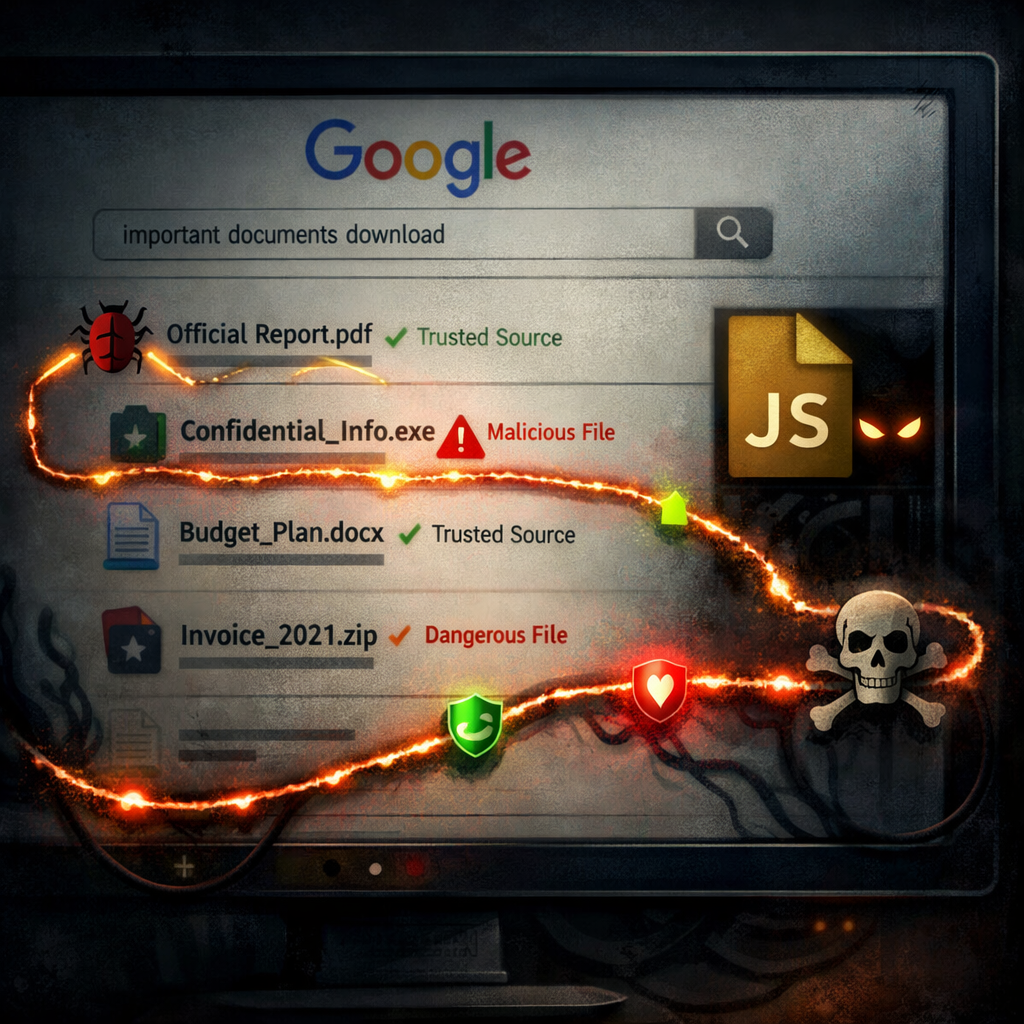
The FBI has issued a warning about how cybercriminals are exploiting Google Search and compromised WordPress sites to deploy Gootloader malware—an initial access tool that paves the way for ransomware attacks. By poisoning search results with malicious JavaScript files tied to seemingly legitimate legal documents, contracts, and business resources, the attackers are targeting businesses and legal professionals alike.
A FLASH advisory published November 16, 2026, revealed that more than 1,000 WordPress sites were infected and 216 domains are being operated by the Gootloader administrator as of October 2026. These malicious sites serve to lure visitors who search for specific documents, then redirect them to download harmful scripts. The advisory connects this operation to over $28 million in ransomware payments. Once installed, Gootloader functions primarily as an initial access framework—designed not to encrypt immediately but to support further intrusion and attack stages.
How the Threat Works
The campaign uses search engine optimization (SEO) poisoning, elevating fraudulently created pages alongside legitimate content. From 2020 to 2026, attackers focused on search queries with low competition, especially those tailored to legal and business settings, such as jurisdiction-specific contract clauses. Forged forum posts and hidden keywords are used to manipulate search rankings.
Compromised WordPress websites are repurposed to serve as lure pages, redirectors, and traffic filtering nodes. Depending on the visitor’s location, referral source, or browser history, a single compromised site may display entirely different content or simply redirect traffic—making detection difficult. In recent months, the operation has shifted toward abusing WordPress comment paths, deploying geographic filtering, and intensifying targeting of legal professionals in the U.S.
Execution, Post-Compromise Activity, and Risks
Victims who download and execute the JavaScript may trigger a multi-stage infection chain. Typically, this begins with a ZIP archive and continues with Windows Script Host, PowerShell, scheduled tasks, or registry-based payloads. Later phases may involve fileless execution—running malicious code held in memory after referencing registry locations. Threat actors also deploy techniques such as credential theft, process injection, evasion of security tools like AMSI, and lateral movement across networks.
A single payload is enough to compromise a system deeply: deleting the initial file does not revert all damage or remove all hidden payloads. Indicators of compromise listed by the FBI include artifacts like the executable “easinvoker.exe,” masquerading directory paths, functions used to disable defenses such as AmsiScanBuffer, and alternate upload services used for exfiltration.
What Can Organizations Do
Defenders should watch for browser downloads triggering script execution, unexpected PowerShell activity, scheduled tasks, registry changes, or strange network traffic. If an archive was downloaded but not opened, it should be handled through formal security channels—never simply extracted manually. When JavaScript has already run, disconnecting the device from the network and following rigorous incident response procedures—changing credentials from a clean machine and, where necessary, reimaging systems—are essential.
Preventative steps include restricting Windows Script Host where possible, using tools like WDAC or AppLocker to control script execution, and blocking scripts in writable directories. WordPress site owners should maintain updated software, remove unused plugins or components, enable strong administrator authentication, and continuously monitor file integrity. Cleaning up after takedowns and resetting compromised credentials remain critical, especially given work by law enforcement and cybersecurity teams to disrupt Gootloader infrastructure.
This threat underscores how traditional browsing activities—like searching for contracts, legal documents, or jurisdiction-specific terms—can translate into severe risk if threat actors manipulate search engine rankings to lure victims. It’s the convergence of supply-chain-style compromise (WordPress sites), SEO abuse, and sophisticated malware-delivery strategies. What to watch next: how automated detection tools adapt, whether WordPress ecosystems can scale defenses, and whether law firms and legal tech providers ramp up awareness and resilience enough to blunt this evolving threat.