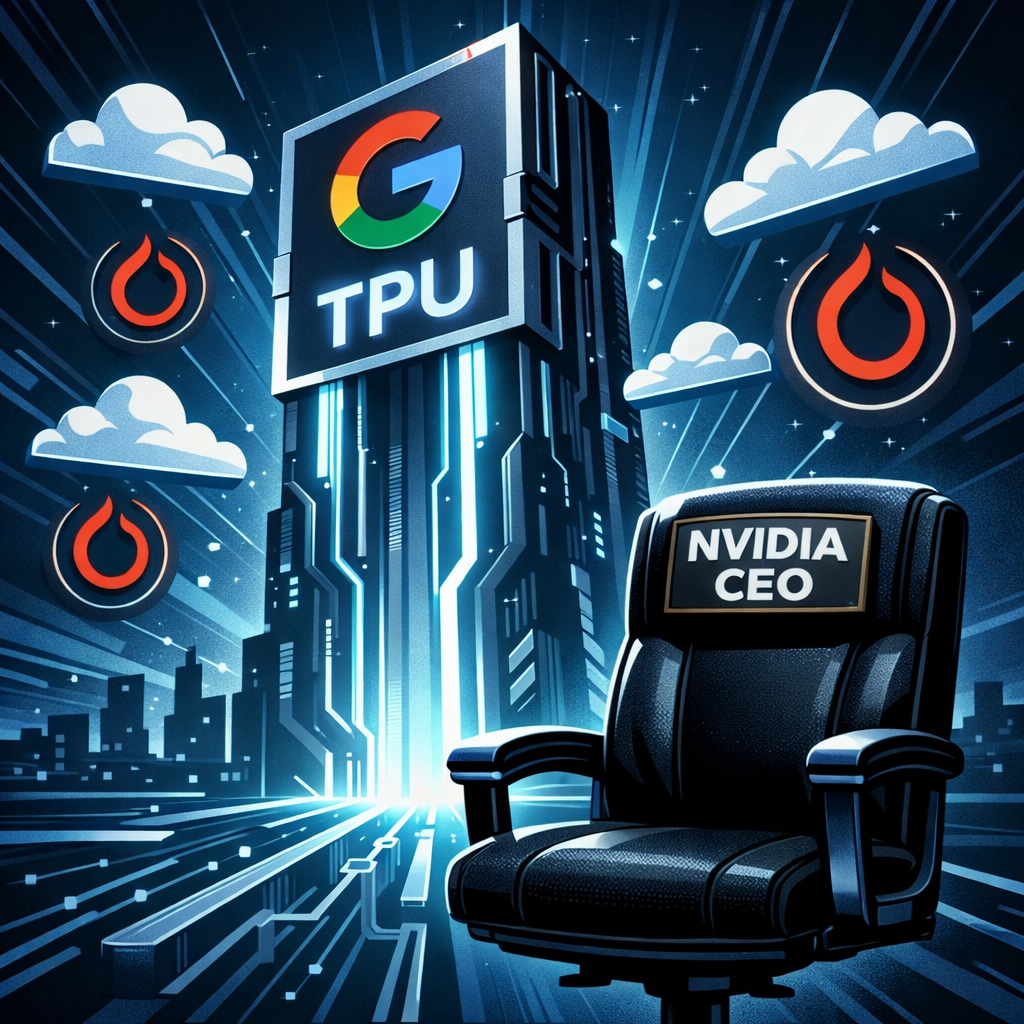
Nvidia’s sudden leadership crisis—triggered by Jensen Huang’s abrupt resignation as CEO on November 11, 2026—may be opening up fresh opportunities for Google to challenge Nvidia’s dominance in AI hardware. With Huang gone, competitors already circling Nvidia’s ‘CUDA moat’ have reason to be more aggressive, and Google’s cloud-based Tensor Processing Units (TPUs) are increasingly positioned as a serious alternative.
What’s Changed at Nvidia
Nvidia’s board confirmed Huang’s exit, naming Colette Kress—formerly CFO—as interim CEO while officially launching a search for his long-term successor. Harvey C. Jones was appointed chair of the board. The company claims its roadmap—spanning product development, customer commitments, and operations—will press on uninterrupted despite the leadership changes.
Still, Huang’s departure strips Nvidia of its most visible public face—someone deeply associated with its AI expansion, GPU leadership, and international policy navigation. Already, there are signs that the shift is having tangible effects on how customers and industry watchers evaluate Nvidia’s future.
Google’s TPU Strategy Aligns with the Moment
Google, long offering TPUs mostly to its internal projects and those hosted on Google Cloud, has lately begun opening up access. A partnership with Oracle Cloud Infrastructure (OCI) will allow companies outside of Google Cloud to use TPUs starting in 2027—marking the first time Google’s custom AI accelerators will be available on a rival public cloud.
At the same time, Google has made major software moves aimed at reducing friction for developers who traditionally rely on Nvidia’s architecture. TorchTPU, a native PyTorch stack co-developed with Meta, has been open-sourced, enabling familiar PyTorch-based code to run on TPUs with minimal changes. This lowers the barrier for migration and comparison—even if TPUs don’t match Nvidia’s peak GPU performance in certain workloads.
The Tactical Upside & Long-Term Stakes
Even if customers don’t abandon Nvidia overnight, Google may benefit immediately from sentiment shifts: increased willingness from organizations to explore non-GPU accelerators, more competitive pricing pressure, and greater diversity in hardware supply. Google’s TPU v8 line—specialized for different stages of the AI lifecycle—offers chips tailored to tasks like scale-up training, low latency inferencing, confidential computing, and handling massive context windows.
Those shifts not only give Google room to grow, but also help mitigate risks elsewhere: should growth in Google Search slow, its cloud infrastructure and TPU ecosystem are likely to emerge as core drivers of its next phase of expansion. For Nvidia, preserving its edge without its charismatic founder will be a stern test.
What to Watch Next:Upcoming Nvidia earnings, customer contract renewals, and cloud infrastructure builds will reveal whether TPUs’ new accessibility translates into adoption. Watch how Nvidia responds—either by lowering GPU prices, improving software compatibility, or accelerating product cycles—and how Google scales out TPU availability across clouds and use cases.