Microsoft is alerting organizations worldwide about a large-scale phishing campaign that takes advantage of recent Microsoft 365 service disruptions. The attack tricks users into believing urgent messages from Microsoft, prompting them to click on fake recovery links under threat of losing important emails. This is not related to the cause of the outage itself but uses the disruption as a pretext to harvest credentials.
How the Scam Works
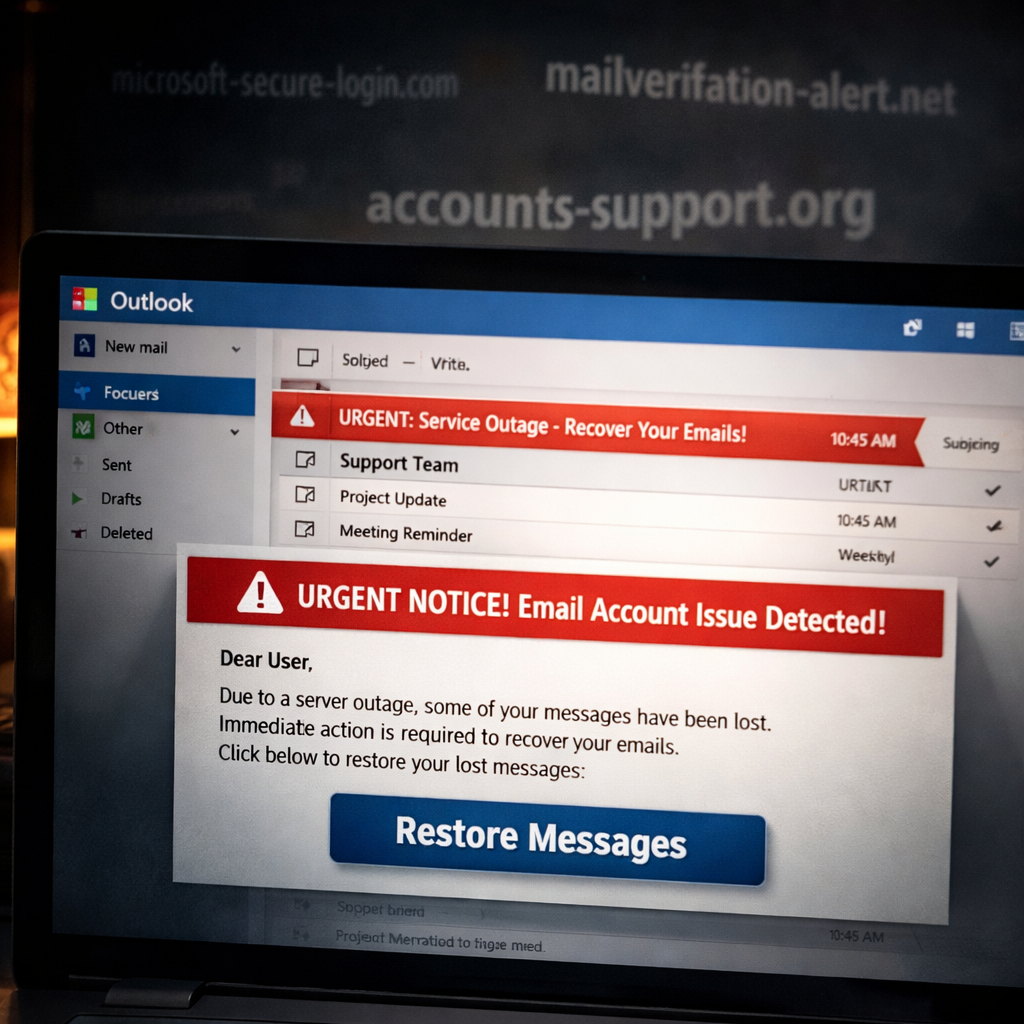
The phishing messages, first spotted on November 13, 2026, falsely claim that several emails have been “held” due to a Microsoft 365 service disruption. Recipients are warned that unless they act quickly—often within 24 hours—important messages will be deleted. The emails mimic Microsoft branding and include subject lines resembling “Outage –” followed by a random six-character code. Sender names use combinations like “MSF Outage Notification” or “AMZ Service Health” to appear legitimate.
Inside the messages, there’s usually a prominent “RESTORE MESSAGES” or “TAKE ACTION” button. These buttons link to domains not affiliated with Microsoft, such as moments-notice.com, planetmaison.com, newbooker.com, and reallifeaccounting.com. Each user gets a unique link, sometimes with a hidden conversation, likely meant to evade spam filters. While there’s no confirmed evidence of compromised passwords or account takeover yet, credential theft is the main suspected goal.
Detection, Prevention, and Response
Microsoft Defender has already blocked the domains tied to the campaign and is quarantining the emails through its Office 365 protections. Organizations are urged to search for emails that match the phishing profile—look for the sender domains, unusual subject patterns, recovery instructions, and unexpected display names.
Further investigation tips include reviewing records of email events, clicked URLs, browser history, and proxy logs to track which users followed the links. If there’s any suspicion that credentials were entered, Microsoft recommends resetting passwords, revoking tokens and sessions, and verifying multi-factor authentication registrations. It also advises teams to inspect OAuth permissions, mailbox forwarding, and unusual collaboration sharing, though no such behavior was confirmed in this campaign.
For future protection, Microsoft emphasizes the use of phishing-resistant authentication, Safe Links protection to vet URLs at click time, and relying on the official Microsoft 365 Service Health page rather than emails for outage updates. Rather than blocking shared platforms wholesale, the advice is to combine signals—sender, subject, links—to spot phishing.
The outage that served as the backdrop for this campaign stemmed from a hidden Windows bug that overwhelmed cloud servers. Microsoft confirmed that there’s no indication that malicious activity caused the service disruption. The phishing operators, compensation methods, or exact identity of the attackers have not been conclusively determined.
This incident highlights the enduring threat of credential phishing—even without malware. Attackers are exploiting timing and fear tied to service interruptions to create urgency. What to watch for: whether any definitive breaches occur, how defensive tools evolve, and whether future service disruptions become recurring leverage points for attackers. For now, organizations need to double down on detection, user education, and resilient authentication.