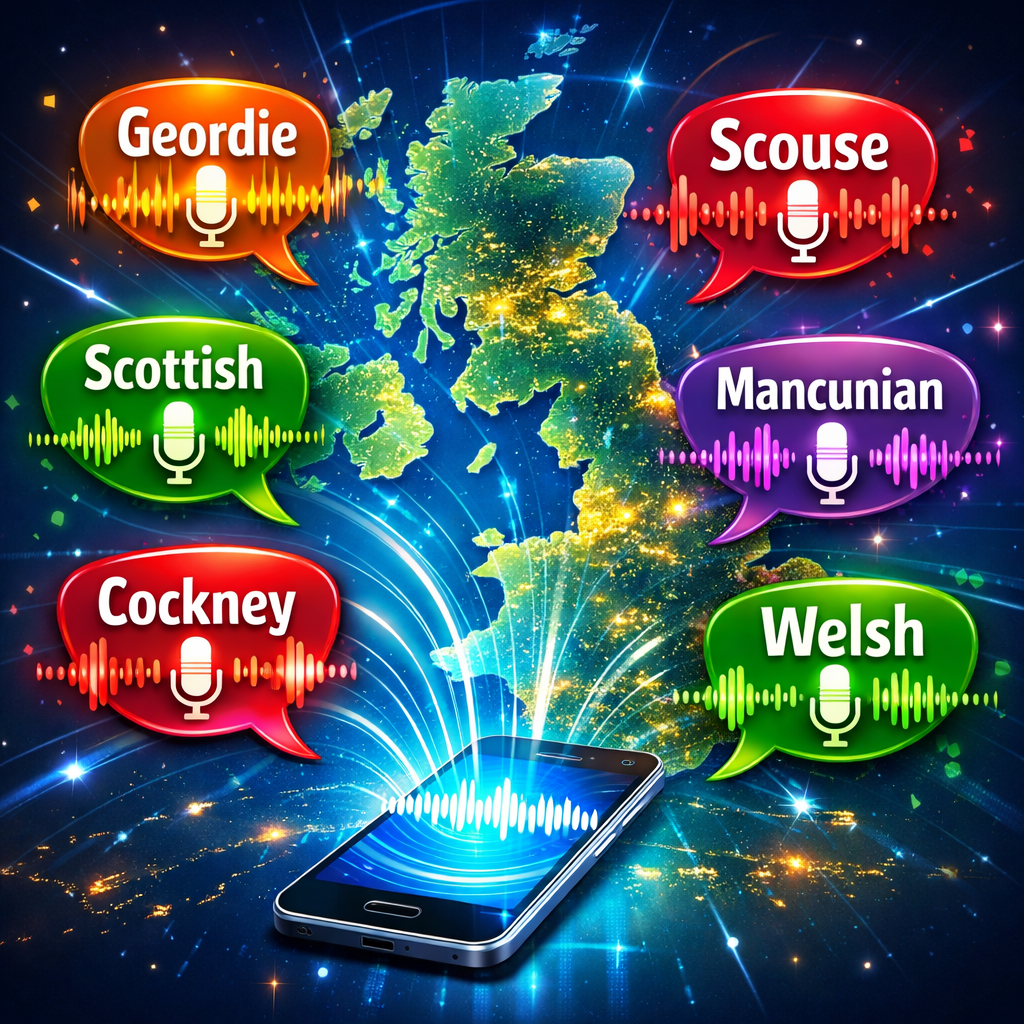
Gemini is rolling out a major update today: 66 new regional voices are now available in its Android and iOS apps. These voices cover accents and dialects in U.S. English, U.K. English, Indian English, Hindi, Brazilian Portuguese, Indonesian, and Korean. The richest variety comes from the U.K., which now has more than 10 distinct regional English voices such as Geordie, Scouse, Brummie, Scottish, Welsh, Northern Irish, Modern RP, and Multicultural London English (MLE). The expansion follows a preview of the feature earlier this year at I/O.
Real accents, not stereotypes
The goal with this update is to deliver voices that sound natural—capturing local rhythm, pitch, and pronunciation rather than exaggerating stereotypes. Slang isn’t the focus; instead the emphasis is on cadence so that Gemini voices sound like local speakers without veering into caricature. Once you select a regional accent, it applies across the app—via “Gemini Live” conversations and text-to-speech when you tap “Listen” on responses.
How to try them & how they behave
You’ll find the new voice options by using the three-dot menu in Gemini Live or going into the app settings under “Gemini’s voice.” The voices don’t come clearly labeled by city or region, and Gemini won’t self-report the accent if you ask directly. However, the accent tends to emerge in context: prompts about local food, culture, or sports—for example, asking for a pub in Sheffield or the best traditional stew in Liverpool—will naturally trigger the regional feel of the voice.
This update aims to address inconsistencies users have noticed before, where English accents sometimes drifted into blends of Australian or American styles. Whether those issues are fully resolved with these new options still needs more testing.
Regionally diverse digital voices are part of a growing trend toward personalization in AI, where nuanced accent options show up as key in making voice assistants feel more local and authentic.
Analysis: This voice expansion cements Gemini’s push toward greater regional authenticity and user personalization. It matters because diverse accents help people feel seen—and they help AI seem less generic. What’s worth watching: whether users feel the regional voices truly avoid blends and stereotypes, how accurate accent recognition will become in future versions, and whether other languages will get similar accent-rich options. Expect regional voice options to become a more standard expectation for AI assistants moving forward.