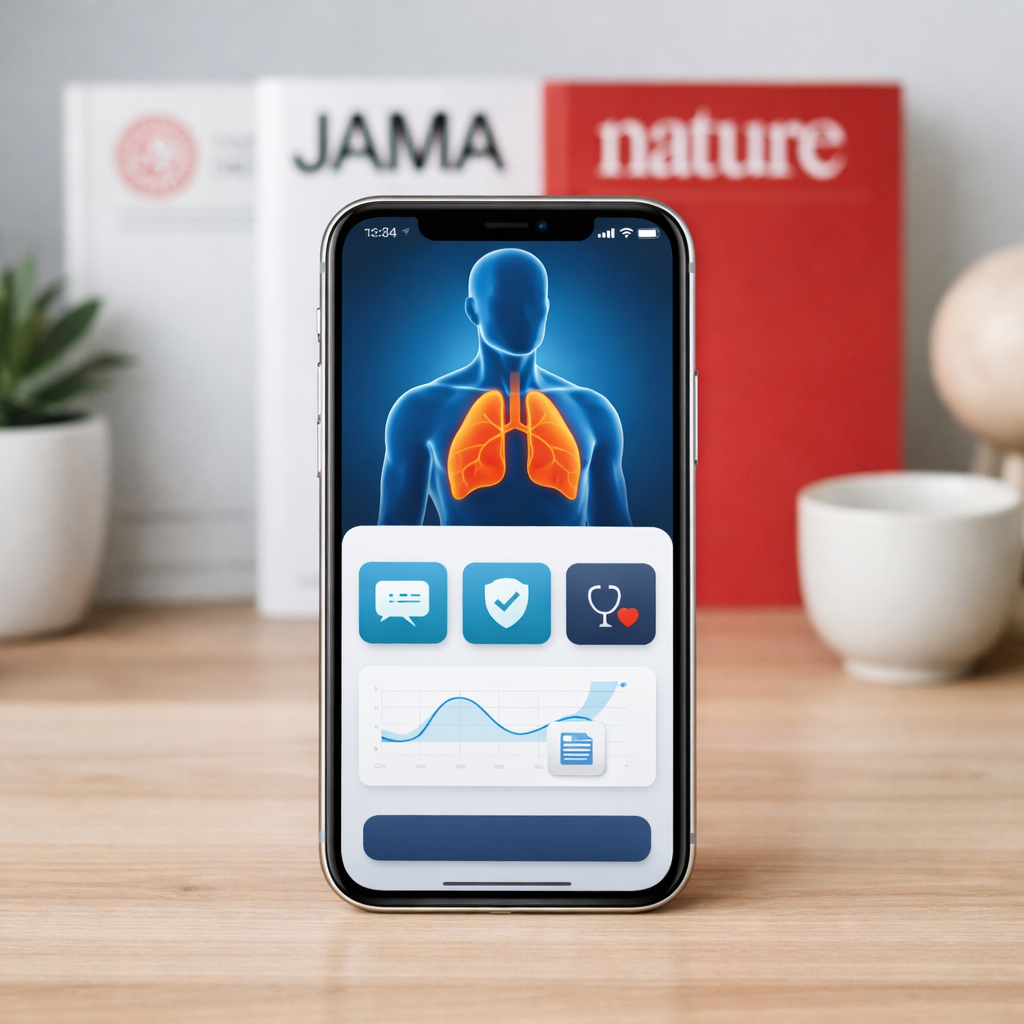
Apple has rolled out a new app aimed at exploring how people use artificial intelligence for health-related queries, emphasizing answers that are grounded in clinical research. In partnership with AI-health company OpenEvidence, the tech giant invites U.S. residents over 21 with an iPhone 15 or newer running iOS 26 and Apple Intelligence enabled to participate in a study spanning up to 200,000 users over a year.
Unlike many consumer-facing AI chatbots today, the app’s responses will draw on peer-reviewed medical journal sources like The New England Journal of Medicine, JAMA, and Nature. Users will be able to ask everyday health questions, receive simplified responses, rate those answers, provide feedback, and take monthly surveys to help monitor their understanding and satisfaction.
User Data & Feedback Mechanisms
Participants can optionally share biometric and wellness data from HealthKit—such as resting heart rate, activity, sleep patterns, or lab results—to receive more tailored advice. The app is designed not just to generate responses but also to help users prepare for doctor appointments and direct them to medical professionals when needed.
Apple has highlighted strong privacy protections: data sent to cloud servers will be anonymized, and the company promises that neither this data nor user queries will be used to train AI models. OpenEvidence, its partner, will delete query-and-response logs within 24 hours.
What’s Next & Impacts on Apple’s Ecosystem
The app is now available for download to eligible users in the U.S. It remains uncertain whether Apple plans to bring AI-driven medical Q&A features directly into its existing Health app or embed them into Siri. The timing will be key given the rapidly growing volume of AI-powered health inquiries—the study comes against the backdrop of data showing that earlier in the year, OpenAI saw its users pose over 300 million health-related questions each week.
As Apple explains, the goal is not merely to build tools but to understand how people interact with health AI in daily life. The insights from the study are meant to fuel the scientific conversation and inform development of AI tools that are trusted, clinically grounded, and genuinely useful across a wide range of health journeys.
This marks a shift for Apple from exploring health features reactively toward generating structured research data. What to watch: whether Apple will integrate clinician-reviewed AI responses into mainstream tools like Siri, and how this approach stacks up against models trained on broader but less verified datasets.