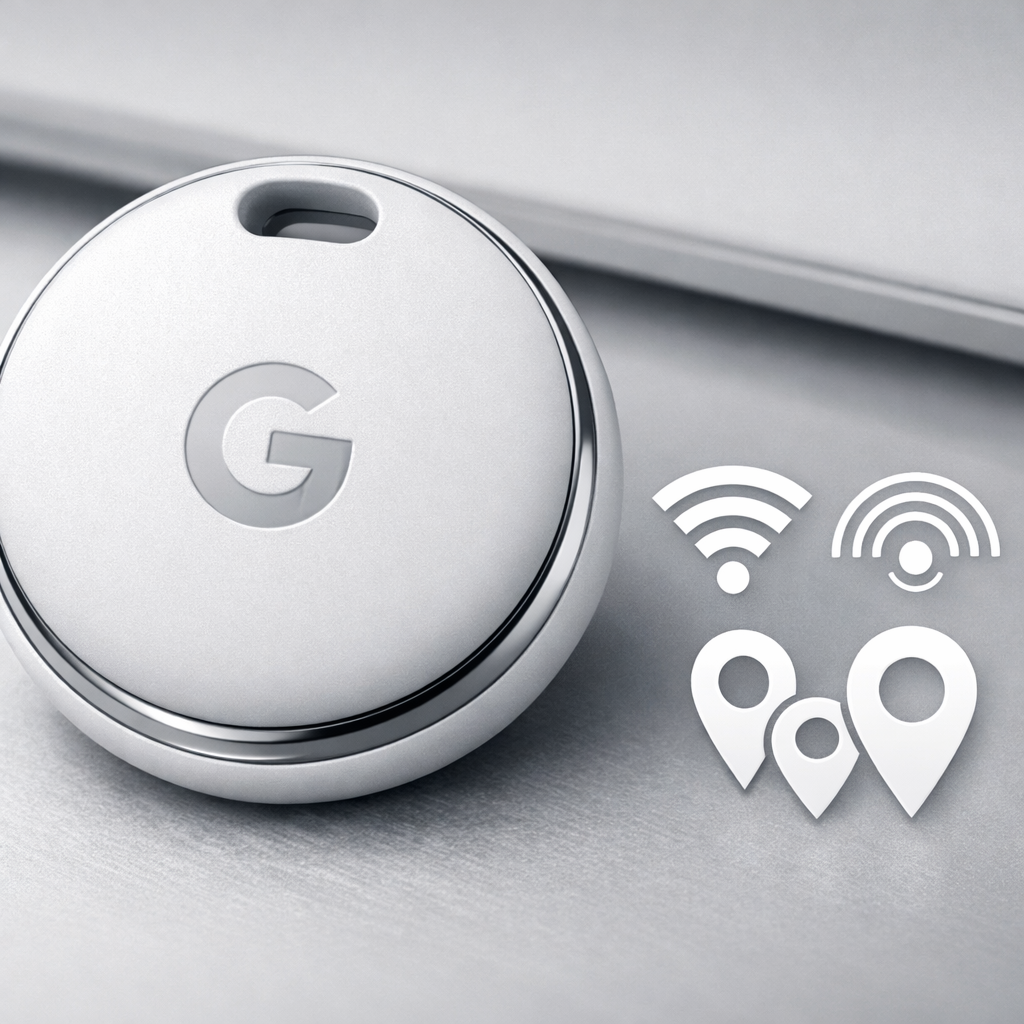
Google’s new Pixel Tag tracker adds many welcome upgrades—like ultra-wideband (UWB) precision and built-in volume controls—signaling what a premium Find Hub device can be. But despite its solid hardware, the tracker doesn’t solve the deeper flaws within Google’s Find Hub network.
Early Choices That Still Weigh It Down
When Google first rolled out the Find Hub network (once called the Find My Device network), it opened in “high-traffic areas” by default. Regions like major cities, travel hubs, and busy public zones had visibility, but rural areas and less dense suburbs were mostly excluded. Although users could turn on “all areas,” the default setting meant many users never benefitted unless they manually enabled full coverage.
The excuse: preserving privacy. But this early limitation harmed device tracking, as lack of network presence in many areas still hampers performance. Even with better hardware, a tracker is only useful if someone else’s compatible device can help detect its signal—and many places remain too thinly covered.
Improvements, but Not Enough
Since 2025, Google has taken steps to fix things. The company pushed speed enhancements for the network and in some recent device setup processes, encouraged or even defaulted to enabling Find Hub in all areas. Still, adoption remains uneven, and times of installation can still trigger the high-traffic default for users who aren’t vigilant.
The Pixel Tag adds meaningful features—UWB for precise locating, better hardware integration, and more device control—all strengths over many third-party Find Hub trackers. But the underlying problem remains: the network is not yet as reliable as it needs to be. Even Samsung’s tracker network, limited to Galaxy devices, seems to outshine Google’s multi-device system in many parts.
What Pixel Tag Actually Fixes—and What It Doesn’t
With its premium build, native software integration, and UWB support, Pixel Tag is a leap forward in tracker hardware. It represents what a well-integrated device in the Find Hub ecosystem should be. However, it doesn’t solve the visibility gaps that happen because of how and where the network was enabled—or the size of the active device base needed to make full coverage reliable.
Precision finding works well—with UWB, you get sharper directionality and faster location effects—but when nobody else’s device is in the area to help detect the tracker, none of that matters. First-party trackers like Pixel Tag can enhance experience, but they can’t completely overcome the network’s foundational limitations.
Ultimately, Pixel Tag is as close to a fix as Google has delivered so far, but it remains a Band-Aid rather than a cure. Users benefit from better hardware and some settings tweaks, but full improvement hinges on expanding network reach, changing defaults universally, and scaling user adoption across regions.
In the end, the Pixel Tag isn’t what solves Google’s Find Hub network—it’s just what highlights the problems more clearly. What to watch: whether Google begins enforcing “all areas” by default, how many active devices are contributing in underserved zones, and how third-party tracker performance compares with Apple’s network. Until then, the hardware is good—but the network is still holding everything back.