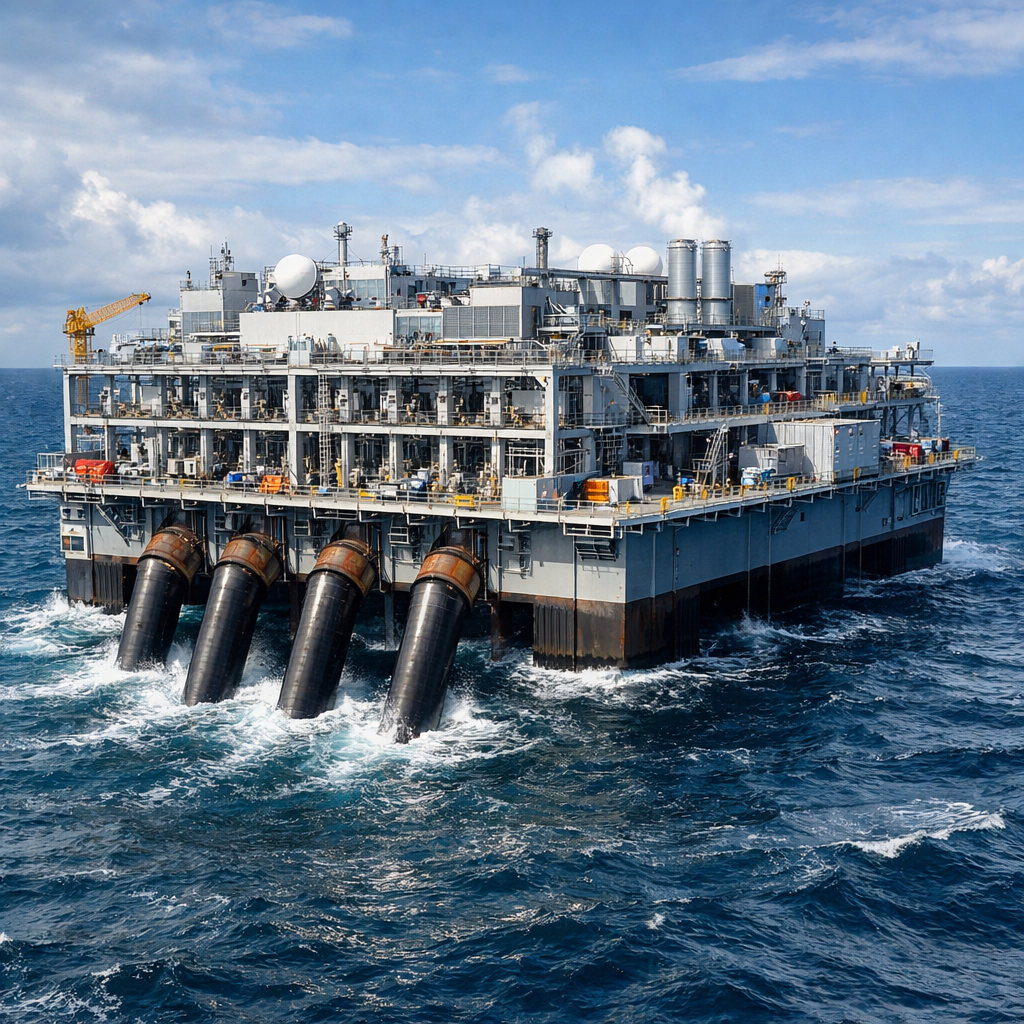
A Washington, D.C.–based startup named Drogue is developing floating data centers powered by ocean thermal energy conversion (OTEC). Its systems aim to extract power from the temperature difference between warm surface waters and cold deep ocean currents to run data centers aboard ships and offshore platforms. The company has secured around $20 million in funding just six months after its founding.
Inside Drogue’s Plan
The company is designing a multi-megawatt prototype that will be installed on a traditional oceangoing ship and deployed at sea in early 2028. Later systems will be built on floating structures more akin to offshore oil rigs. Drogue’s co-founder and CEO, Sam Sipe, says the approach is meant to shave years off the build-out timelines that plague land-based data center deployments, which typically stretch over eight to ten years. With AI-related data demands having multiplied tenfold in just three years, the urgency to find faster, scalable solutions is accelerating.
How Ocean Thermal Energy Conversion Powers the System
Drogue’s technology leverages the fact that ocean surface waters are heated by sunlight, while water several hundred meters below remains very cold—around 4°C (≈39°F). The system circulates warm surface water to cool servers, then uses the warmed water to vaporize ammonia (which boils at about −28°F), driving a turbine to generate electricity. Cold seawater drawn from depths of about 1,000 meters condenses the ammonia back into liquid form, completing the energy loop.
The concept isn’t entirely new—it has origins going back to the 1950s—but previous efforts faltered due to technological and financial barriers. Drogue believes that modern advances in manufacturing—particularly in heat exchangers and piping—offer a chance to revive the idea successfully. The company has spent time analyzing early failures, lining up materials and designs, and targeting a “sweet spot” where scale unlocks viability.
One key decision is keeping the data centers at sea, instead of routing power to shore, which would require costly undersea cables. Data centers aboard vessels or floating platforms allow efficient data transfer and potentially reduced infrastructure expenditures. Drogue expects each vessel to operate for about a decade in ocean waters.
Backing, Timeline, Risks
Despite being just six months old, Drogue has raised $20 million in seed capital from investors including Toyota Ventures, XYZ Venture Capital, Tamarack Global, Dream, FDVC, Garuda Ventures, Flexcap, Boost VC, and Slow Ventures.
It has also received an “approval in principle” from the American Bureau of Shipping, which assesses marine safety standards. The company is now purchasing its first ship to build and launch its prototype for open ocean testing.
Some technical challenges remain: biofouling, exposure to storms, corrosion, operational logistics at sea, regulatory compliance. Yet the engineering team believes many of these can be tackled with modern materials and lessons learned from early pioneers.
The entrance of ocean thermal energy as a solution may tap into a growing concern over sustainable power for data-heavy AI workloads. Traditional land-based data centers are constrained by site selection, grid availability, and long permitting cycles. Drogue’s offshore model seeks to bypass many of these friction points.
What this could mean:If successful, floating data centers powered by OTEC could reshape how we map data infrastructure, especially for regions near warm ocean zones. This model may offer lower cooling costs, reduced grid strain, and greener operation—if the environmental and technical hurdles are cleared. Investors’ early commitment signals belief in a future where data centers no longer need be landlocked. Watch for Drogue’s 2028 prototype deployment as a key inflection point.