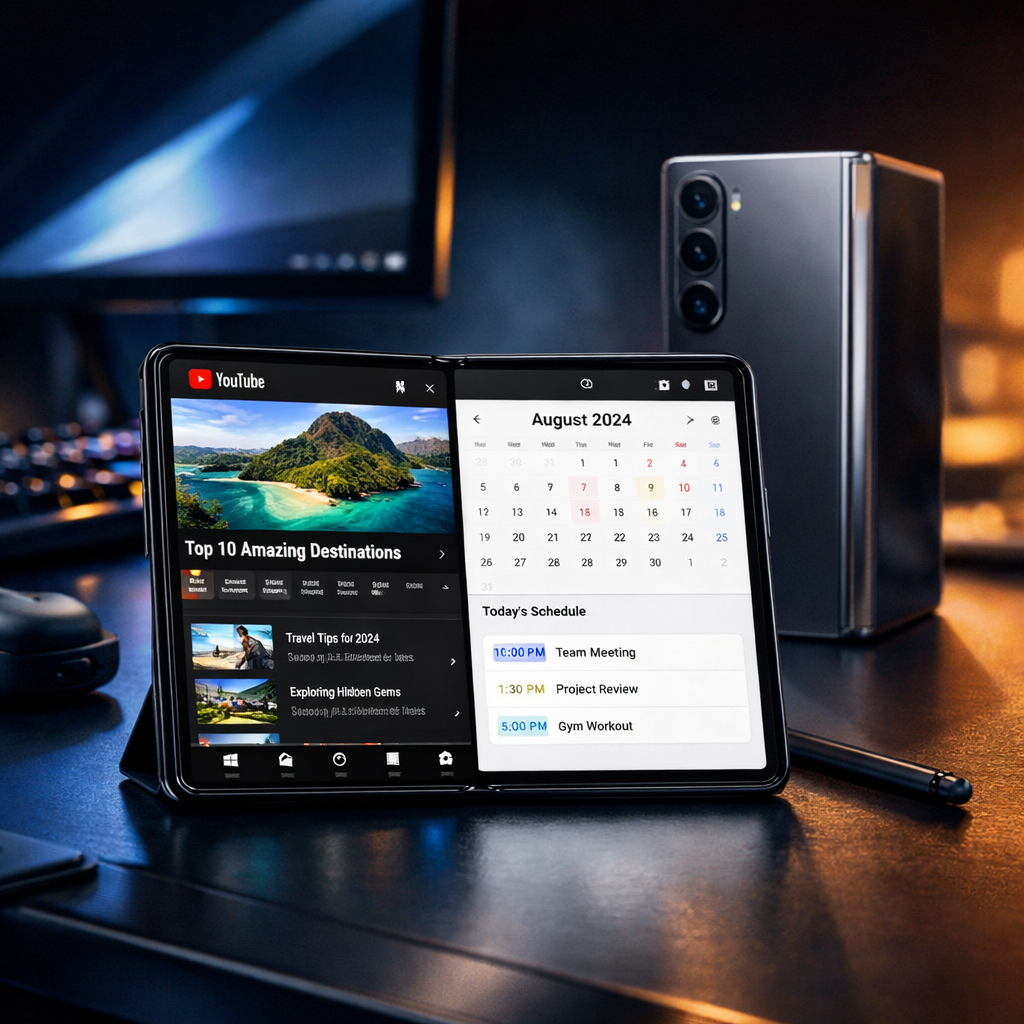
After a month together with Apple’s new foldable, the iPhone Duo, it’s clear this device delivers something unique—though it demands compromise. The latest episode of the Overtime podcast takes a deep dive into its multitasking prowess, FaceTime improvements, and squaring off against Samsung’s Galaxy Z Fold 8. We also get an early look at what’s rumored for the second-generation MacBook Neo.
What iPhone Duo Gets Right
The foldable format shines in productivity. Split-View multitasking on the inner display feels purposeful: pairing apps like Safari with Notes elevates how you work, while a new dock and navigation design — shifted to the right — help make the larger layout feel more usable. UI responsiveness is strong, and the overall experience points toward what many hoped a foldable iPhone could be. The matte nano-texture finish built into the inner screen boosts durability and clarity in challenging light. Battery life holds up too — a typical day still leaves you with noticeable charge remaining even while spending more time on the foldable display.
Trade-Offs and Comparisons with Samsung
“No telephoto, no Face ID” is fast becoming the shorthand drawback. The absence of a 3× zoom lens limits versatility, particularly when compared with the Galaxy Z Fold 8. Face ID’s omission also stings, especially given Apple’s history with biometric security. The outer display, while great for quick interactions and short messages, can’t carry the same multitasking flexibility: it lacks the split-screen options and app pair rearranging that Fold 8 owners have grown used to. Thickness when folded and closed is noticeable — a reminder of the engineering trade-off between ruggedness and polish.
FaceTime & Software Nuances
FaceTime across both displays impresses in certain moments — particularly during video calls and group chats. The under-display camera for “selfie mode” works well enough, though it’s simpler than what you might expect from higher-spec front-cams. Software is clearly optimized for the fold, but the experience isn’t flawless. Some apps don’t adapt well to the stretch of the inner screen yet, and while multitasking shines, it’s limited: two apps side by side works well, but the customizable arrangements that Android foldables offer aren’t yet here.
MacBook Neo 2 Rumors & Apple’s Product Push
Meanwhile, Apple’s product tempo is accelerating. Rumors suggest that MacBook Neo 2 — the budget laptop released earlier this year — is set to get a much-needed upgrade in 2027. Expected improvements include swapping out the current A18 Pro chip for the newer A19 Pro, increasing RAM from 8GB to 12GB, and introducing fresh color options. For many, the biggest bottleneck in the first Neo was memory — these rumored changes could unlock a better experience for light power users and make room for more advanced on-device AI features under the macOS roadmap.
Apple’s broader rollout of the Duo, coupled with these impending upgrades to Neo, signals a shift in strategy: more form-factor experiments, deeper integration of foldables, and a tightening focus on software adaptation. Users curious about the Duo will have to decide whether the positives outweigh sacrifices like camera trade-offs, missing Face ID, and software rough edges. Time will tell how much Apple can polish this first foldable and whether its leap into unfolding design inspires loyalty outside the Apple ecosystem.
What this means: The iPhone Duo is not perfect, but it’s a bold first step that highlights Apple’s ambitions in folding tech. What to watch next: third-party app optimization, broader multitasking on the cover screen, and whether MacBook Neo 2 raises the bar for entry-level Macs. The groundwork is laid, but the finishing touches will determine long-term adoption.