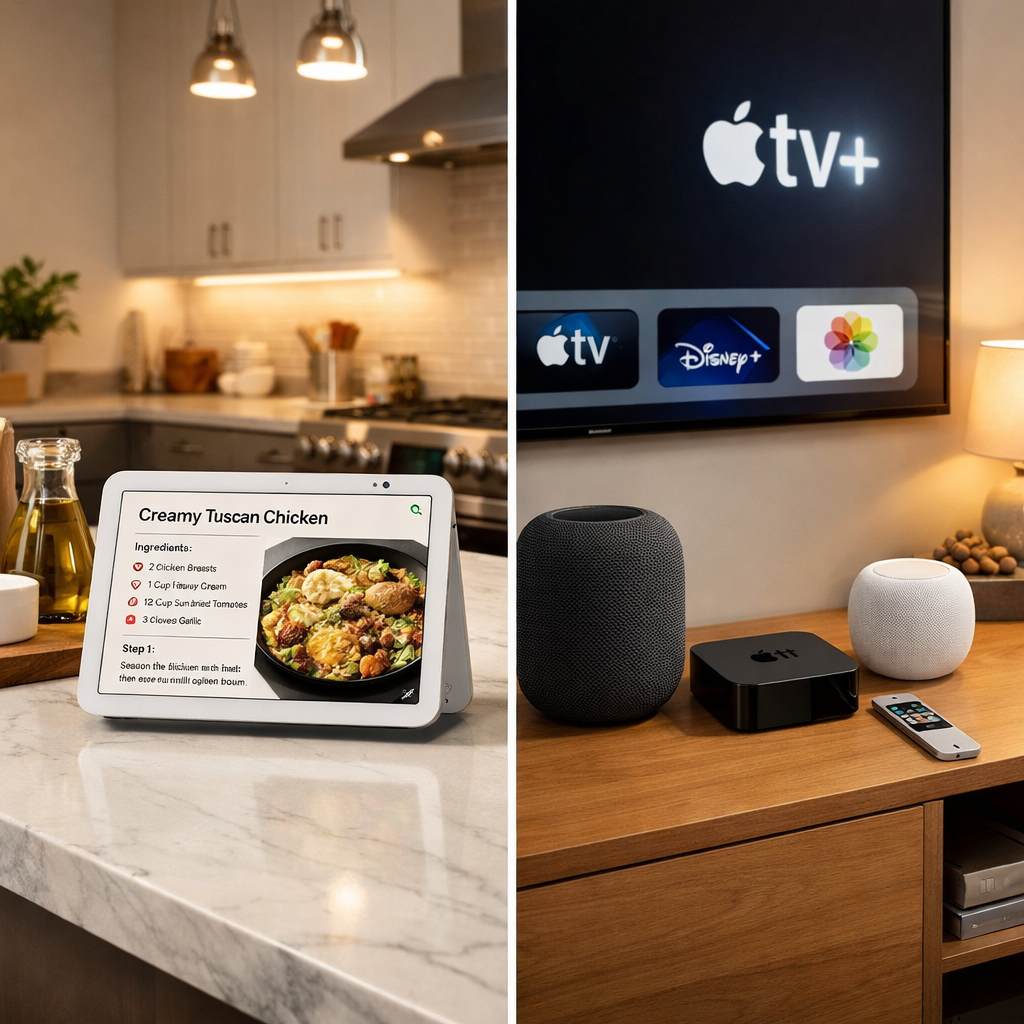
After spending a week with Apple’s new HomeView smart display and getting early hands-on time with the fourth-generation Apple TV 4K, our first impressions highlight strong design, useful features, and important trade-offs—especially in value.
Exploring HomeView: Form, Function, Frictions
The HomeView is Apple’s ambitious entry into the smart display category—a 7-inch square Liquid Retina screen powered by the A18 chip, with built-in Siri AI and a Center Stage 12-MP camera for face recognition. It comes in two versions: a tabletop model with a speaker base including a woofer and passive radiators, and a wall-mount-only model priced the same but lacking the richer audio hardware. The device offers vivid build quality, premium materials, and an overall design that turns heads. But the square aspect ratio—and relatively thick bezels—make certain tasks like watching widescreen video feel constrained.
Audio performance lands between the HomePod mini and the full-size HomePod. The tabletop version in particular delivers good bass, solid volume, and clarity—enough for music, podcasts, or background sound without distortion. Video, however, often ends up in wide letterboxing due to the square screen—part of the compromise of this form factor.
On the interface side, HomeView leans heavily on smart faces—customizable displays showing widgets, photos, home-control panels, or calendars when idle. It pulls together user data via face and voice detection and links with your iPhone or iPad for accessing apps and personal context. Typed messaging, web browsing, and iPhone-app extensions control some media. But there’s no App Store—apps not natively supported require a connected Apple device. For recipes, the device shines: webpages of cooking instructions can be converted into step-by-step checklists, a feature well suited to kitchen counters.
Still, HomeView feels like a first-generation product in many ways. Some widgets are limited, home-control isn’t always as responsive as expected, and occasional quirks—like sensory false positives with device hand-off—are frustrating. Price is another sore spot. Both versions cost $299, but the wall-mount lacking the base’s woofer makes the tabletop model clearly more compelling.
Apple TV 4K (4th Gen): Chips, Siri, and Surround Sound
The updated Apple TV 4K introduces Apple’s A19 chip, which boosts CPU performance by about 50% and doubles GPU capabilities over the previous generation. The physical design carries over, but the remote has a built-in speaker so you can find it via sound, and the set-top box itself has far-field mics for hands-free “Hey Siri” commands—even while audio is playing through the TV. It also supports pairing with four compatible HomePod speakers for a true surround sound setup. These enhancements give the device a lot to offer, notably for users already owning HomePods.
Yet some enhancements are more incremental than transformative. Many of the benefits are most noticeable for those with older Apple TVs. If you already own a recent model (2nd- or 3rd-gen), the speed improvements are there, but not always dramatic enough to justify the higher $299 price tag.
Siri AI features are central in both new devices. In Apple TV, expanded AI powers quick content suggestions, deeper queries, and voice activation without remote use. But it remains in beta—follow-up questions can be hit or miss, and context matters. It works best when your Apple devices are modern and authenticated to your account.
Does It All Add Up?
Between HomeView and the new Apple TV 4K, Apple is pushing hard into devices driven by AI, voice, and home integration. HomeView gives you a sleek, responsive smart display that excels in control, glanceability, and ambient use. Apple TV offers upgraded chip performance and better voice integration, expanding options for home theater enthusiasts who already own HomePods.
At $299 each, though, these devices land in a premium price tier. For many, especially those already invested in Apple gear, they’ll offer meaningful value—but people with newer devices may find fewer reasons to upgrade. And key features still need polish. If your priority is smart display video, flexible app support, or home control from a distance, you may want to wait until software matures.
What this means: HomeView marks Apple’s long-anticipated entry into this category, combining display, smart home control, and AI. It’s a solid step forward—but its path is more evolutionary than revolutionary. Significant wins in design and integration are tempered by compromises in form factor and the high cost of wall-mounting and full features. Over time, software updates could close many of the gaps. For now, the decision depends heavily on whether those hardware and design trade-offs align with how—or where—you’ll put the device.