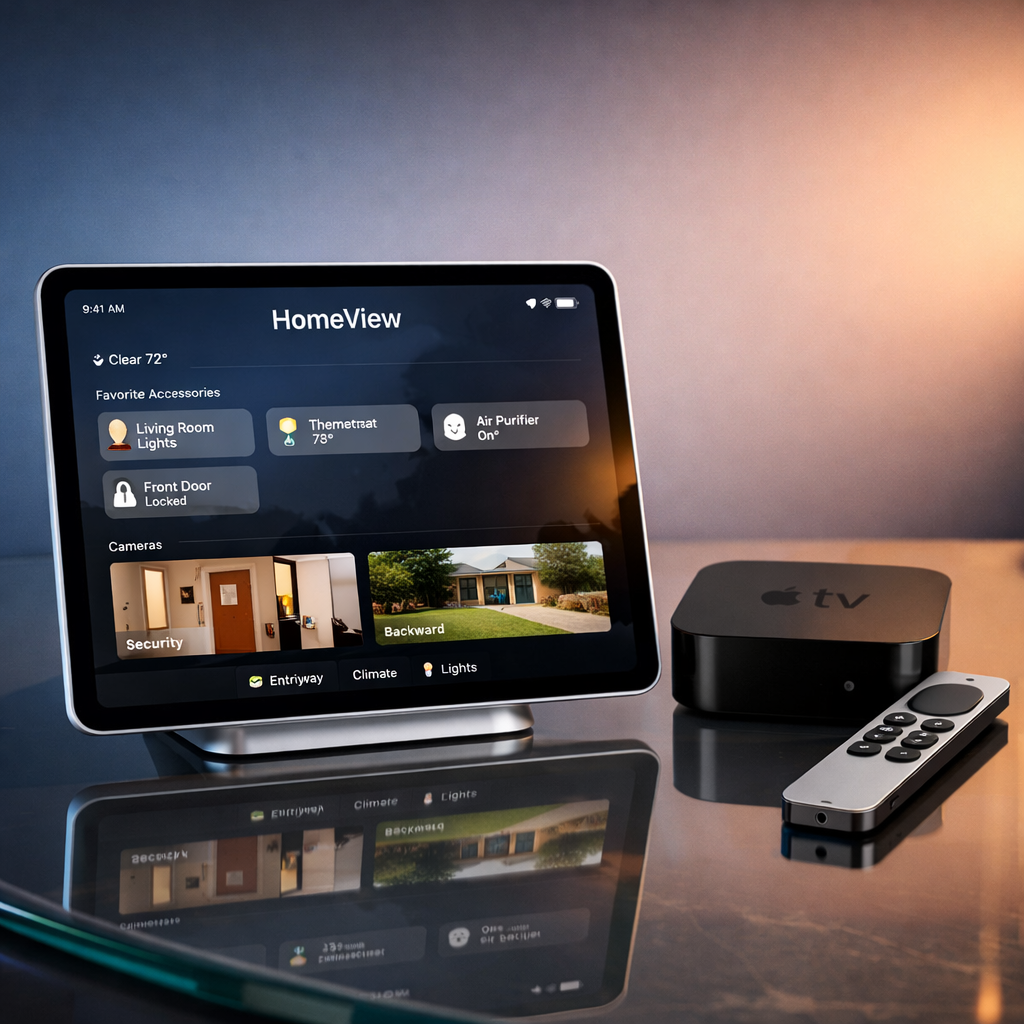
Today, Apple rolls out two eagerly awaited devices: the new HomeView smart home display and the revamped Apple TV 4K. Both officially launch on Friday, November 13, 2026, after opening for pre-orders in mid-October. Their arrival represents the first time these products are available on this date.
HomeView: A Smart Hub for the Home
The HomeView is Apple’s entry into the smart display market. It’s powered by Apple Intelligence and integrates Siri AI, offering users a centralized interface for entertainment and home automation. It will be sold in two formats: a tabletop version and a wall-mounted model. One of its key features is facial recognition, enabling up to six people in a household to have personalized Home Screens. The price tag for HomeView is set at $299.
However, Apple plans to hold off on offering HomeView in the European Union initially. The reason is regulatory: Siri AI isn’t yet approved for use on iOS in EU markets. Apple says it’s engaging with EU authorities to resolve this, though no timeline has been disclosed.
Apple TV 4K Gets Smarter
The new Apple TV 4K model offers several upgrades over its predecessor. It now runs on the A19 chip and adds Siri AI for voice-assisted control. The remote gets smarter, too, featuring built-in Find My capabilities. On the audio front, users can take advantage of four-speaker surround sound when paired with the HomePod mini 2, and it comes equipped with 128 GB of storage. Pricing also comes in at $299.
Both products were first revealed during Apple’s October 13 event, where the company also introduced the HomePod mini 2, which launched earlier on October 30. These new devices mark Apple’s expanding focus on devices driven by artificial intelligence and enhanced user interaction.
Why it matters: The launch of HomeView and the upgraded Apple TV 4K underscores Apple’s push into AI-powered hardware. With devices designed to better integrate Siri and Apple Intelligence, Apple is positioning its ecosystem to make voice, smart home control, and personalized experiences more central. Potential buyers in the EU may wait longer due to regulatory barriers, so keeping an eye on how that plays out could be key in evaluating Apple’s global AI strategy.