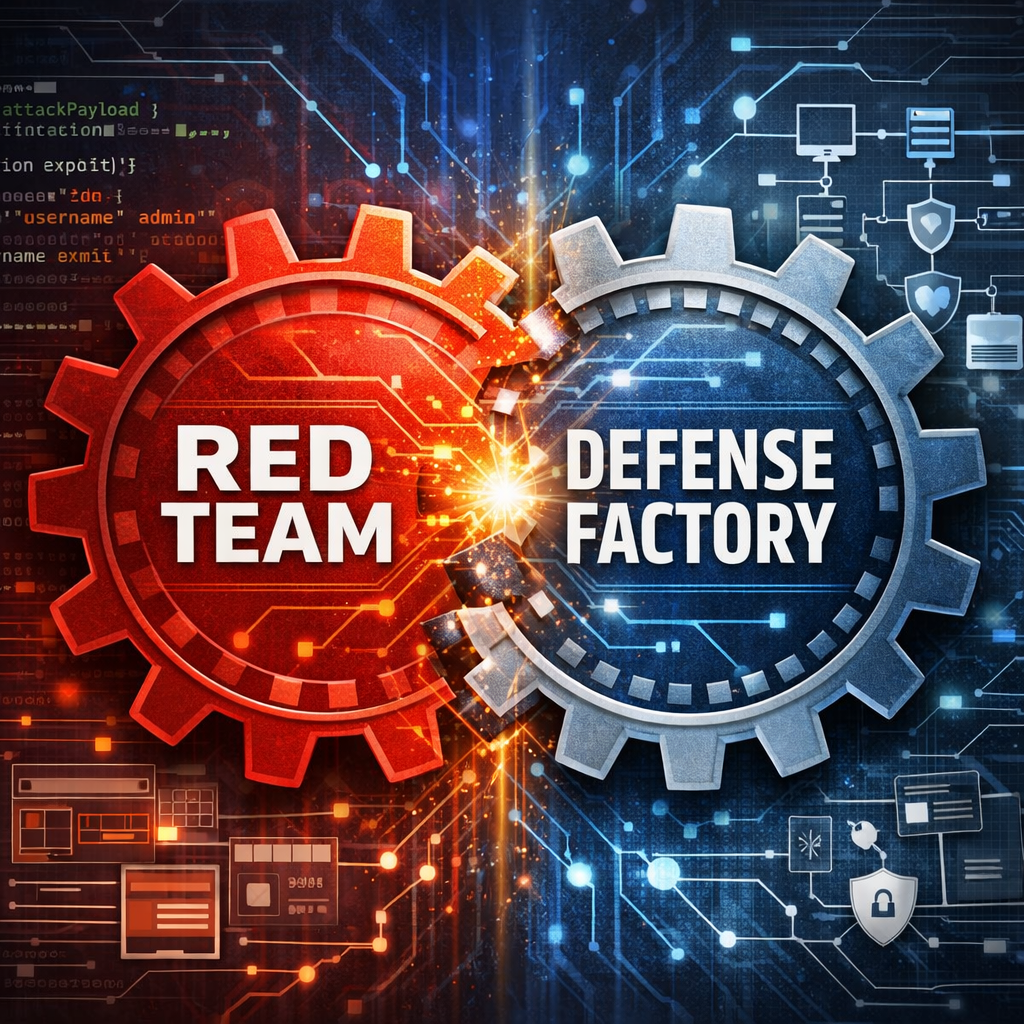
OpenAI has rolled out two new additions to its Daybreak security platform—Daybreak Red Team and Daybreak Defense Factory—aimed at automating the detection, validation, and remediation of vulnerabilities in web applications. These tools were unveiled on November 12, 2026 at OpenAI’s Cyber at the Frontier event. Rather than simply flagging risks, the goal is a unified workflow where engineers identify issues, test exploitability, and deploy fixes with evidence—all while keeping human oversight intact.
How the Tools Work
Daybreak Red Team is currently in early access. It uses OpenAI’s AI models to continuously scan web applications, analyze source code, and explore possible attack paths. Rather than stopping at warnings from code scanners or bug bounty reports, it assesses whether a vulnerability is both reachable and exploitable in practice. Once a flaw is confirmed—whether from an internal scan or external disclosure—Red Team can also evaluate whether proposed patches fully address the risk.
Daybreak Defense Factory builds on those confirmed findings. It investigates potential flaws using OpenAI’s cyber models (including the upcoming GPT-6 Cyber), generates patch proposals, and bundles them with tests demonstrating the fix works. Engineers then receive merge-ready pull requests for review. Defense Factory doesn’t push fixes live—human approval remains a required step before changes reach production, ensuring safety.
Positioning and Practical Value
This pair of tools aims to bridge the gap between mere vulnerability discovery and practical security remediation. Historically, security workflows involve static analysis tools or scanners that produce warnings—but many of them are false positives, lack context, or require manual digging. OpenAI’s approach is to automate the heavy lifting: test whether risks are exploitable, generate patches, and provide evidence—all while keeping engineers in the loop.
Red Team and Defense Factory join earlier OpenAI offerings like Codex Security—an agent built for project-specific security context and patch generation—and Codex Security Cloud, which constantly monitors repositories and code changes for vulnerabilities, deduplicates findings, and prepares fixes. This indicates a trend toward embedding security into every stage of software development, not just at review or pen-testing checkpoints.
Still, the impact depends on real-world reliability. Key questions include whether the tools can produce accurate exploitability assessments, patches that are trustworthy, and results that reduce manual investigation time rather than simply increasing the volume of alerts. And at present, availability is limited: Red Team is in early access, and Defense Factory proposals require human vetting.
What this Means
For security teams, the most significant upgrade isn’t just automation—it’s evidence. A patch with proof is far more actionable than a warning. OpenAI’s launch signals a push toward continuous security, where discovery, verification, and remediation are part of a single flow. What to watch: how seamlessly these tools integrate with existing pipelines, how accurate the exploit-assessment becomes, and whether patch quality holds up under pressure.