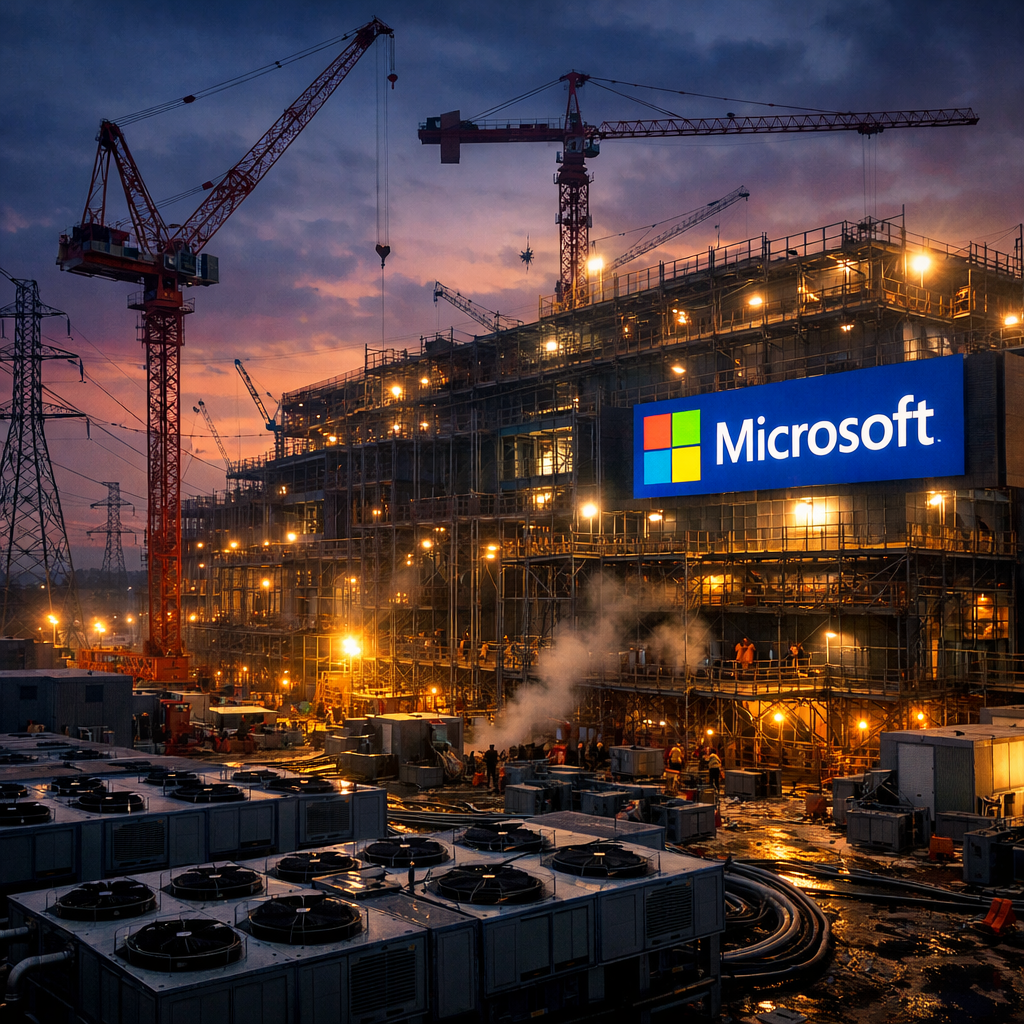
Nebius has unveiled plans to spend between $40 billion and $45 billion in capital expenditures (capex) in 2027—far exceeding analyst expectations—as it leans heavily into the neocloud model. The AI infrastructure company aims to fund this buildout through customer prepayments and loans secured by long-term contracts, a strategy that already involves significant risk given ongoing construction and permitting delays.
Microsoft Deal Slippage Underlines Risk
A centerpiece of the risk is Nebius’s $19.4 billion AI capacity contract with Microsoft for its Vineland, New Jersey data center. Only just over half of the promised capacity is expected by end of 2026, with the remainder pushed into Q2 2027. Responsible for the delay is DataOne, the third-party operator, which is phasing out temporary power generation ahead of its switch to Bloom Energy fuel cells.
Regulatory troubles have piled on. The data center facility was fined $1.1 million by New Jersey regulators for operating natural gas generators without proper permits. Nearby residents are also pursuing a lawsuit over persistent generator noise. Compounding these issues, Microsoft’s contract allows it to terminate impacted services if Nebius doesn’t meet delivery obligations—tied closely to both deadlines and whether alternate capacity is supplied.
Financing Everything on Prepayments & Contracts
Nebius’s buy-in behind its 2027 plan is based on a foundation of customer prepayments and asset-backed financing. Up to 85% of the $40–45 billion capex could be covered this way, particularly through investment-grade contracts from major players like Microsoft and Meta.
Its cash position stood at $7.4 billion at the end of Q3, and the company reported $981 million in revenue—a jump of 571% year-over-year. However, the 2026 revenue forecast has been tempered, trimmed by $200 million to $3 billion, largely because third-party builds are lagging. Nebius expects pre-tax breakeven in Q4 2027.
Where the Growth Is Real
While third-party build projects like the Vineland site are in flux, Nebius’s own data centers—where it has direct control over timelines—appear to be meeting or beating their rollout targets. Most of its future capacity is expected to come from these owned sites.
Deals signed in Q3 featured stronger up-front payments and more favorable terms. In some cases, prepayments in that quarter fully covered the associated capex, a notable improvement from Q2 when they covered just 50–60%. The average payback period for comparable 1–3 year contracts also improved, from 1 year 10 months in Q2 to 1 year 7 months in Q3.
Nebius has also locked in multiple enterprise and AI-native customers with long-term contracts, including novel five-year deals, expanding its base beyond hyperscalers. The company’s inference platform, known as Token Factory, is approaching a multi-hundred-million-dollar run rate, with a 17× growth quarter-over-quarter in Q3.
Still, concerns over execution speed are pressing: Microsoft is reevaluating neocloud relationships and recently reduced its planned use of some third-party providers due to power availability, permitting, or delays. The uncertainty is pushing companies in Nebius’s position to either double down or risk being squeezed as performance becomes the deciding factor.