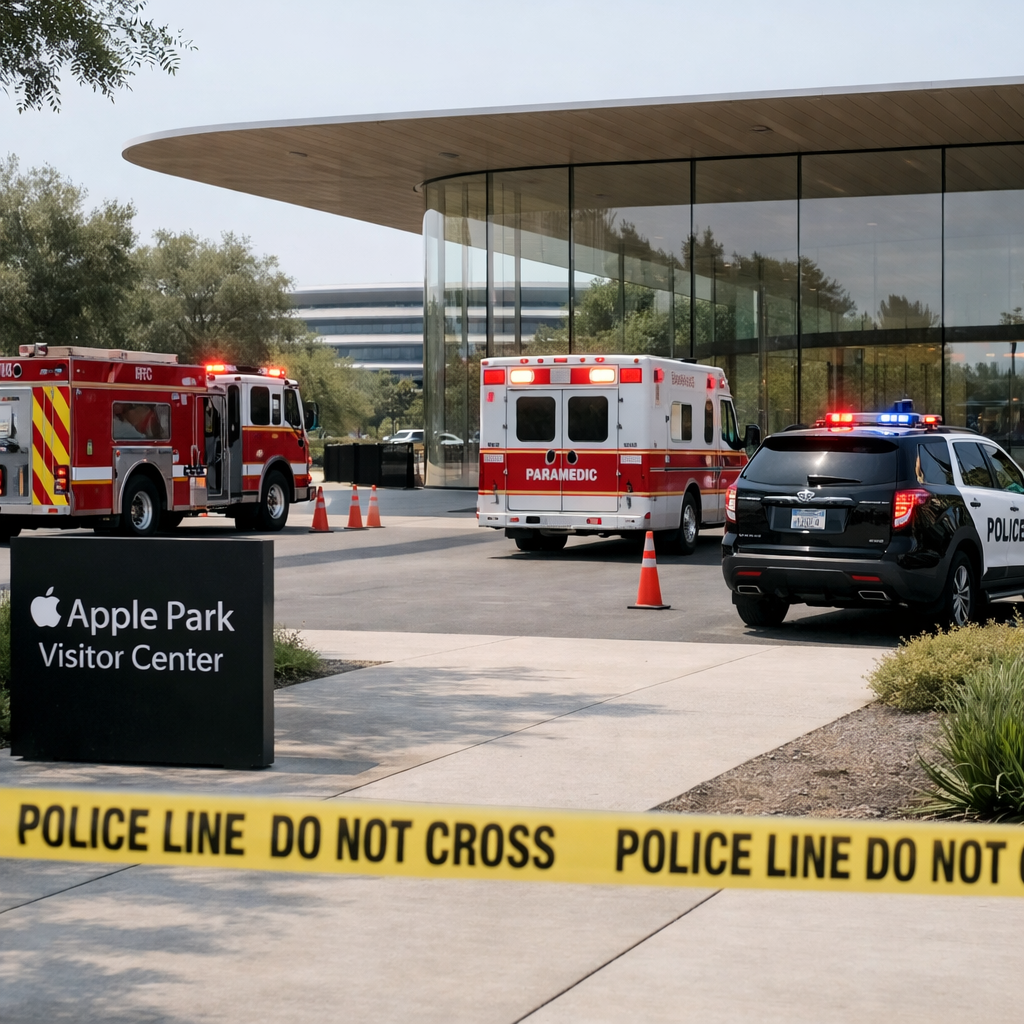
Apple has issued a statement following a fatal traffic collision involving one of its employees near its Cupertino headquarters. Late last week, employee Eric Chen Su was arrested and initially charged with suspicion of gross vehicular manslaughter after a high-speed crash outside the Apple Park Visitor Center. The incident has since escalated, with charges upgraded to murder and assault with a deadly weapon. The two-year-old child struck in the crash later died; her babysitter was also hurt and both were taken to hospital. Mr. Su suffered only minor injuries. The case is now awaiting court proceedings.
What Happened
The crash occurred shortly after noon last Friday at the intersection of North Tantau Avenue and Pruneridge Avenue, directly adjacent to Apple Park’s Visitor Center. Authorities say Mr. Su was traveling between 90 and 100 mph when he rear-ended a stopped vehicle occupied by a woman and her toddler. Emergency responders transported both victims to a local hospital; despite treatment, the child died. The babysitter’s condition was described as serious.
Apple’s Reaction
In its statement, Apple expressed deep sorrow over the tragedy. The company said its “hearts are broken” and extended thoughts to all who are grieving, while also thanking first responders for their care and support. Apple did not immediately clarify whether Mr. Su has been placed on leave or terminated, and declined to comment further, noting that legal proceedings are now under way.
This event has gripped the Cupertino community given its proximity to Apple Park and the severity of the charges. Gross vehicular manslaughter is a serious charge, but the upgrade to murder and assault with a deadly weapon raises the stakes significantly. Legal experts note that those upgraded charges indicate prosecutors believe the behavior was intentional or exhibited extreme recklessness.
Apple’s response arrives amid broader conversations about corporate responsibility and public safety. With large campuses like Apple’s often surrounded by busy roads, questions of staff behavior, company oversight, and employee conduct become especially relevant. How Apple addresses internal policies around employee conduct during off-duty hours may come under scrutiny.
Analytically, this story underscores the legal, moral, and public relations crossroads a corporation faces when an employee is implicated in a tragedy. Apple’s watershed moment will likely be less about this specific case and more about how transparent it remains, what actions it takes internally, and whether systemic changes follow—especially given high stakeholder expectation around accountability.