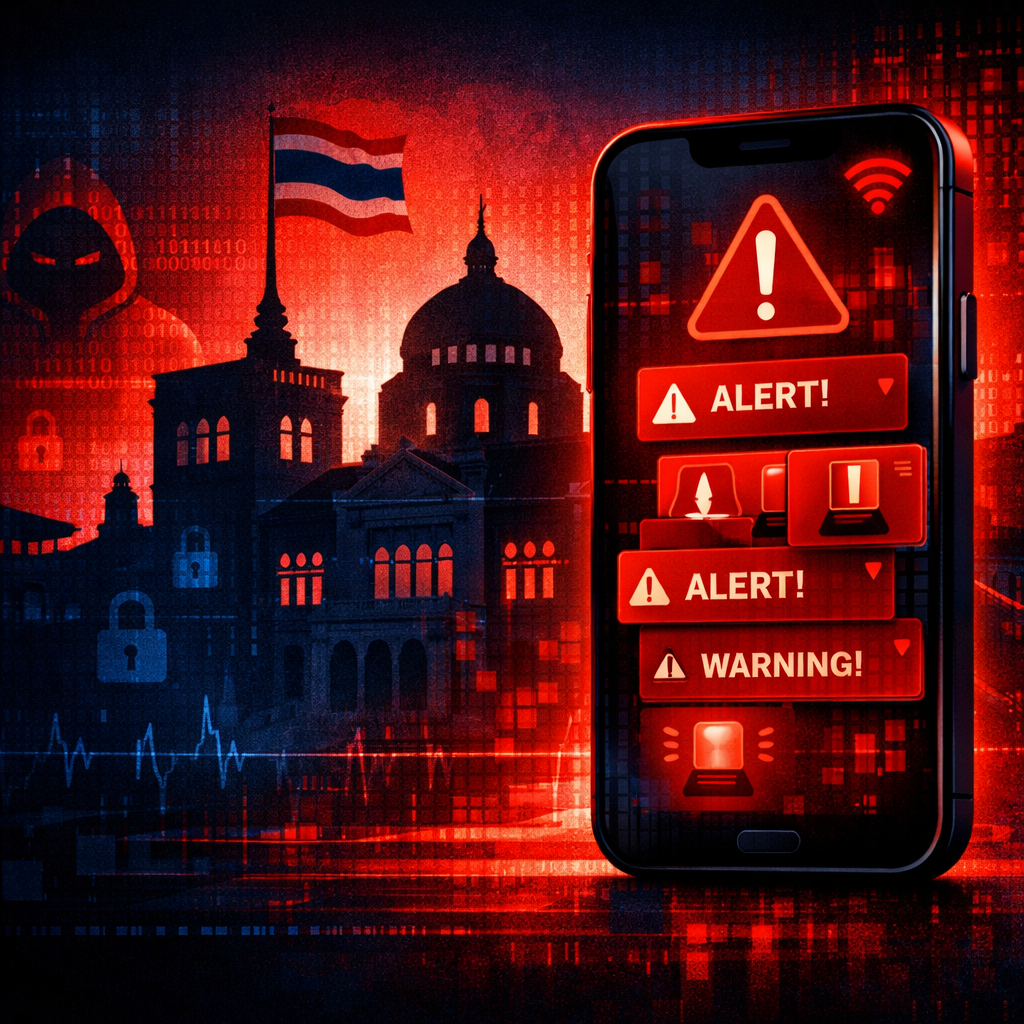
As apple devices issued high-confidence spyware alerts to Thai politicians this October, Thailand’s government has formally pressed Apple for transparency and support. The appearance of these warnings has prompted a series of meetings and investigations aimed at boosting the nation’s digital defenses.
What triggered the probes?
The alerts reached political figures’ iPhones on October 29, 2026—coinciding with similar warnings sent to officials in Germany. These notifications followed a broader push in August of that year, when Apple’s systems detected spyware incidents spread across more than 110 countries. Thailand’s Ministry of Digital Economy and Society has labeled the situation an unprecedented threat to national cybersecurity.
How Thailand is responding
Apple representatives have met with key Thai institutions—including the Digital Economy Ministry, the National Security Council, and the country’s cyber agency—to map the scope of the reported attacks. These talks are part of a larger strategy to build a comprehensive understanding before drafting a response plan. While the content of the meetings has not been publicized, officials say they plan to have a strategy in place by the week of November 16, 2026. Hardware and software industry leaders are being brought into the coalition to help shape the response.
What Apple says
Apple classifies the alerts as “high-confidence notifications” tied to “mercenary spyware”—softer than governmental surveillance, but far more sophisticated than run-of-the-mill hacking. These notifications are issued when the company believes an attack is plausible, but cannot offer absolute proof. Since launching this alert system in 2021, Apple has sent them to users in over 150 countries.
Thailand’s case underscores growing buyer distrust over global cell phone security in the face of state-targeted spyware. It’s one thing for Apple to flag suspicious behavior; it’s quite another for governments to demand answers—and perhaps accountability.
Analysis: This episode illustrates how technology companies are becoming central players in geopolitical and national security debates. Apple’s spyware alerts system reflects a growing responsibility to protect users, but also exposes tensions when those users are state actors who demand transparency. What Thailand hopes to oversee—clarity, consistency, and perhaps even reparations—may shape future norms for how private firms defend against espionage threats. As the deadline of mid-November looms, there’s a lot riding on what Thailand’s action plan will reveal: both for domestic cyber policy and for how major tech firms engage with national security concerns globally.