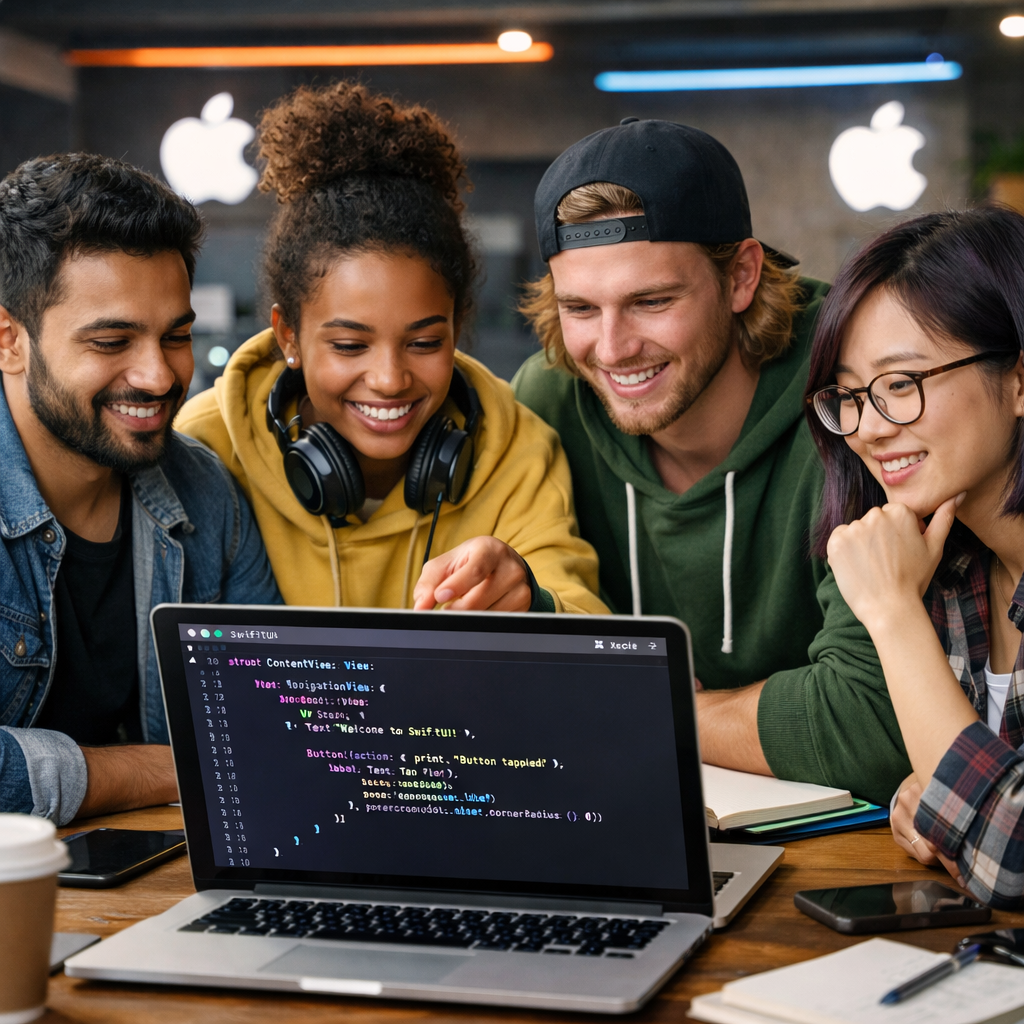
Apple has officially launched the Swift Student Challenge for 2027, inviting young developers from around the world to submit app projects between February 8 and February 28, 2027. Participants can build an app in Xcode or Swift Playgrounds, with judges expecting submissions that can be experienced in under three minutes. This year, submissions may be for any Apple platform—not just iOS, marking a major change.
What’s different in 2027
For previous editions of the Swift Student Challenge, the focus was limited to iOS-powered apps. Now, in a shift that broadens possibilities, students are encouraged to create apps for any platform in Apple’s ecosystem. Whether targeting macOS, visionOS, watchOS, or other environments, entrants have far more choices than in past competitions.
To help teams prepare, Apple is offering tutorials and online “Meet with Apple” sessions to highlight its newest tools—especially those related to AI, machine learning, spatial computing, and SwiftUI. Develop in Swift resources are also expanding, helping students integrate modern coding intelligence and creative features into their work.
Judging, rewards, and what’s next
Submissions will be evaluated based on innovation, creativity, social impact, or inclusivity. Top winners—“Distinguished Winners”—will receive an invite to Apple Park in Cupertino to attend WWDC 2027 in person. That event, which hasn’t officially been dated yet but traditionally takes place in June, is expected to be the stage for unveiling iOS 28, iPadOS 28, macOS 28, and other updates.
Full rules and eligibility criteria are posted on the official Swift Student Challenge website. Entry deadlines are firm—projects must be submitted within the February 8 to February 28, 2027 window. Be sure to review the format requirements, including the three-minute experience rule.
What this change shows is Apple upping the stakes for student developers. By opening submissions across more platforms, the company is signaling a push toward broader creativity and cross-platform fluency among new coders. For students, this offers a chance to build for a platform that aligns with their strengths—whether that’s immersive spatial tools, wearable experiences, or desktop capabilities. Applications that excel in purpose—be it social good, inclusivity, or sheer inventiveness—will stand out. As WWDC approaches, this challenge will be closely watched as a barometer of where Apple believes its developer ecosystem is headed.