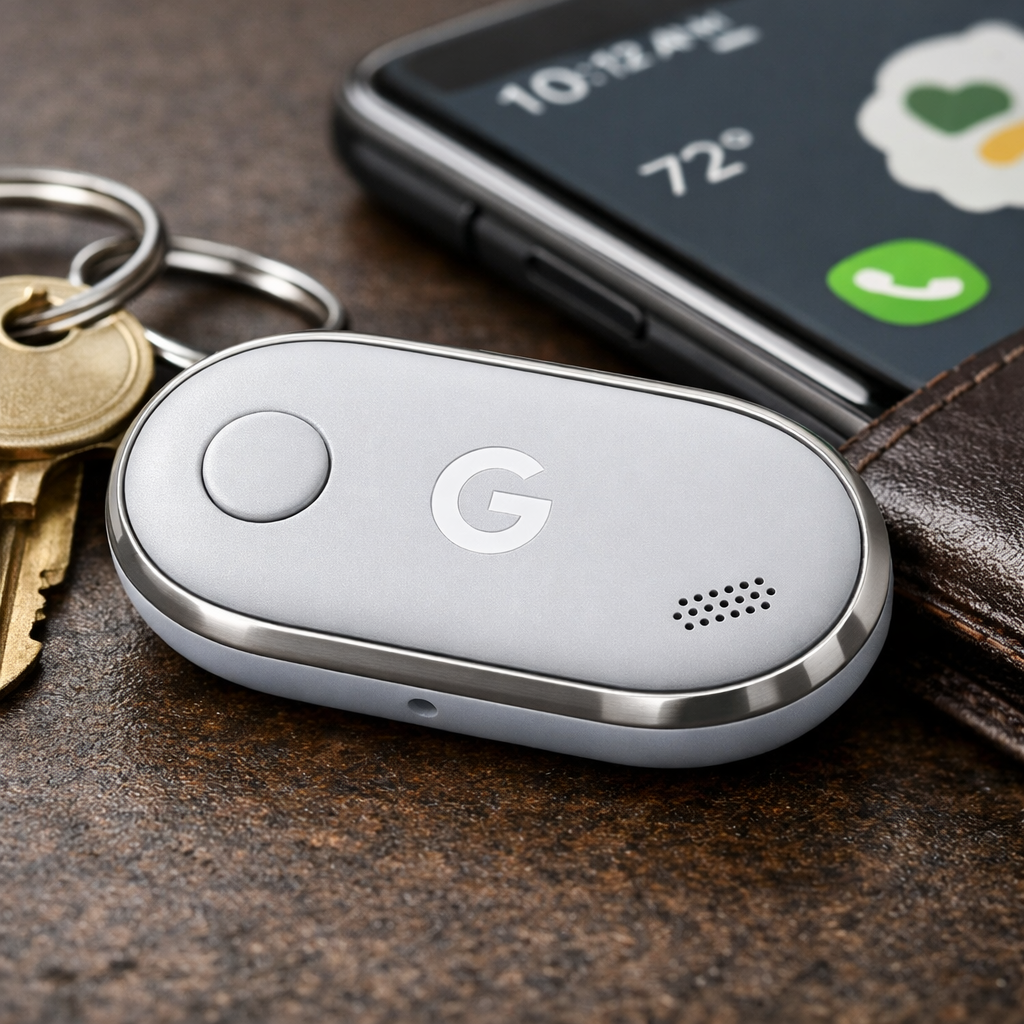
Google’s Pixel Tag emerges as the most compelling Find Hub tracker available, offering polished features, Ultra-Wideband (UWB) precision, and thoughtful software integration. After a first week’s use, it impresses in pairing experience and smart functionality—though not without a few missing hardware conveniences.
What the Pixel Tag Gets Right
Pairing the Pixel Tag to an Android phone is smoother and noticeably faster than many rivals. Like other Find Hub trackers, it connects via Bluetooth and UWB, but Google adds standout extras that elevate the experience. A dedicated button lets users ring the connected phone—even if it’s silenced—while visible ringer settings allow for quieter alerts in close quarters. The overall process feels well thought-out and polished.
Precision finding with UWB works well in practice, especially within a range of 10–12 feet, when directional cues still operate reliably. For locating objects in bags or nearby pockets, this is excellent. Larger distances revert to more generic guidance.
The hardware earns its keep: a thin, oval tag made of metal and polycarbonate carries an IP67 rating, fit for everyday mobility. Battery comes from a standard CR2032 coin cell rated to last over a year. Google also made the battery compartment easier to access than in some competing models.
Where It Misses the Mark
The design’s sleek profile is also its weakness in practice—it lacks any built-in clip, strap, or loop for mounting on keys or bags. Google offers third-party accessories like Bellroy’s rope-style silicone case to fill the gap, but it’s a letdown that they’re necessities rather than add-ons.
Another issue is the Find Hub network itself. Despite Google’s efforts to strengthen its device tracking infrastructure and re-enable functionality in more settings, past hardware and software decisions have left trust gaps. Users report that the network’s coverage and reliability still vary depending on location and crowd density.
Specs & Price Snapshot
The Pixel Tag is 1.8×1.1×0.2 inches, weighing about 0.4 ounces with battery (0.3 without). It features Bluetooth Channel Sounding, UWB for precision finding, and a built-in speaker rated loud enough at max volume, yet with a genuinely low volume setting. It draws power from a replaceable CR2032 coin cell, with Google’s estimate of over one year’s battery life, and is IP67 water and dust resistant.
The tag sells for $29 for a single unit, or $99 for a four-pack. It becomes available on November 11, 2026.
Software features also shine: left-behind alerts, exclusion zones, and the ability to quickly adjust ringer volume from within the tag’s interface add real-world utility. These are small touches, but they add up—there’s none of the app-switching or clumsy workarounds seen in many competitors.
In short, for Android users who want an AirTag-like tracker but with better integration and newer tech like UWB and Bluetooth Channel Sounding, the Pixel Tag delivers on almost all fronts.
Analytical Perspective: The Pixel Tag signals a turning point for the Android Find Hub ecosystem. Google has long lagged Apple in the tracker space, but this hardware finally feels competitive, not just derivative. That said, accessories and network robustness will make or break the user experience—this is less about specs and more about ecosystem execution. As travel and mobility pick back up, this tracker’s strengths and its outstanding trade-offs will become much clearer. Users should watch for real-world performance after several months, especially battery behavior and Find Hub reliability in sparsely connected areas.