Security operations centers (SOCs) often face attacks that only become visible after several deceptive steps—from a benign-seeming PDF to hidden phishing flows. Analysts frequently spend hours or days following redirects, browser activity, network logs, and infrastructure that may point to the real threat.
What’s changing the game is AI-powered malware analysis, which stitches together attack execution, interactive inspection, threat intelligence, and AI-assisted reporting. This approach helps security teams surface malicious behavior faster and focus efforts where they matter most.
Tracing the Full Attack Chain Automatically
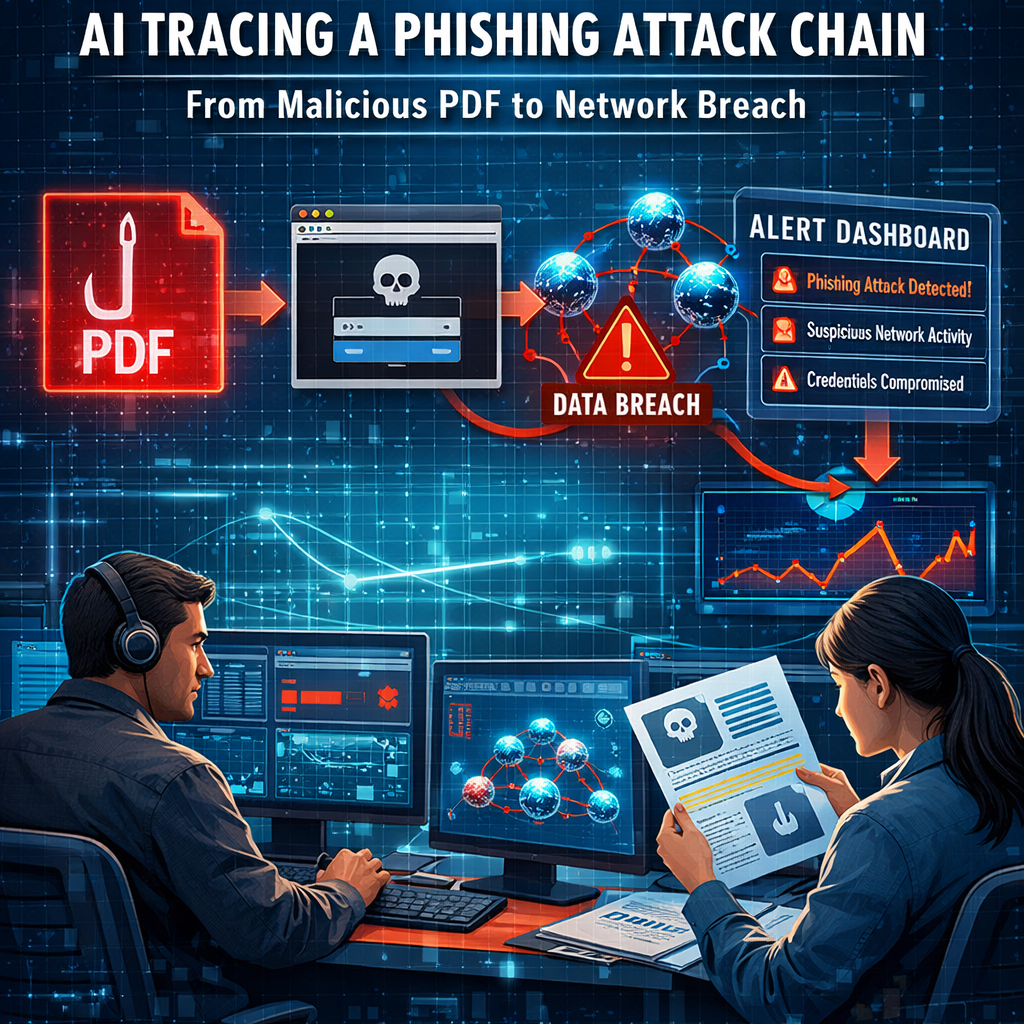
One obstacle in phishing investigations is that malicious payloads often don’t appear immediately. A document might link to a CAPTCHA page, which then leads to OAuth phishing—all without showing any obvious signs up front. An investigation using ANY.RUN’s interactive sandbox reveals exactly that.
Starting with a PDF hosted on a trusted domain, the sandbox follows the embedded link, navigates the CAPTCHA barrier, and eventually captures the phishing flow through Microsoft OAuth. As each step runs, behavioral and network data get logged, giving analysts insight into URLs, connections, and suspicious artifacts—not just the initial file.
Even though much of the workflow is automated, humans stay in control. At any stage, analysts can override, dig deeper, or explore alternate paths without restarting the investigation. This is especially useful when user interaction is a necessary trigger for the hidden parts of an attack.
Going Beyond the Popup: Threat Infrastructure & Context
Detecting a phishing page only solves part of the problem. Uncovering related infrastructure—domains, IPs, past attacks—can reveal whether the same campaign has been active elsewhere. ANY.RUN’s Related Threat Context feature surfaces prior sandbox analyses alongside new indicators, making it easier for analysts to connect the dots.
In one case, examining a domain called slybee[.]com tied it to over 70 investigations, 29 URLs, 8 IP addresses, and classifications linked to SkyW4lker phishing operations. That context lets SOC teams dig through SIEM logs, EDR telemetry, DNS activity, and proxy records efficiently.
From Evidence to Actionable Intelligence
Once malicious activity is confirmed, turning complex evidence into useful reports is time-consuming. Analysts sift through URLs, network behavior, threat classifications—all of which may differ across files and investigations. ANY.RUN’s Tier 1 report bridges that gap by automatically summarizing key behavior and suggesting response actions grounded in frameworks like MITRE ATT&CK.
This report doesn’t replace human expertise but gives Tier 1 analysts a concise, structured base. Tier 2 teams can pick up where Tier 1 left off, without repeating every discovery step.
Strengthening Detection and Reducing Operational Load
Collecting indicators of compromise—malicious URLs, behaviors, domains—isn’t enough if they aren’t integrated across detection systems. AI-powered feeds pull verified indicators from real investigations and feed them into SIEM, SOAR, threat intelligence platforms via API, SDK, or formats like STIX/TAXII.
These integrations enrich alerts, automate threat hunting, and help SOCs stay ahead of emerging malware or phishing campaigns. The payoff: less manual work, fewer missed threats, and better ROI from existing security infrastructure.
Reported results show meaningful gains: 21 minutes shaved off average response time per incident, up to 20% fewer Tier 1 workload items, a 30% drop in escalations to Tier 2, and as much as 58% more threats detected by catching those hidden inside multi-step campaigns.
This evolution shows that with smart tooling, security teams don’t need infinite resources—they need better processes and automation. For SOC leaders trying to sharpen defenses without hiring endlessly, AI-assisted analysis delivers measurable gains in speed, detection, and cost control.
Why This Matters: As phishing and malware attacks grow more complex and stealthy, AI-powered tools are enabling SOCs to not just react, but proactively uncover threats deep in attack chains. Moving forward, the biggest wins will come from integrating AI analysis with threat intelligence and improving alignment across SOC tiers. Organizations should watch for tighter ecosystem integration, better contextual reporting, and advances that make detection smarter without adding noise.