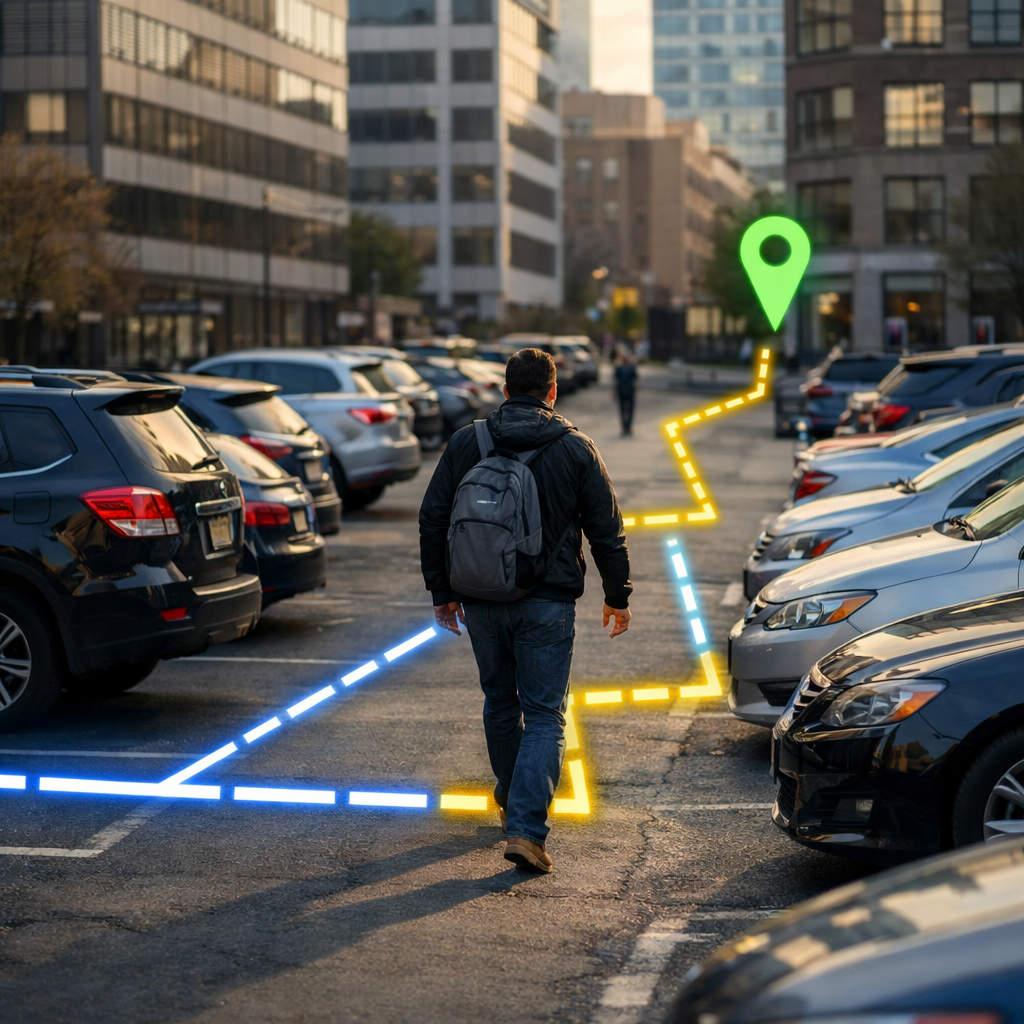
Apple is reportedly working to update Maps so your trip’s ETA includes more than just the drive. Code discovered in iOS 27.3 suggests the app could soon estimate how long it takes you to park and walk from your car to the final destination. That could turn sometimes-misleading door-to-door times into something more realistic.
What’s Changing: Parking-Aware Routing
Currently, Apple Maps only tells you how long driving will take. But there’s often extra time needed to locate a parking spot and then walk from there—especially in busy cities. To bridge that gap, the new code shows something called a TimeToPark flag within the CoreRoutine module. When enabled, it tracks how long you’re near your endpoint before parking, plus the duration of the walk from the parked car to your actual destination. The system records both metrics per journey.
How It Works & Where It’s Headed
This isn’t official yet—it was uncovered by a code sleuth reviewing internal bits of iOS 27.3. The functionality relies on motion and location data running in the background to understand when you’ve arrived at your parking spot and when you start walking.
The goal is simpler: give users an arrival time that truly reflects how long they’ll take to get indoors—especially useful for events, restaurants, or tight appointment windows. It could impact how many people plan to leave early or select transportation options.
This isn’t the only navigation update in the works either. Separately, Waze and Garmin are teaming up on a cyclist safety feature. Under that plan, cyclists using Garmin devices who opt in will share live location data viewable by drivers on Waze—helping improve visibility and safety on shared roads.
More broadly, Apple stacking up to introduce a parking-aware ETA shows the company is tuning its navigation tools for realism and convenience. Users won’t just see when they’ll “arrive” in a car-only sense—they’ll know when they’ll actually be at their door.
Why it matters: real arrival predictions help avoid one of the most frequent frustrations of city driving—arriving “on time” only to circle blocks looking for parking. This feature could alter how we think about travel time thresholds, route planning, or even walking vs. driving decisions. To watch for: how well it handles multi-level garages, whether walking speed or mobility modes are taken into account, and how privacy is protected when tracking post-parking motion.