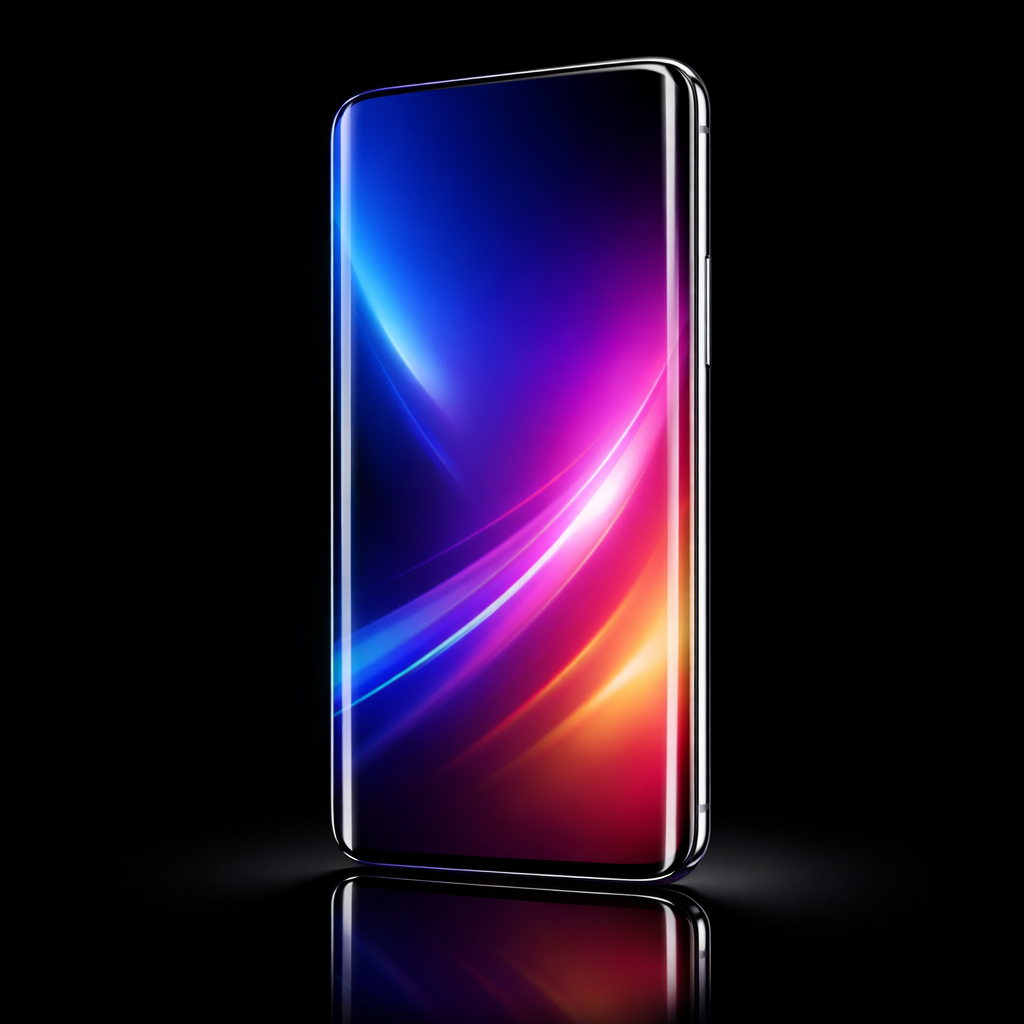
Apple is said to be gearing up for its most radical iPhone redesign since the iPhone X, in time for the 20th anniversary launch in September 2027. Leaks and supply chain chatter suggest changes across almost every component—from display to battery—and possible features that could redefine what people expect from a flagship iPhone. Here’s a breakdown of ten big rumored upgrades.
1. Glass Everywhere: Quad-Curved Design
One of the most talked-about changes is a display glass that gently curves along all four sides, creating an “all-glass” slab without visible edges. Reports suggest Apple is working with Samsung on an “equal-depth quad-curved” panel to realize this look, wrapping the display over a thin metal frame to hide it under normal use. While similar designs have been seen in Android devices, the goal here is shallower curves and subtle edge blending.
Currently, testing is underway, though manufacturing and image quality challenges remain major hurdles.
Also under consideration are display sizes around 6.41 inches for the standard Pro model and roughly 6.96 inches for the Pro Max, aligning with today’s Pro / Pro Max footprint.
2. Brighter, Slimmer OLED—Maybe
Apple has reportedly planned to use OLED panels that are thinner and brighter, using Samsungʼs Color Filter on Encapsulation (COE) process. That technology could reduce display stack thickness and improve light transmission, but analysts say its readiness may stretch past 2027—possibly 2029—casting doubt on its inclusion in next year’s model.
3. Vanishing Cutouts: Under-Display Face ID & Camera
Another major rumor is the possibility of moving Face ID components and the front camera fully beneath the screen, eliminating the final visible “notch” or cutout. Apple has already experimented with under-display camera tech on the inner screen of the iPhone Duo, though image quality was criticized. Testing continues, but it’s unclear if Apple will ship a fully cutout-free display in 2027. A smaller Dynamic Island or punch-hole alternative remains a possible compromise.
4. Solid-State Buttons
All physical buttons—side, volume, action, even camera controls—might be replaced with solid-state equivalents that use haptic feedback instead of mechanical movement. This could improve durability, reduce water ingress points, and further the illusion of a seamless glass body.
5. Apple’s Own Modem in U.S. Models
The company is said to be developing its own cellular modem chips—not just for international markets, but for U.S. units too. The modem, expected in 2027, aims to deliver faster speeds and stronger AI performance, potentially overtaking Qualcomm’s offerings. Some current iPhones already use Apple’s C2 chip outside the U.S., but Qualcomm still powers the U.S. version of the iPhone 18 Pro Max.
6. Custom Image Sensor & High Dynamic Range
Apple is prototyping its own stacked image sensor—replacing its long-time reliance on Sony—that uses LOFIC (Logarithmic Image Format) technology. The result could be higher dynamic range (up to ~20 stops) and improved low-light performance, if Apple can execute on both sensor design and image processing.
7. Next-Gen 2-nm A21 Chip
The processing heart of the 2027 Pro lineup is rumored to be the A21 Pro, built on second-generation 2-nanometer process technology. This would build upon this year’s A20 Pro designs, pushing performance, energy efficiency, and neural compute capability ahead.
8. Silicon-Anode Battery + On-Device AI Enhancements
Apple is exploring a silicon anode in its battery cells to store more lithium ions per gram—boosting capacity without increasing size. Paired with better memory bandwidth (rumored vertically stacked DRAM), this could unlock stronger on-device AI, fewer thermal constraints, and more sustained performance.
9. Two Sizes, Slightly Larger
While Apple is expected to maintain only Pro and Pro Max models for the 20th-anniversary iPhone, screen sizes are tipped to be modestly larger this time. Reports list approximately 6.41-inch for Pro and 6.96-inch for Pro Max, the latter marketed as essentially a 7-inch phone.
10. Feature Readiness & Risk of Delay
Despite all the exciting potential, many of these features are in early prototyping or testing phases. COE panels, under-display cameras, and completely cutout-free displays are frequently cited as facing delays or quality trade-offs. Apple’s plans remain fluid, and what shows up next fall could be a subset of what’s being developed now.
The iPhone 20 Pro and Pro Max, if even some of these rumors come true, would mark Apple’s boldest iPhone redesign in a decade. Between display tech, imaging, battery chemistry, and materials, it seems that Apple is aiming not just for incremental updates but a reinvention of its flagship line.
Analytical Take: The breadth of these rumors underscores how Apple is pushing the envelope—either to stay ahead in hardware innovation or to reset expectations in an increasingly saturated smartphone market. For consumers, this could mean waiting to upgrade until fall 2027, especially if you want the full suite of display, camera, and power enhancements. For competitors, Apple’s trajectory suggests the next battleground may center around display innovation, on-device AI, and material engineering. We’ll be watching closely to see which features make the cut when Apple finally takes the wraps off the iPhone 20 Pro.