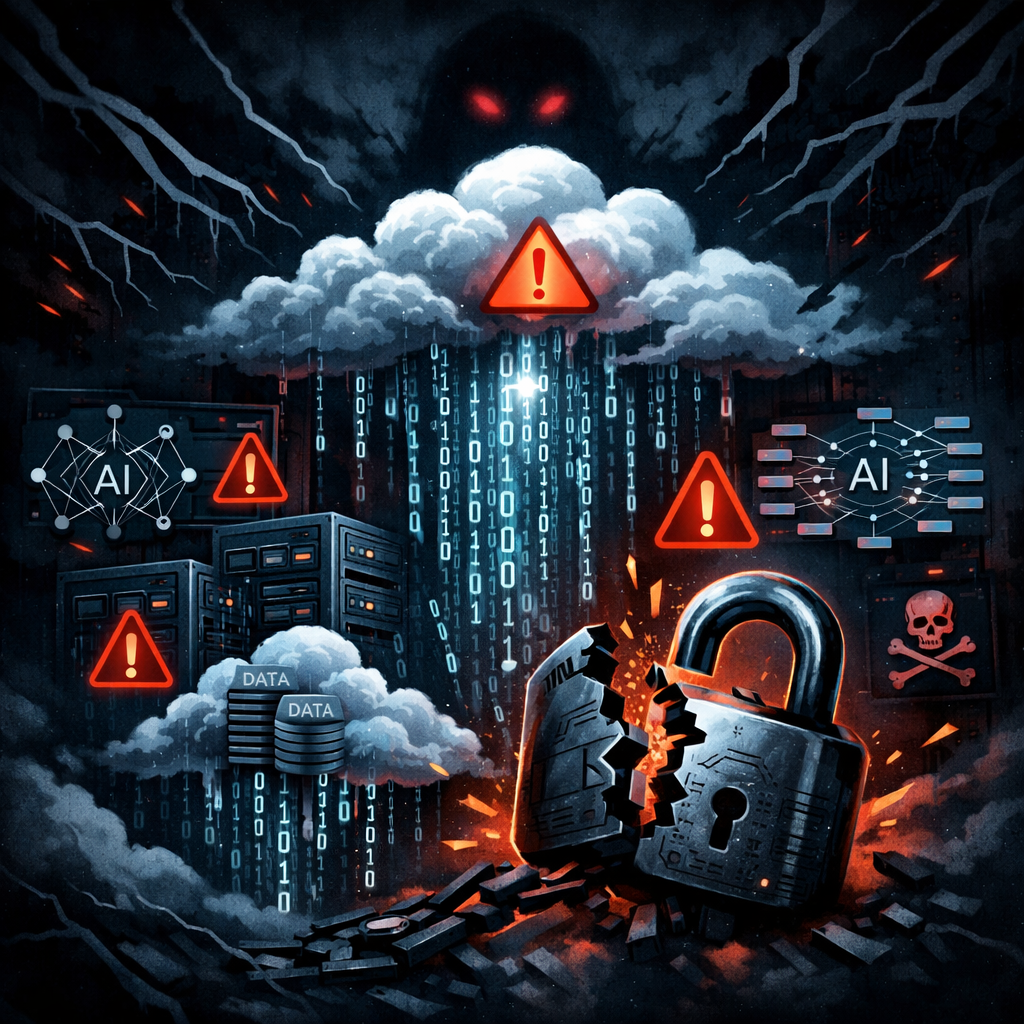
Fireworks AI has revealed a broader breach of customer data after an earlier disclosure, saying attackers accessed development machines via a cloud provider to steal account details, billing records, datasets, and partial model weights. This update, published on November 9, 2026, significantly expands on what was first reported in October.
How the Breach Happened
On October 23, a cloud provider hosting Fireworks AI’s R&D infrastructure suffered a security incident. The next day, the intrusion enabled attackers to reach Fireworks’ development machines, where they executed unauthorized workloads and accessed more customer data. Fireworks acted swiftly, plugging critical vulnerabilities upon discovery.
Another earlier attack, dated October 6, involved misuse of internal credentials. In that incident, attackers captured environment variables tied to evaluation jobs—potentially exposing API keys, tokens, and other secrets. Fireworks revoked compromised credentials and notified impacted users starting October 7.
What Was Exposed
The investigation found that exposed internal apps revealed resource identifiers, names, descriptions, and creation timestamps. Billing data compromised include shipping and billing addresses, invoices, payment history, balances, and credit usage. Fireworks clarified that it doesn’t store payment card numbers, and those remain unaffected.
In addition, for some customers only, attackers accessed portions of incomplete model weights and certain datasets. The breach did not lead to theft of whole production models. Functional services like Inference, Training SDK, or Nexus—which default to zero data retention—reportedly suffered no impact. The inquiry is still ongoing.
Aftermath & Response
Fireworks believes the breach is tied to a financially motivated cybercrime group seeking to profit through LLM-jacking: enabling illicit access to large language models via hijacked credentials. As part of its response, law enforcement has been notified, and Palo Alto Networks’ Unit 42 is handling forensic analysis. Affected credentials have been replaced, elevated privileges revoked, and affected systems isolated. Storage and network access protections have been strengthened.
The company has temporarily disabled self-service dataset uploads and downloads for certain services. Training SDK remains live; however, Lab-based training now runs in isolated environments with enhanced protections. Fireworks is personally notifying all customers whose data appears to have been accessed. Guidance for action includes rotating API keys, third-party credentials, and scrutinizing logs for signs of misuse.
Fireworks AI’s full statement emphasizes that customer card numbers were never stored and thus not compromised. The breach’s confirmed impacts concern credentials, datasets, billing data, and incomplete model artifacts—not the finalized production models.
This incident fits within a larger wave of risks facing AI platforms: leaked cloud credentials are one of the top attack vectors enabling access to sensitive model data and paid AI infrastructure. It also highlights gaps in cloud provider security and internal credential hygiene.
For customers and observers, this is a warning: securing AI environments requires more than internal firewalls. Strong oversight of third-party providers, zero trust around credentials, and clear retention policies—especially for models and billing systems—are no longer optional.