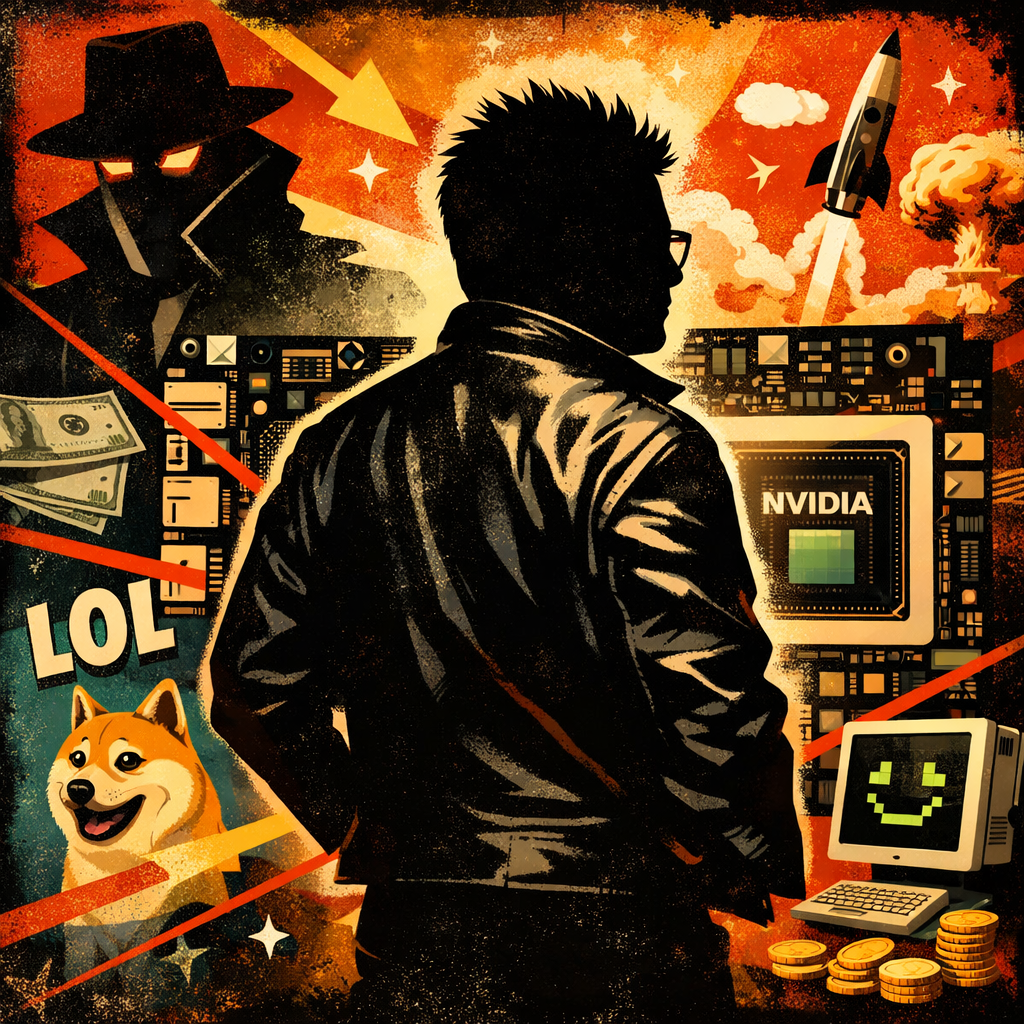
Nvidia CEO Jensen Huang recently admitted to having an affair—purportedly as part of a honeypot scheme involving a suspected Chinese spy. The revelation has sent shockwaves through tech circles, not just for the personal breach, but for its potential to impact Nvidia’s leadership and wider AI industry ties. The response online has been swift and unfiltered.
Why the Scandal Feels Bigger Than Just Personal Drama
Huang and his wife Lori have been together since the 1980s, and both of their children work for Nvidia. For years, Huang’s public persona has been one of stability—rock-solid in a leather jacket, deeply respected as one of AI’s more reliable figures. That’s what makes these allegations so disorienting.
There’s more at stake than just personal headlines. Nvidia commands a significant influence over the U.S. stock market, and its hardware underpins tens of thousands of AI startups globally. Any upheaval at the top, especially with no announced succession plan in place, could trigger ripple effects across the industry and markets at large.
Memes Go Viral—and AI Is Doing the Heavy Lifting
The minute the story broke, social platforms lit up. Posts have gone from “500 Days of Summer” movie jokes to riffs on divorce attorneys, and even AI remix of music videos like Usher’s “Confessions Pt. II”—a song whose theme now feels painfully on point. One had a Coldplay concert reimagined with a startup CEO discovered on the Jumbotron embracing a coworker, while others leaned hard into the betrayal angle.
Tools for spotting AI manipulation have logged a sharp spike in deepfakes, photoshops, and digitally altered clips featuring Huang. A firm that monitors AI content counted over 70 posts tied to AI edits involving Huang and a woman named Alice Huang. These alone racked up more than 8.4 million views and tens of thousands of interactions just shy of this week. Those numbers are almost certainly higher now.
Huang came forward with an admission of the affair only the day before this wave of meme-fueled commentary. That hasn’t slowed the internet’s momentum; on the contrary, the content floodgates opened wide—and fast.
Among the memes are some that lean surprisingly technical—jokes about semiconductors, loyalty, betrayal. Others are more blunt. One user lamented that every San Francisco founder now feels they’re worth spying on. Another cracked that if Huang goes through a divorce, it might cost half his fortune. The sentiment across platforms is intense disbelief. It’s not just about cheating—it’s who Huang is, what he represents.
On AI ethics, too, this raises questions: how far should manipulations, satire, or parody go—especially when real people and reputations are involved? The AI juggernaut that Huang helped build is now entwined in a story it didn’t start but can’t easily escape from.
The real fallout will be revealed over time—not just in Nvidia’s stock price or Huang’s personal standing, but in policy and public trust. One thing’s sure: memes aren’t just reactions; they help define what gets remembered. And this story already has enough twists to be talked about long after the internet’s laughing fits are over.