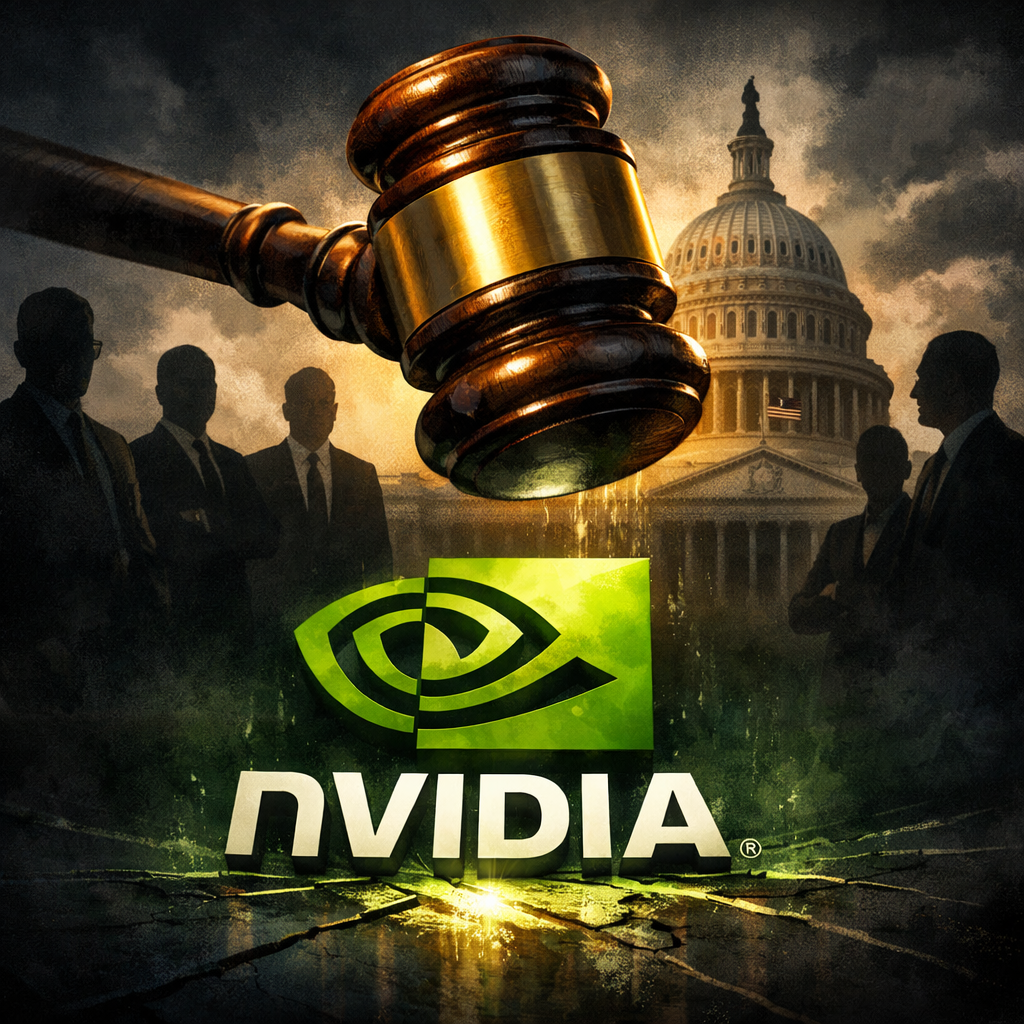
Nvidia’s shares plunged over 4% after the company revealed that its board is investigating CEO Jensen Huang’s relationship with Alice Huang—an executive at Singapore-based company Megaspeed, whom U.S. intelligence believes spied for China. Legal firms wasted no time attacking, with shareholder-rights outfits filing notices to explore whether Nvidia misled investors or withheld key information. Experts say at least one lawsuit is likely to be filed imminently.
What’s at Stake
The issue centers on whether Nvidia’s public statements were misleading. Earlier, the company had asserted Huang’s ties to Alice Huang were normal and part of typical business interactions. But after media reports revealed a more intimate relationship—and that U.S. intelligence had monitored Alice Huang for over a year—Nvidia’s board confirmed that their relationship was personal.
From a securities law standpoint, the mischaracterization has consequences. Because Huang is both CEO and a public face of the company, any false statements he made are considered knowledge attributed to Nvidia itself. The key legal route appears to be a “fraud on the market” claim—arguing that Nvidia’s share price was inflated by false public statements, and that investors lost when the real story broke.
The Legal Arena and Possible Outcomes
A number of firms—including Schall, Brown & Schwartz; Rosen Law; Levi & Korsinsky; Bronstein, Gewirtz & Grossman; and the Law Offices of Frank R. Cruz—have announced investigations or are preparing class-action suits. The first plaintiff to file determines much of the case’s path: it triggers a public notice, gives investors a 60-day window to step forward, and often leads to lead counsel selection among firms representing investors with the biggest losses. These cases typically head to federal court, likely in Northern California where Nvidia is headquartered.
The damage calculation is drawn from Nvidia’s stock drop—the bigger the fall, the greater the potential class-wide liability. Although litigation tends to stretch out and often results in settlements, there’s unlikely to be criminal sanctions or personal repercussions for executives, unless investigators find something more serious. If the board investigation uncovers broader misconduct or national security implications, however, that could introduce a whole new level of exposure.
Regulatory liability is also on the table. The SEC could impose penalties, including bans on officers or directors for intentional securities fraud, especially if evidence surfaces that leadership knowingly misled investors. But motivated enforcement may depend heavily on who is in charge of the SEC, what political pressures exist, and how this issue fits into broader policy trends.
In practice, while the legal claims are strong, early filings are only a signal of intent. Plaintiffs’ firms often issue investigation notices even when their case is still being fleshed out. What matters in the end is who leads the case, who has the clearest evidence of loss, and what revelations come from Nvidia’s ongoing board inquiry.
Context and Broader Significance
Nvidia is one of the world’s most valuable companies and a leader in AI, data centers, and high-performance computing. Its performance and reputation carry outsize weight in global tech markets. In this case, transparency about top executives’ activities matters not just for compliance, but for investors’ trust and broader governance norms.
Allegations like these are part of a growing pattern of scrutiny over how tech companies handle insider relationships, potential foreign espionage, and national security-related risks. In a post-9/11 and increasingly polarized landscape of U.S.-China competition, these issues ripple far beyond courts—they shape policy, supply chains, and investor confidence.
This case is likely to serve as a test of market integrity, regulatory resolve, and board accountability. What emerges could redefine what clarity and disclosure investors should expect regarding relationships with geopolitical implications.