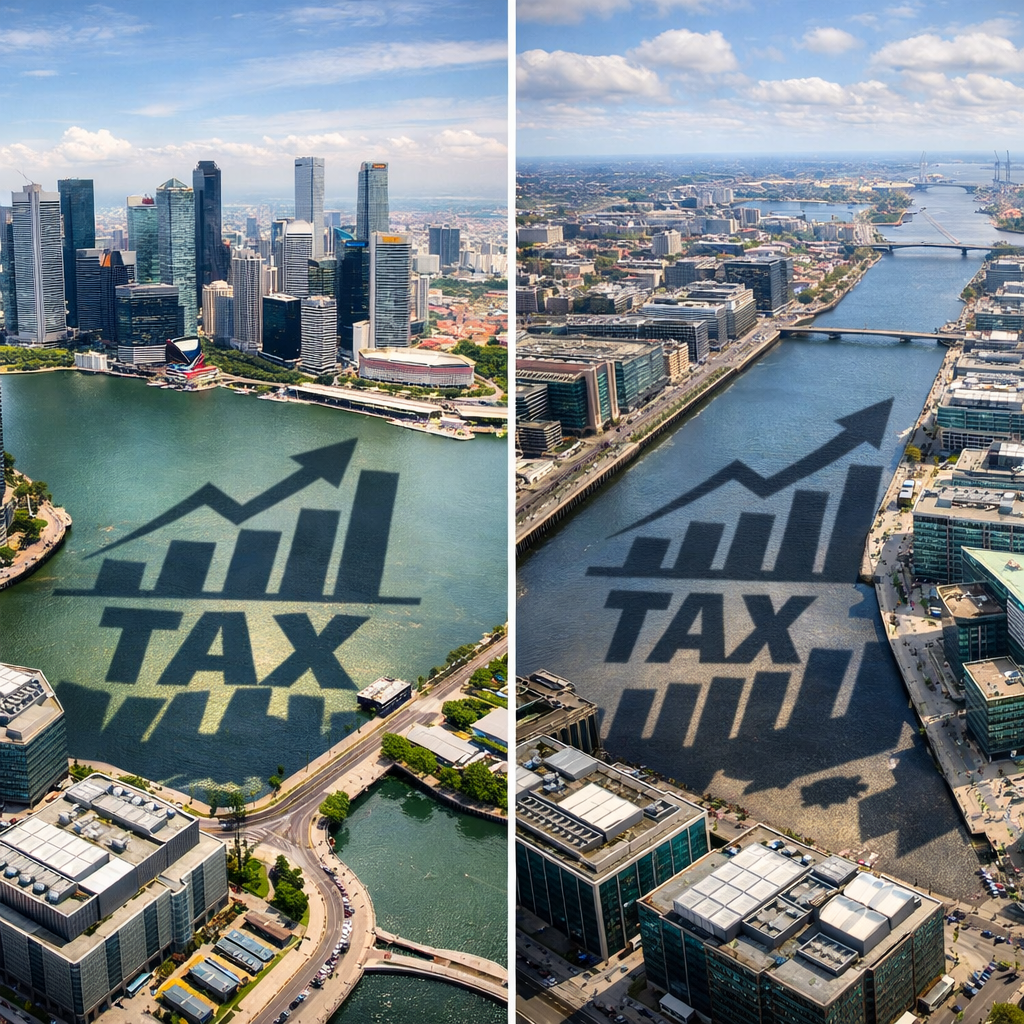
Apple unveiled in its latest SEC filing that it managed to reduce its global tax bill by more than $5 billion during its 2026 fiscal year through strategic profit allocation in Singapore and Ireland. Under recently enforced minimum-tax rules, the company paid an additional $2.5 billion in Singapore due to these changes, but still reported vast savings overall. The breakdown: approximately $2.7 billion saved through Singapore and $2.6 billion through Ireland.
Background and How the Savings Were Achieved
These figures came to light with Apple’s annual Form 10-K. The savings stem from international tax shifts that take advantage of low-tax jurisdictions to reduce overall obligations—even as new global tax rules seek to close those loopholes. Singapore, with its corporate tax rate officially at 17%, has long served as a hub for such arrangements. Under prior arrangements, Apple’s tax rate there hovered around 10% between 2023 and 2025. Those rates are now shifting upward under the new minimum-tax agreement.
Ireland adopted the OECD-coordinated 15% minimum-tax rule in 2024, followed by Singapore in 2025. Under that framework, when a multinational like Apple pays less than 15% tax in a jurisdiction, additional taxes may be levied elsewhere—often in the company’s home country—to make up the difference.
Recent Developments: Rulings and Reforms
Apple’s prior tax arrangements in Ireland previously drew heavy scrutiny, culminating in a 2024 ruling by the EU’s top court that required the company to pay €13 billion in back taxes. That settlement was finalized in 2025. Around the same period, Apple also repatriated substantial overseas cash holdings following reform efforts in the U.S. aimed at reducing incentives for profit shifting.
The newly disclosed requirement under U.S. accounting standards forces public companies to report when their overseas effective tax rate significantly deviates from the U.S. federal corporate rate of 21%. In Apple’s case, this contrast highlights the scale of the benefits it derived from its Singapore-Ireland structure in 2026. Had all its global profits been taxed at 21%, Apple’s tax liability would have totaled about $33 billion—versus the $27 billion it actually paid. That $6 billion gap roughly aligns with the $5-plus billion saved via Singapore and Ireland together.
Featured Figures
- Estimated tax savings: $2.7 billion (Singapore), $2.6 billion (Ireland)
- Overall corporate tax paid by Apple in 2026: ~$27 billion
- What it would have paid if all profits taxed at 21%: ~$33 billion
Although Singapore’s standard corporate tax rate is 17%, the effective rates Apple has enjoyed have been well below that—until now. With the minimum-tax rules in place, these benefits are shrinking. Apple anticipates Singapore’s effective tax rate to edge closer to 15% under the new regulatory framework.
Why It Matters
Apple’s maneuvers underscore enduring tensions between corporate tax planning, international regulation, and fairness debates. While the OECD minimum corporate tax initiative was designed to clamp down on aggressive profit shifting, the full effects on big multinationals are only just becoming visible. Apple’s disclosures suggest these new rules are already having significant impact—but not yet wiping out the financial incentives entirely.
As subsidy seekers and governments worldwide aim to protect their tax base, what to watch next includes how other large multinationals disclose similar savings, how effective enforcement becomes, and whether further tightening or new taxation regimes emerge. Apple’s case could become a template. By the end of this year or in 2027, we’ll see whether global tax rules finally close more of the gaps that enabled billions in savings like these.