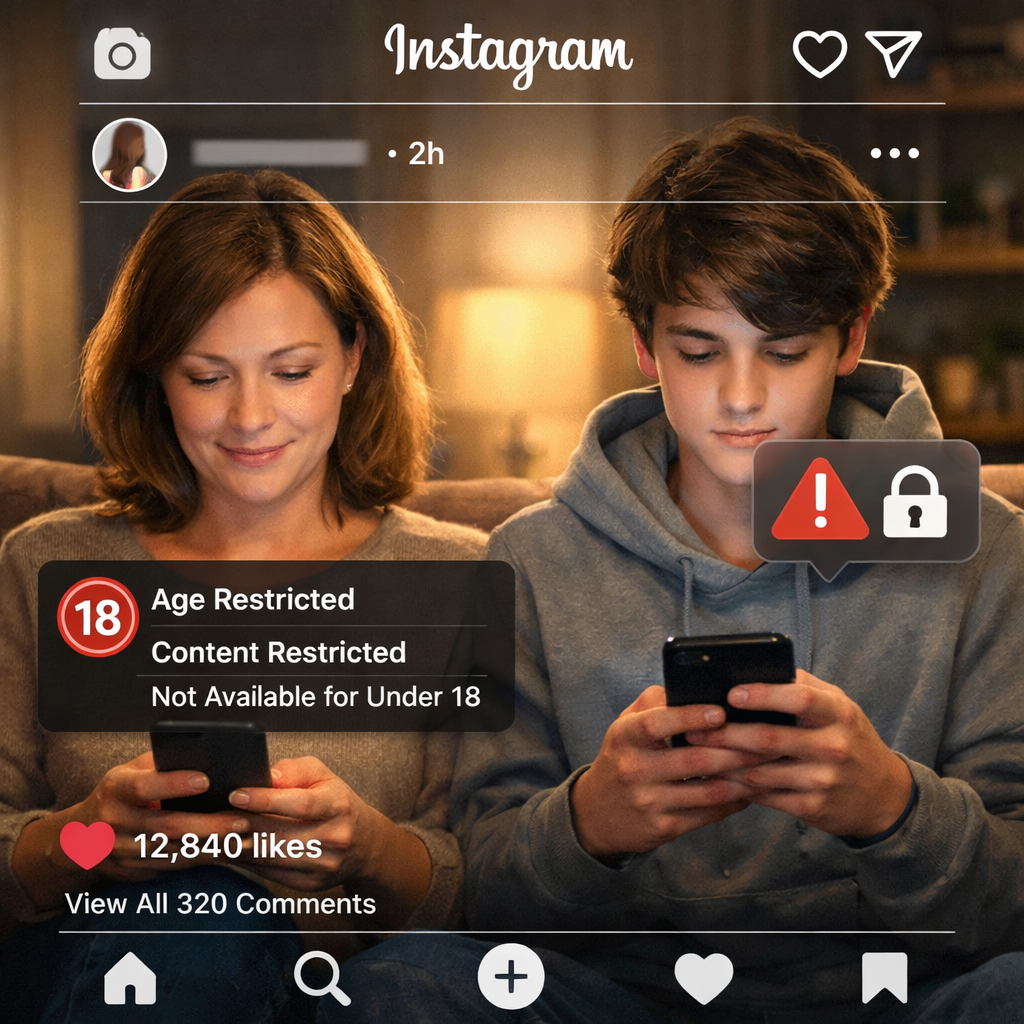
Meta is expanding its AI age estimation tool on Instagram to a global scale, aiming to strengthen protection for teenage users by applying age-appropriate settings even when a user declares they are older. As part of this shift, parents in the United States will soon receive notices within the app explaining how the AI feature works and what safeguards are in place.
How the System Works
Teen accounts undergo limitations automatically—for users aged 13 to 17—with stricter controls if someone tries to misrepresent their age. These controls include curated content feeds, restricted interactions from adult users, and time management tools by default. The AI estimation was first introduced earlier this year to correctly identify teens who falsely provide birth dates showing them as adults.
From this month, parents in the U.S. will see an educational video about Meta’s age assurance system appear in their Instagram feed. The video links to further reading by an internet safety expert that outlines the multi-stage approach: blocking users under 13, applying tailored protections for 13–17-year-olds, and guiding parents on helping teens be truthful about their age online.‹/p›
Where Else It Applies
The same age estimation tool will be adopted on Meta’s other platforms, including Threads and Facebook, bringing more uniformity to how teen protections are enforced across its ecosystem.
Enabling this global rollout marks a shift toward proactively protecting young users in places where age verification is often tricky, especially when users misrepresent their age. Meta’s update comes amid broader concerns about online platforms ensuring the safety and wellbeing of adolescent users.
That said, questions remain about how accurate the technology proves to be. Early attempts had flaws, like when a 12-year-old managed to appear older via a fake mustache. These kinds of challenges highlight the balance Meta must strike between automation and fairness.
What this means: More platforms are leaning into AI to help flag age misrepresentation, aiming to wrap robust guardrails around teen experiences. The push toward transparent parent notifications and detailed documentation signals a shift from passive terms of service toward active engagement in age safety. What to watch now is how well the AI can navigate real-world diversity in appearance and context without excluding or misclassifying legitimate users.