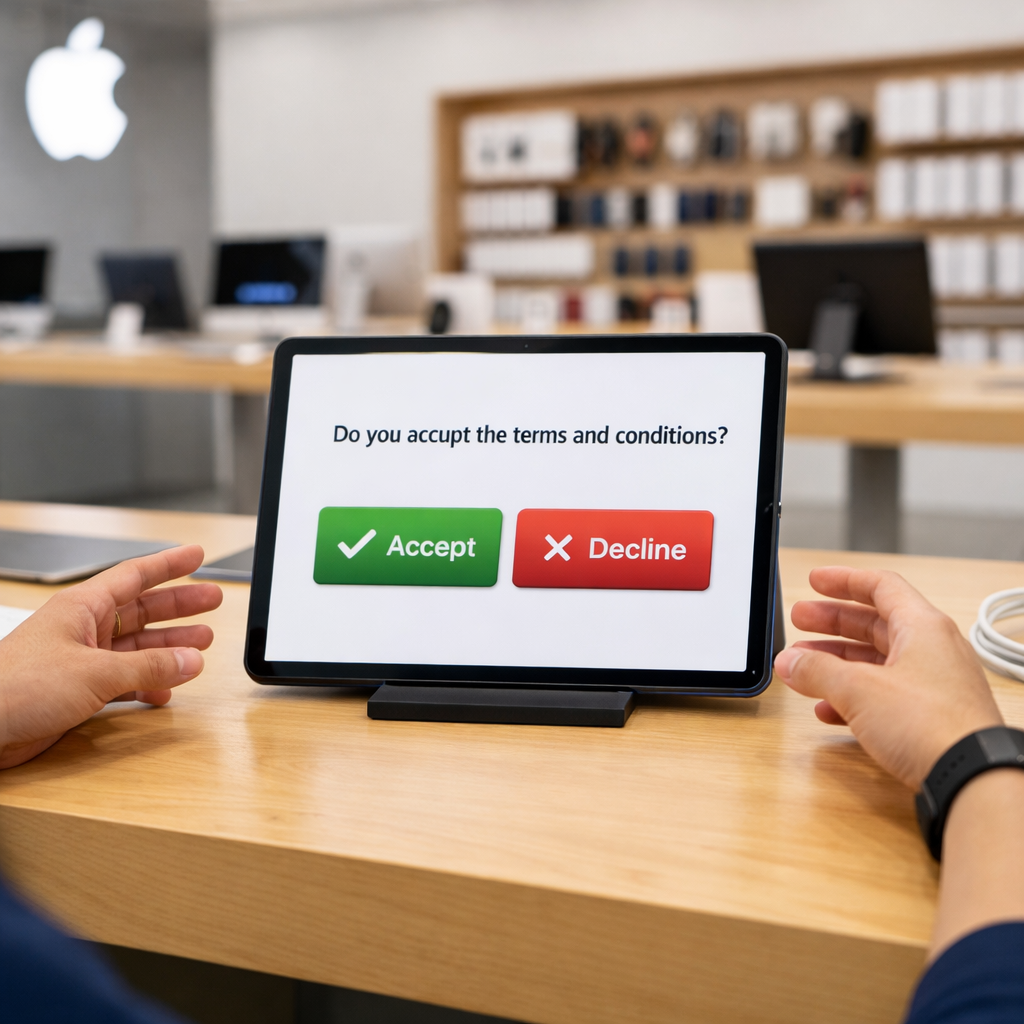
Apple has issued a directive to its retail stores: staff must cease enrolling customers in subscription services—free trials or otherwise—without their explicit approval. The policy, newly formalized, aims to prevent situations where employees tap “Accept” during device setup without the customer’s knowledge. Previously, the “Accept or Decline” prompt appeared on the staff’s device rather than the customer’s. In many cases, employees were allegedly encouraged to present trials as gifts—without clarifying that charges could begin later.
This change comes after a YouTuber known for questioning Apple’s repair and retail practices published video evidence illustrating how staff enrollment in services worked during new device setups. According to insider sources who spoke following that video, Apple responded by mandating that only customers may press “Accept.” Regional managers have distributed new instructions to stores, to be read word-for-word, reinforcing this updated process.
Performance Metrics Tied to Sign-Ups Axed—For Now
Another shift: stores are reportedly no longer judged on how many customers their staff members enroll in services. This performance metric—once used to drive sign-ups—has been suspended for the current 2026 holiday season. That said, it’s unclear whether the suspension will be permanent or just temporary. This isn’t new: similar metric freezes have occurred during past holiday periods, especially around early November.
Apple first introduced sign-up metrics when Angela Ahrendts assumed leadership of Apple Retail back in 2013. Through the years, the company has relied on them to encourage free trial and subscription pushes. Under the new policy, both the metric and the consent process have been reworked to give customers full control over service enrollments.
What This Means
This policy update marks a significant shift in how Apple handles service enrollments in its physical stores. It addresses growing concern over transparency and consent—especially given that customers might unknowingly agree to trials that turn into paid subscriptions. Apple’s action follows public scrutiny of these practices, showing the company felt pressure to change.
What remains to be seen is whether the metric suspension becomes a permanent fixture or is merely a holiday-season reprieve. Also in question is how rigorously stores will follow the new instructions and whether Apple will take steps to audit compliance. For consumers, though, the clear takeaway is that consent must now come directly from them—not from a screen someone else controls.