Allegations have emerged that some Apple Store employees have been enrolling customers in service subscriptions without their clear consent. A repair technician and consumer advocate claims that staff are pressured by internal targets to show—and in some cases accept—trial offers on behalf of customers.
How the Alleged Practice Works
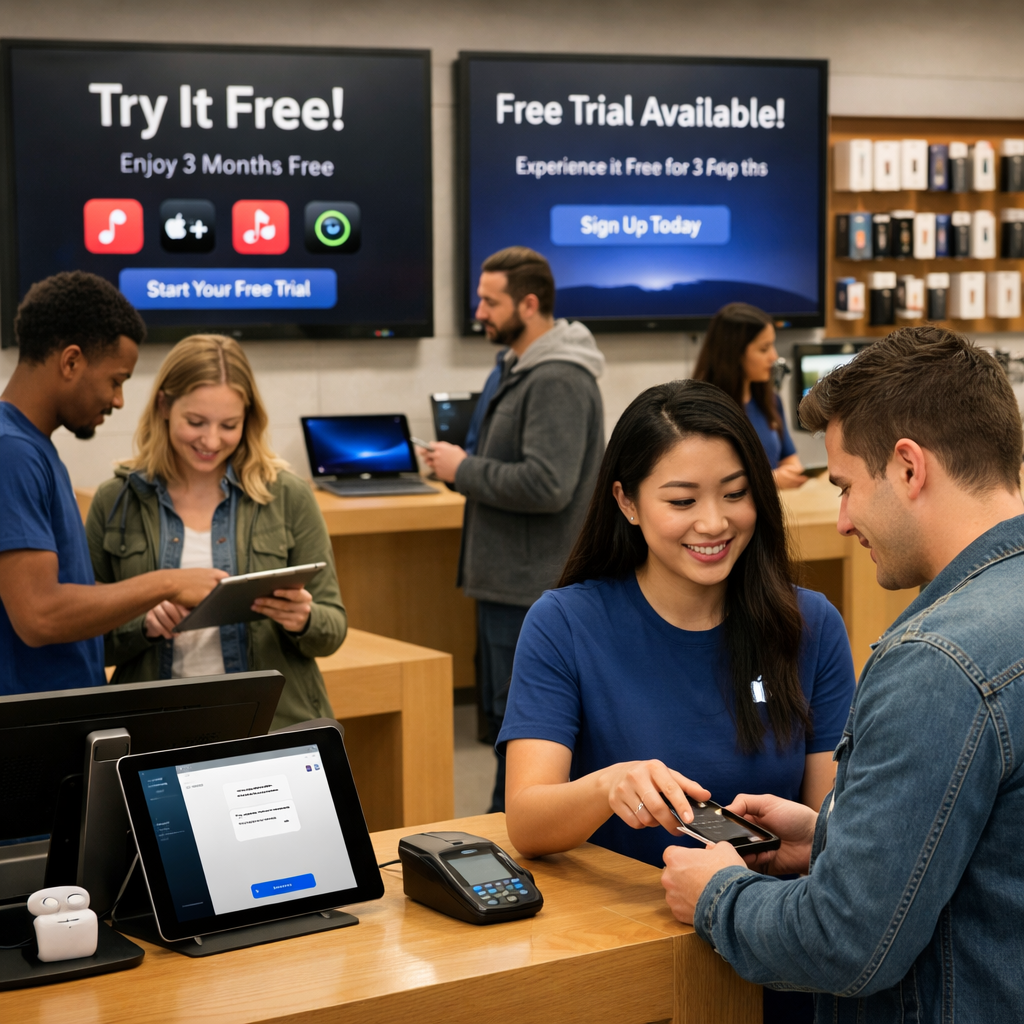
Sources say customers who accept a “personalized shopping experience” in-store are shown free trials for services like Apple TV+. Such trials are tied to purchases (for example, buying an iPhone might qualify for a three-month trial), but if the trial isn’t canceled, it automatically converts into a paid subscription. The accusations assert that staff must hit a “40% sign-up” performance target, tracked internally, even if this requires activating trials without explicit customer approval. In some cases, it’s claimed that employees themselves tap “Accept” on the customer’s behalf, and that the offers are presented on staff devices, not on customers’ own phones.
Internal Response and Changes
After the allegations surfaced in a video by the repair technician, internal action reportedly followed. A memo shared in Apple store morning meetings reminded staff that only customers are allowed to agree to subscription offers. Further, Apple appears to have scrapped the sign-up target metric. These steps suggest the company is treating the accusations seriously, although there has been no official public statement confirming wider policies or practices.
This matter raises questions about the ethics of upselling when performance targets are tied to metrics like subscription sign-ups, especially when customer consent risks being glossed over. It’s also indicative of growing scrutiny over how free trials are turned into recurring fees, often without customers realizing field staff or automated systems will initiate the paid subscription unless the trial is canceled.
What to watch next: whether regulatory bodies examine the practice, how Apple adjusts training and oversight in stores, and if similar patterns emerge in other retailers or sectors. Ensuring transparent customer consent will be critical for trust, regardless of internal metrics.