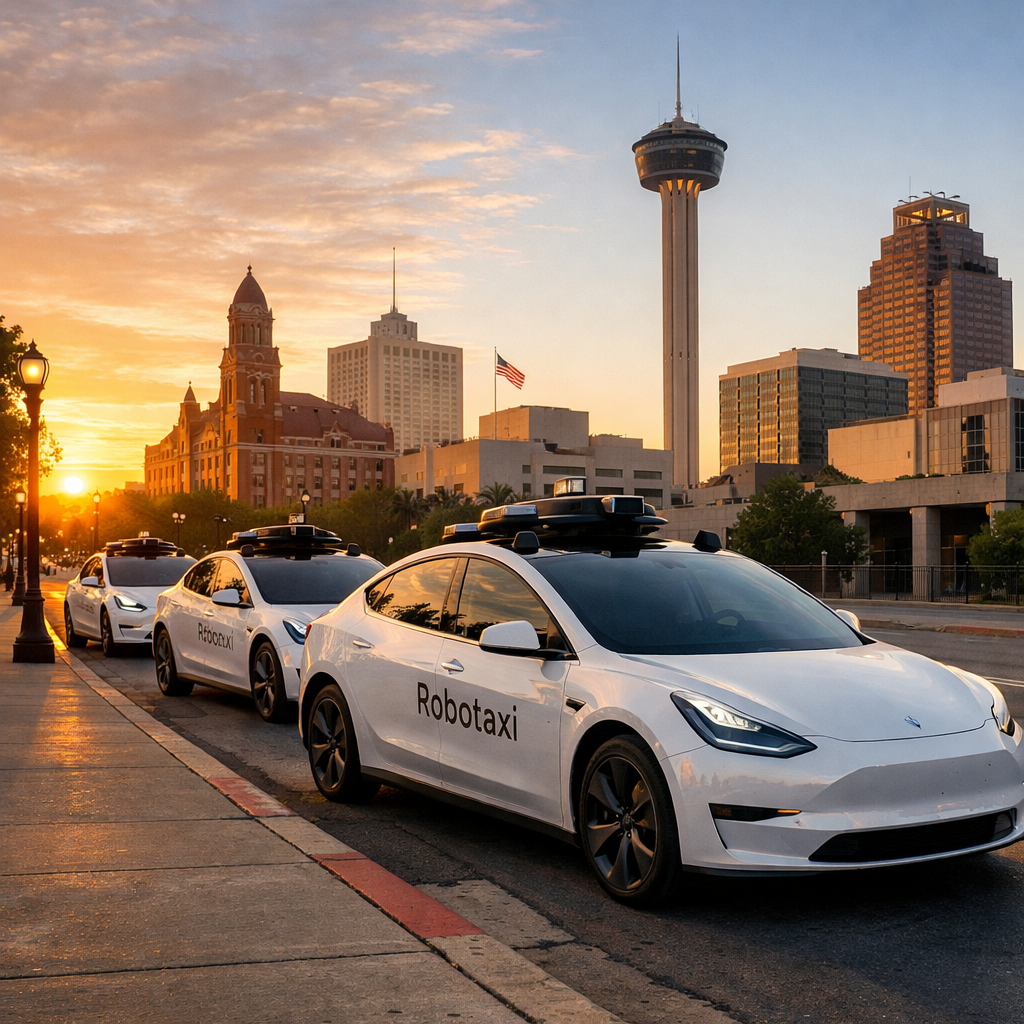
Tesla has rolled out its robotaxi service in San Antonio, starting at 5 a.m. local time on Monday, expanding its network of autonomous rides beyond Austin and other Texas cities. This marks another step in Tesla’s plan to compete with rivals in the robotaxi space. Tesla has not yet shared details on operating hours, vehicle models in use, or whether human safety monitors will be part of the fleet.
Building on past robotaxi efforts
Tesla first introduced a robotaxi program in Austin in June 2025, using vehicles with human safety operators as tests of its camera-only, AI-based self-driving system. By January 2026, those human safety monitors were removed, shifting the service toward full autonomy. Since then, Tesla has expanded robotaxi operations in Austin, Dallas, Fort Worth, Houston, Miami, and Orlando, though the number of vehicles in each city varies widely—from just a handful to over 400 in Austin alone.
Competition heats up—Waymo and others
Waymo also offers robotaxi service under its Ojai brand in several Texas cities, including San Antonio. The company recently resumed operations in San Antonio after a temporary pause due to vehicles becoming stranded in flooded areas. While both companies now share regions, their coverage areas, fleet sizes, and vehicle types differ significantly.
Although Tesla is pushing ahead, the company revealed in summer 2026 that its robotaxi network drove fewer miles with paying customers in Q2 than in Q1—a sign that full demand or operational scale may still be a challenge.
Even as it expands, Tesla’s robotaxi service lacks certain regulatory approvals in some jurisdictions. For example, in California, its ride-hailing service—often called robotaxi—is still operated by human drivers due to permit restrictions and not yet authorized for driverless rides.
Why this matters: Tesla’s San Antonio launch reflects a broader push toward autonomous mobility where robotaxi services are becoming real competitors to traditional ride-hailing and to each other. The lack of clarity on vehicle types, hours, and safety oversight suggests early-stage service, but cities like San Antonio provide key testing grounds. As Tesla scales, how it handles regulatory hurdles, competition from Waymo and others, and real-world reliability will shape whether robotaxis move from intriguing pilots to everyday options nationwide.