Tesla has officially announced that it will wind down production of its polarizing Cybertruck in 2027, shifting its focus toward its autonomous robotaxi, the Cybercab.
From Hype to Hangover
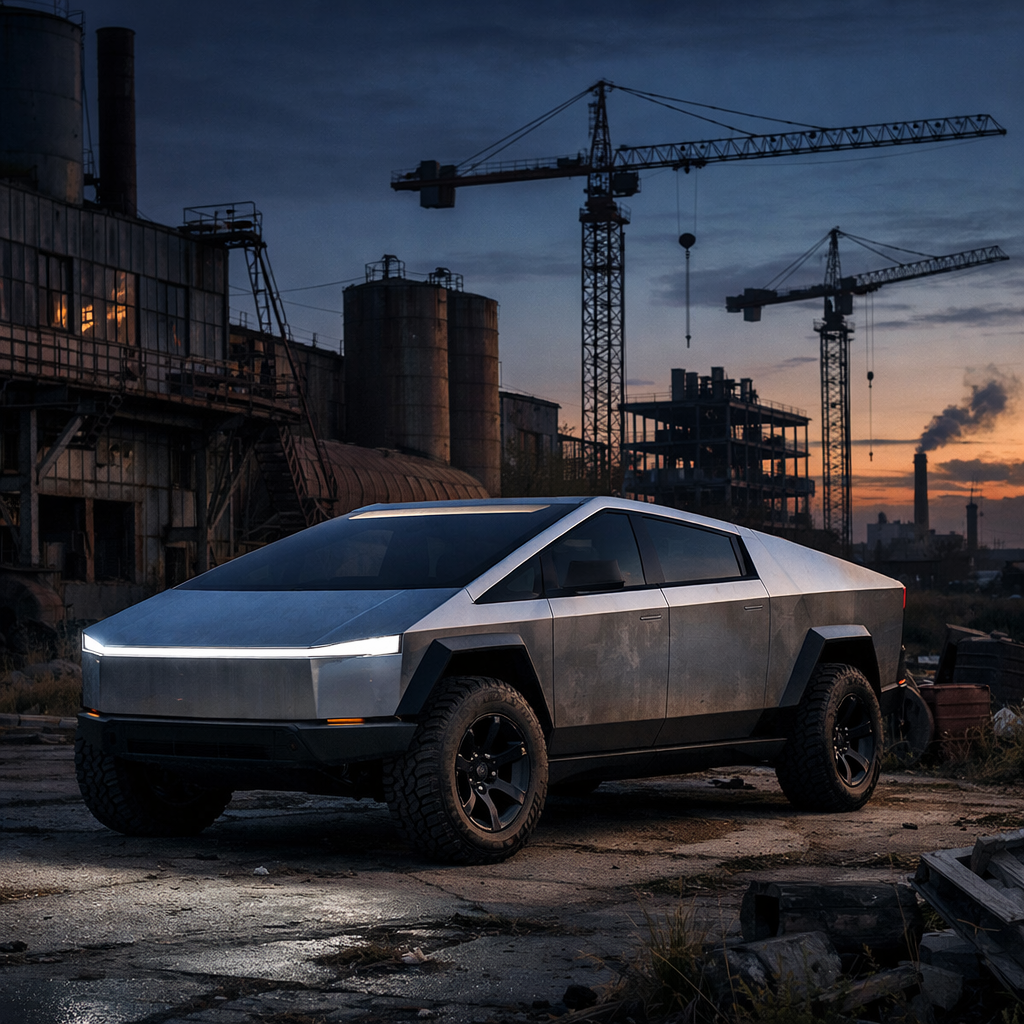
When Tesla first unveiled the Cybertruck in 2019 with its angular, stainless-steel design, it was billed as a game-changer. The company promised a pickup truck with a starting price under $40,000, a 500-mile range, and massive production numbers—targets that helped the truck amass over 1 million reservations by late 2023. But those optimistic figures never came close to reality. By the time the first Cybertrucks shipped in November 2023, its base price had surged well past $70,000 and range estimates dropped by more than 100 miles from initial projections.
Sales Failures and Manufacturing Demise
Industry estimates show that about 71,000 Cybertrucks have been sold since deliveries began. That breaks down to roughly 39,000 in 2024, then a sharp 48% drop in 2025 to around 20,200 units. Q1 2026 saw fewer than 4,000 sales—a steep decline for what was meant to be a flagship model. These numbers are far off Tesla’s original target of producing about 250,000 Cybertrucks per year.
The truck also faced repeated setbacks. It has been recalled multiple times due to issues ranging from detachable panels to faults with pedals and doors. Regulations and safety norms—especially regarding pedestrian impact—posed further barriers for international expansion.
The Rise of the Cybercab and Tesla’s New Direction
Tesla has confirmed that the middle of 2027 will mark the winding down of Cybertruck production at its Texas Gigafactory. The plan: to reallocate space and resources toward Cybercab, a compact, two-seater robotaxi built without a steering wheel or pedals—Tesla’s bet on autonomous mobility. The company already launched Cybercabs in Austin in September and plans to expand to Dallas soon.
This move comes amid Tesla’s broader strategic pivot—from being a company famed for pioneering passenger EVs to one focused on robotics and AI-driven transportation solutions. Earlier this year, the company also discontinued the Model S and X to free up capacity for its humanoid robot, Optimus.
Key Takeaways
- The Cybertruck never met the specs it was sold on—price, range, and production volumes all fell short.
- Despite demand, actual sales proved the Cybertruck was more niche than mass-market.
- Tesla’s future resources are being poured into robotaxis and autonomous tech instead of traditional EVs.
What this means: Tesla is closing the chapter on one of its boldest experiments. The failure of the Cybertruck underscores the limits of hype without execution. As EV competitors continue to mature, Tesla’s success may now depend more on its ability to deliver reliable autonomy and robotics than creating headline-grabbing designs. Watch closely how the Cybercab performs—and whether it can tap into the mainstream legacy the Cybertruck couldn’t.