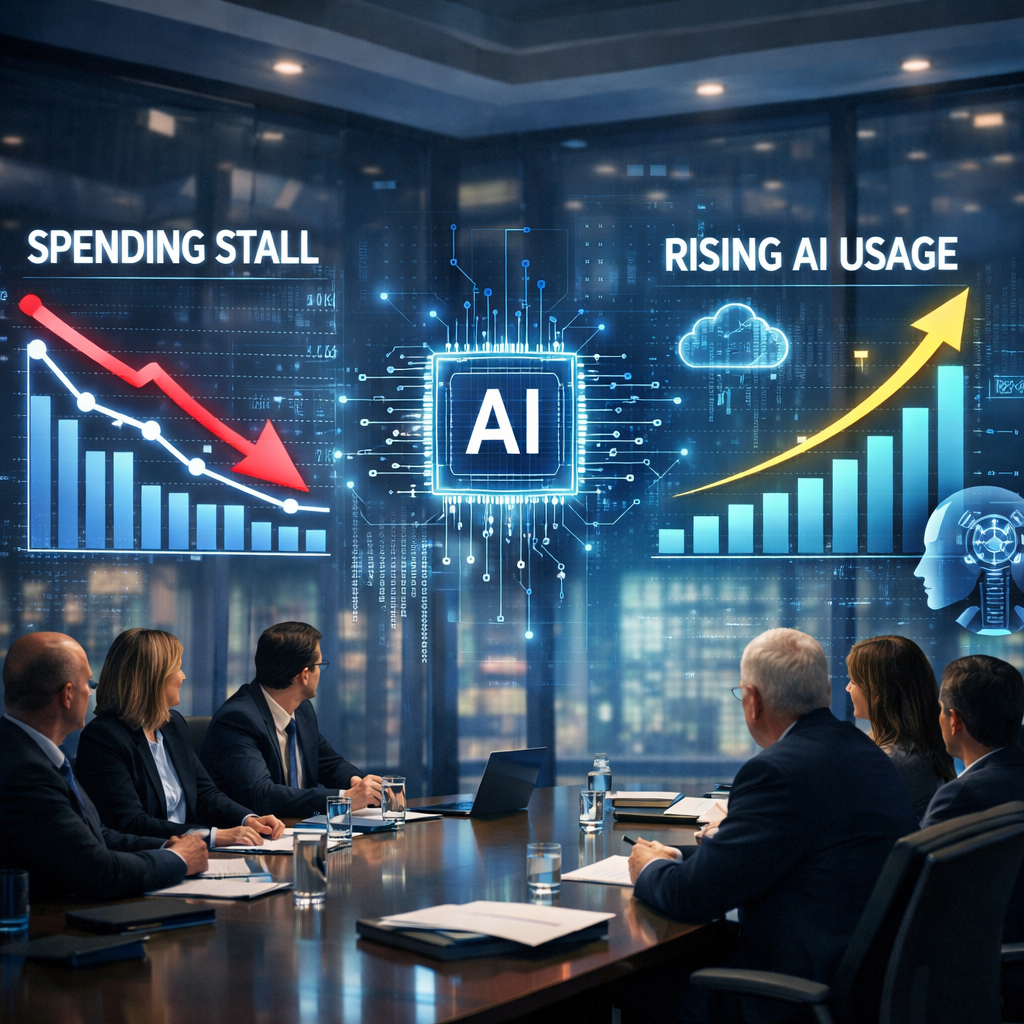
Spending on AI within companies appears to be hitting a plateau just as Anthropic prepares for its initial public offering. Despite continued growth in AI usage, financial outlays have not followed suit. A recent Ramp report finds that while token volumes—the measure of AI activity—continued to rise, the amount companies are spending stagnated during August and September. The token spend in those two months inched up only 1.5%, compared with a dramatic 42% surge from June to July alone.
What’s Causing the Slowdown?
The slowdown stems in part from fierce competition among AI providers. OpenAI and Anthropic have both slashed prices on several of their models—OpenAI halved API pricing for GPT-6 Sol and Luna in September, and Anthropic followed with deep cuts on Fable 5.1 and Opus 5.5. These moves, along with growing enterprise discounts, have softened revenue growth even as usage expands.
Another factor: smarter buyers. Companies are increasingly choosing lighter, cheaper models for many tasks, enforcing cost controls, and optimizing usage so that only certain workloads hit expensive models. In effect, while token use goes up, dollars spent don’t keep pace.
The High End Is Losing Momentum
Even firms in the highest tier—those dubbed “AI-pilled” for their heavy usage—are pulling back. Firms that were spending around $10,000 per employee per month during peak summer months have slipped in August and September. Though spending among top 10% and median users grew slightly, it’s not enough to offset the drop among the very heavy users.
Anthropic, Valuations, and Investor Implications
The trend is particularly relevant as Anthropic eyes its IPO. Earlier valuation estimates for the company dropped sharply—from around $2 trillion in early October to between $1.2 and $1.3 trillion. OpenAI has also walked back fundraising targets and, in some filings, reduced its valuation estimates.
This isn’t just about one company—spin-offs ripple out. Ramp’s lead economist notes that much of AI spend is concentrated among venture-backed, high-growth firms. If that cohort slows, revenue across the AI industry could be impacted.
What’s Next for Growth?
Despite recent momentum in usage, some believe the era of runaway growth in AI spend may be over. There’s cautious optimism around new frontiers, especially in personal agents—tools that assist individuals across tasks—but many experts question whether these will deliver the same economic return as tools aimed at developers or businesses.
Why this matters: If AI usage outpaces spending, that puts pressure on the business models of companies like Anthropic and OpenAI. While cheaper or more efficient tools benefit consumers and businesses, revenue growth becomes harder to sustain. Investors will be watching closely to see whether fresh use cases emerge that can reignite spending growth.
What to watch: Whether personal AI agents begin to prove themselves as economically productive; whether price wars continue eating into margins; and how much the world’s heaviest AI users resume spending as competition and model economics settle.