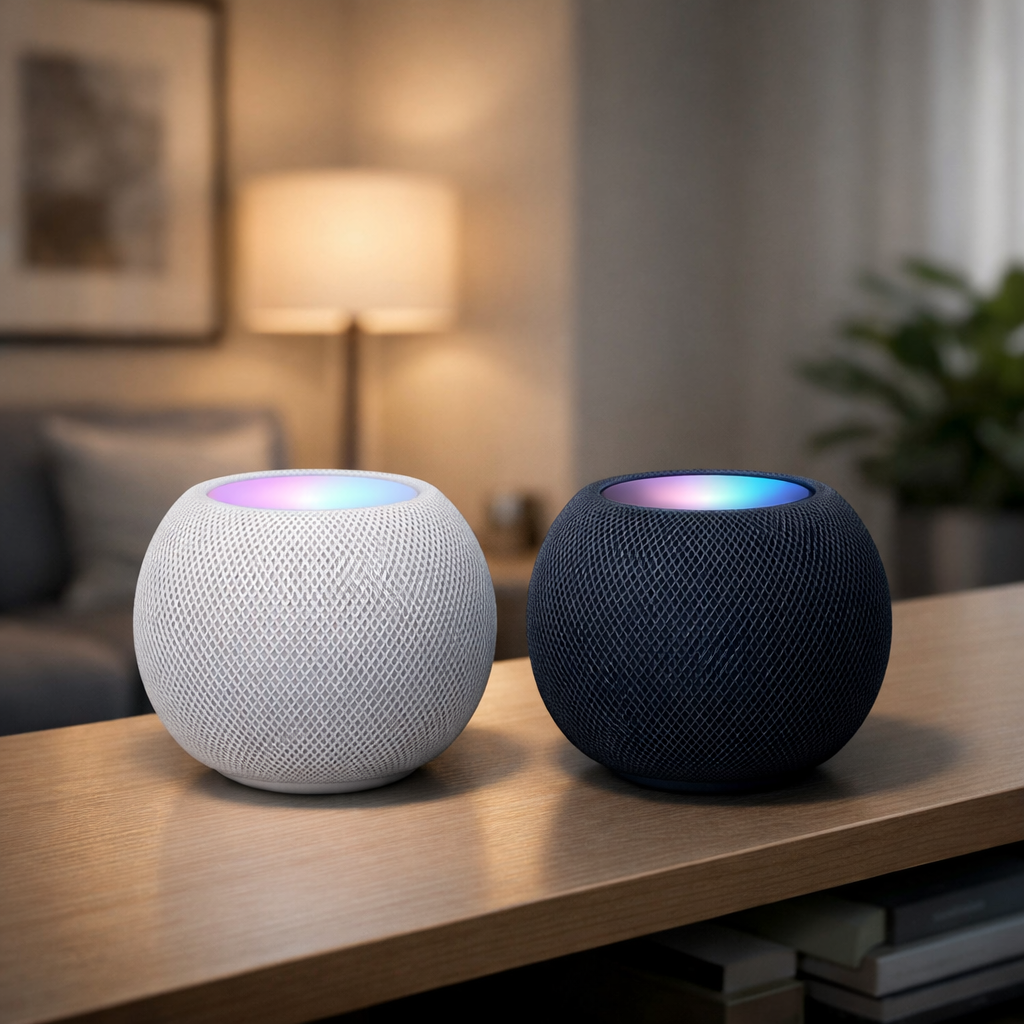
Apple’s HomePod mini 2 landed on October 30, 2026, with several upgrades—yet when stacked against the 2020 original, it doesn’t deliver enough changes to prompt most users to trade up. At a $149 launch price, the newer model packs enhancements in performance and connectivity, but many of the headline features remain incomplete or broadly similar to those of its predecessor.
What’s new—and what’s just marginally better
Inside the housing, the HomePod mini 2 uses Apple’s newer S10 chip, replacing the older S5. It also upgrades Wi-Fi from Wi-Fi 4 to Wi-Fi 6E, and moves Bluetooth ahead from version 5.0 to Bluetooth 6. The speaker preserves its full-range driver and two passive radiators, along with Thread networking and Ultra Wideband sensors. There’s also an expanded color lineup: pink and green join the previous five shades. These upgrades make some difference in connectivity latency and overall responsiveness. But in controlled listening tests—including with lossless music—the improvements in sound, such as better instrument separation, remain modest, especially for average listeners. The original still delivers similar volume and clarity except in closer comparison.
Features that still don’t justify an upgrade
The twice-rumored “Siri AI” boost has not arrived at launch. Apple promises deeper natural language abilities, personalized assistance, and more context-aware voice commands—requests that span multiple apps or personal data sources. But as of early November 2026, the speaker is still delivering only the standard Siri experience. Importantly, unlocking the full version will require a paired iPhone or iPad running Apple Intelligence and compatible software. Because there’s no public release date for these upgrades, their impact is speculative at this point.
Another key limitation: older HomePod minis can’t form stereo pairs with the new model. That means if you want stereo or the new surround sound arrangement, you’ll need multiple units of the same generation. Speaking of surround sound, HomePod mini 2 now supports four-speaker surround setups with Apple TV 4K (4th-gen), which allows matching front and rear pairs, auto-adjusting timing and levels. However, realizing that setup is expensive. Four minis cost $596, and the newer Apple TV 4K adds $299—bringing a minimum cost of around $895 before tax. For those already using the first model, the surround sound value proposition isn’t strong.
Smart home functions and practical verdict
The HomePod mini 2 continues in its role as a Home hub: it maintains Thread support, built-in temperature and humidity sensors, and access to HomeKit automation—just like the original. Even features like “Sound Glow”—animated lighting tied to album artwork during playback—are now supported on the first-generation units through an update. In short, smart-home users won’t see radical changes when moving to the newer device.
For prospective buyers or households expanding a multi-speaker setup, the HomePod mini 2 makes more sense. Those who don’t already own one will benefit from upgraded wireless tech, slightly improved audio quality, and the promise of more powerful voice functionalities. But for people satisfied with their existing minis—especially if used for music, basic Siri commands, or Home automation—the returns don’t yet justify the additional cost. The sound differences aren’t dramatic, key new features haven’t yet landed, and generational mixing issues remain a hiccup for upgrades.
What to watch going forward: the release of Siri AI, performance of surround sound with Apple TV, and whether Apple addresses compatibility between generations. Until then, the HomePod mini 2 is a solid speaker—but not a game changer.