Apple devices are getting pricier, even second-hand. As enterprise IT teams struggle with rising average selling prices (ASPs) and longer macOS support lifespans, the trade-in and buyback market is undergoing notable transformation. In a recent episode of Apple @ Work, Rebekah Griffiths of Assurant outlined how cost pressures and device longevity are rewriting what companies expect when they replace or resell Apple gear.
Costs, Lifecycle & Circularity: What’s Changing
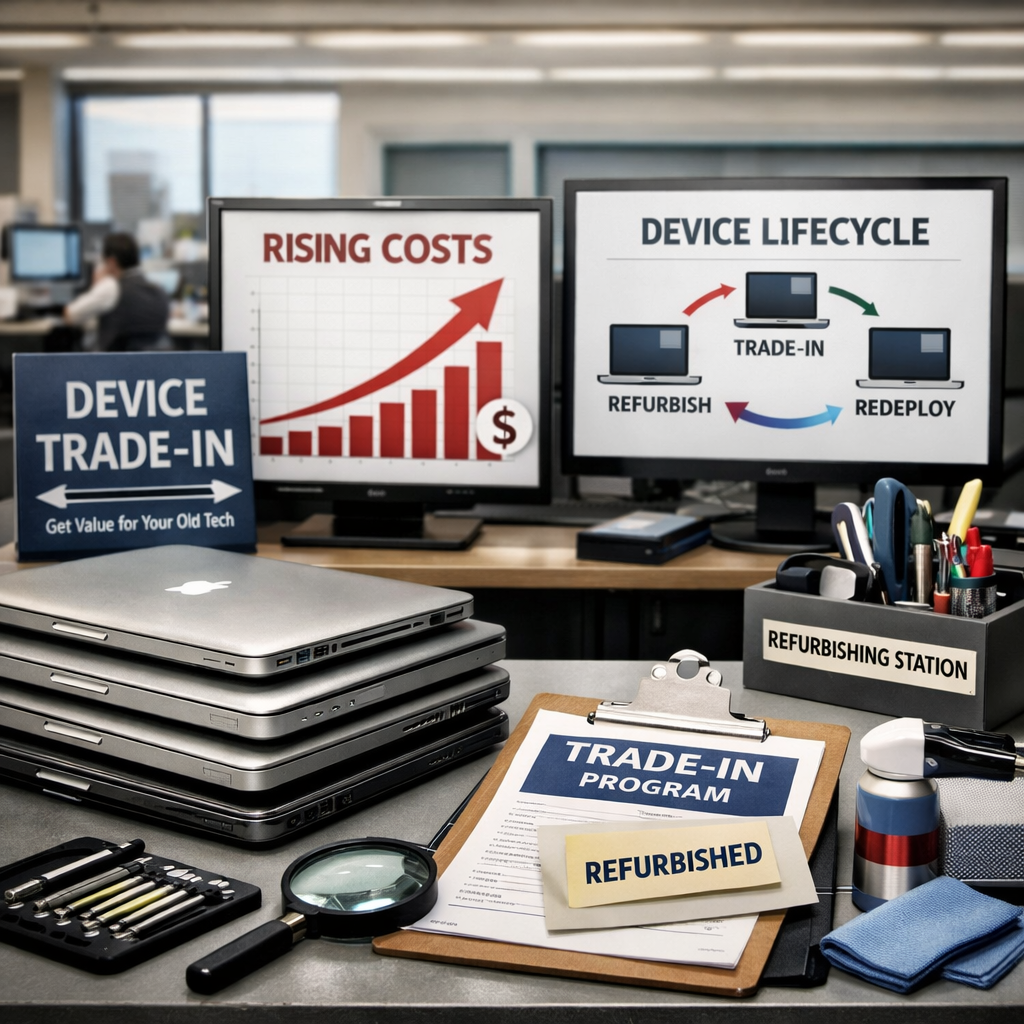
Over the past few years, the ASP for Apple computers has increased significantly. When the upfront cost of new Macs rises, the threshold before trade-ins or buybacks make financial sense shifts upward. What used to be a three-year refresh cycle in many organizations is now stretching as devices continue getting macOS updates for longer, keeping them viable past traditional replacements.
Griffiths pointed out that extending software support indirectly impacts residual values. When an older Mac remains useful longer, its resale value may drop less steeply than before. But higher costs for components, supply chain pressures, and macroeconomic factors also reduce margins for resellers or trade-in programs. Companies handling trade-ins are increasingly factoring in repairs or refurbishing costs—which are rising themselves—to decide how much they can offer for used gear.
Buybacks Reassessed & Strategies Adjusted
Enterprises are now reassessing buyback policies. Instead of replacing Macs solely based on age or performance, many consider ongoing software compatibility, repairability, and developer support. Devices that retain security and OS support longer are keeping their value better in these programs. But even so, the rising cost of maintaining or preparing devices for resale chips away at what trade-in programs can realistically offer.
Another trend: vendor partners and lifecycle solution providers are working to make resale, refurbishment, and reuse more efficient. Circular economy principles are gaining traction—with Apple devices seen not just as hardware but as assets that must be managed for maximum lifespan and reuse. This shift places sustainability front and center in procurement and IT asset disposition, especially as environmental concerns meet financial constraints.
For organizations that lease large fleets or run device refresh cycles, the cost increases mean total cost of ownership (TCO) calculations are being revised. More emphasis is going on mid-life support costs—including battery health, performance degradation, and repair costs—rather than just replacement costs. Trade-in values are being squeezed, not only by higher upfront prices but also by inflated service and refurbishment expenses.
What this means is higher risk for enterprises that don’t adapt. Those who cling to outdated trade-in schedules or ignore extended macOS support may overpay or lose value. On the flip side, companies that embrace circular, value-focused strategies—and that plan for longer device lifespans—may see stabilizing trade-in returns, even as costs rise.
Watching how Apple’s device ASPs, macOS compatibility roadmap, and repair/parts supply chain evolve will be crucial. As costs continue to climb, the smartest organizations will be those that look beyond replacement cycles to how much value a device delivers over its full lifespan—and how trade-in or reselling fits into that picture.