Bringing two iPhones—the new Duo and an iPhone 17 Pro Max—on a five-day trip forced a side-by-side comparison. It wasn’t smooth sailing at first: apps acted up, faces got confused with Touch ID, and the camera setup felt like a step back. But by journey’s end, Duo emerged the winner for someone ready for something different.
Rough Start: Size, Software, and Camera Limits
Switching from a large, ultra-premium slab to a shorter, foldable phone brought instant second-guessing. Duo’s compact, stackable body raised concerns: was the display too small, the hinge fragile? Every time I sat, every drop tested it. Yet the device survived concrete, tile, and wood floors with the screen intact.
Software was uneven. Some apps haven’t been redesigned for Duo yet and show a distracting black bar when folded, limiting usable space. Google’s Search app repeatedly froze when placed in AI mode, which is frequently the default; it became frustrating on a trip where looking up restaurants, weather, or directions is routine.
Camera performance is another area where Duo falls short of the 17 Pro Max. It lacks telephoto lenses and drops the zoom range from 40× to 10× digital. For serious creators or photographers, that gap matters. But for casual snapshots shared online or used in wallpapers, the camera mostly held up. Night shots or distant landscape detail suffered, occasionally appearing over-processed or flat.
Where Duo Starts to Shine
The moment I unboxed Duo, there was a novelty factor—unpacking something refreshing, different. In daily use, that fresh appeal translated into delightful interactions: folding the phone open for split-screen, using the kickstand in the Duo Folio case for watching movies, or folding shut to leave apps bookmarked but out of the way.
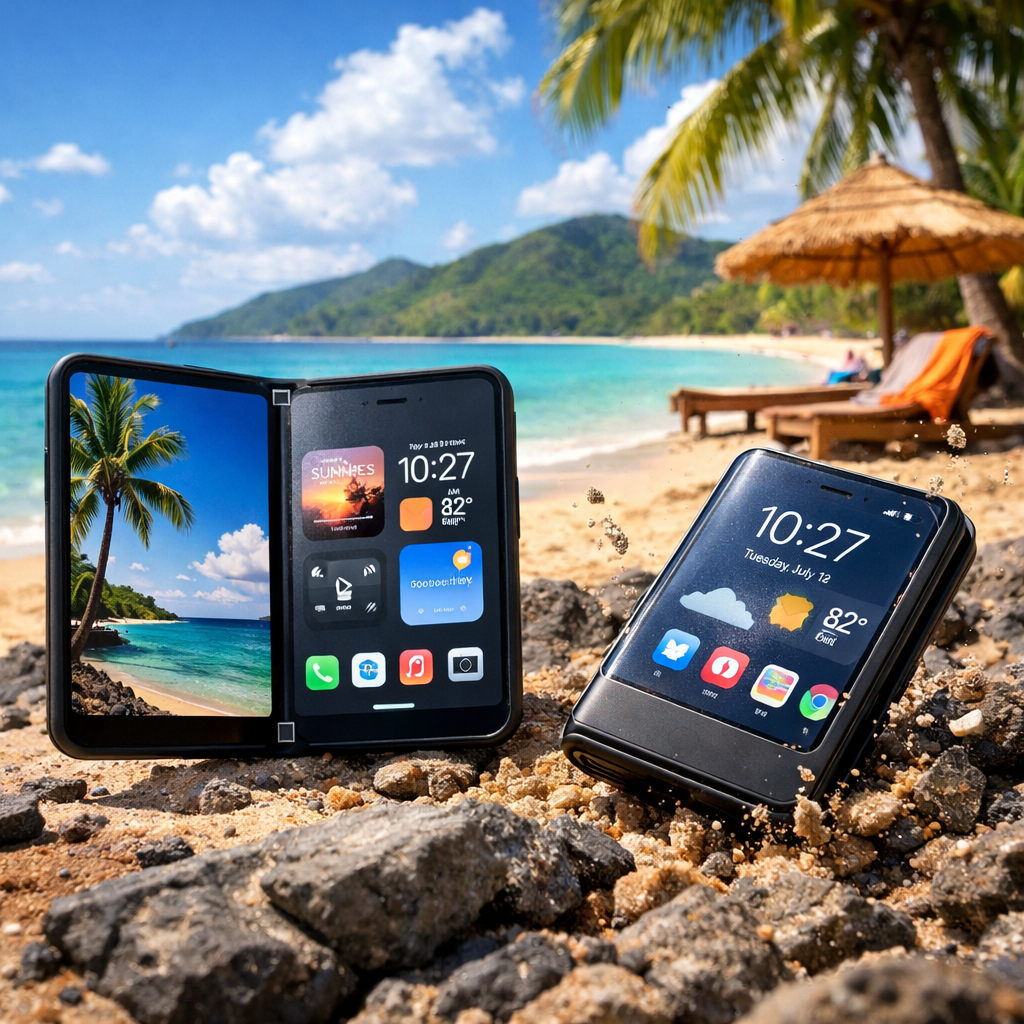
Despite its compact folded size, Duo handled rough with grace. It fit in front and back pockets—even when sitting down. Drops and accidental impacts didn’t damage it. Some strangers saw it as a conversation starter, fascinated that its matte inner display showed no visible crease, and noting its dust resistance—rated IP68—adds peace of mind.
One unexpected benefit of its dual form: it reshaped phone usage. The Duo doesn’t invite mindless scrolling like tall slabs do. Because unfolding it is more involved, using it feels more intentional. Email or social media recedes until there’s a reason to fully open the screens. It’s less about constant distraction, more about discernible interaction.
Trade-Offs: Touch ID, Flexibility, Identity
Face ID, present on most premium phones, is missing here—and that absence looms large. Activities like unlocking, paying with Apple Pay, or opening secure apps often felt clumsy with Touch ID: smaller targets, awkward grips, and more failed attempts. An Apple Watch helped with unlocking, but didn’t solve all the day-to-day friction.
Also, while Duo’s foldable design is appealing, I didn’t unfold it nearly as often as expected. Public unfolding tends to draw attention. And many tasks still get done just as well—or only slightly worse—when the device is folded. The biggest rewards come from watching content, multitasking, or side-by-side app use, which still feel limited by app support.
Despite these drawbacks, Duo kept surprising. The scale of novelty, design precision, and evolving software ecosystem make it ready for mainstream consideration—particularly if you’re less about specs battles and more about changing how you use a phone. Duo makes you think before you tap, spend, and unfold.
This experiment showed that the Duo isn’t perfect, especially for creators who demand camera bells and face-based auth. But it’s compelling in ways many hadn’t expected: as an experiment in restraint, in redefining what you need from a phone, and how often you actually touch it just because it’s there. For those willing to accept its limitations, Duo isn’t just interesting—it might be the one you’d rather keep.