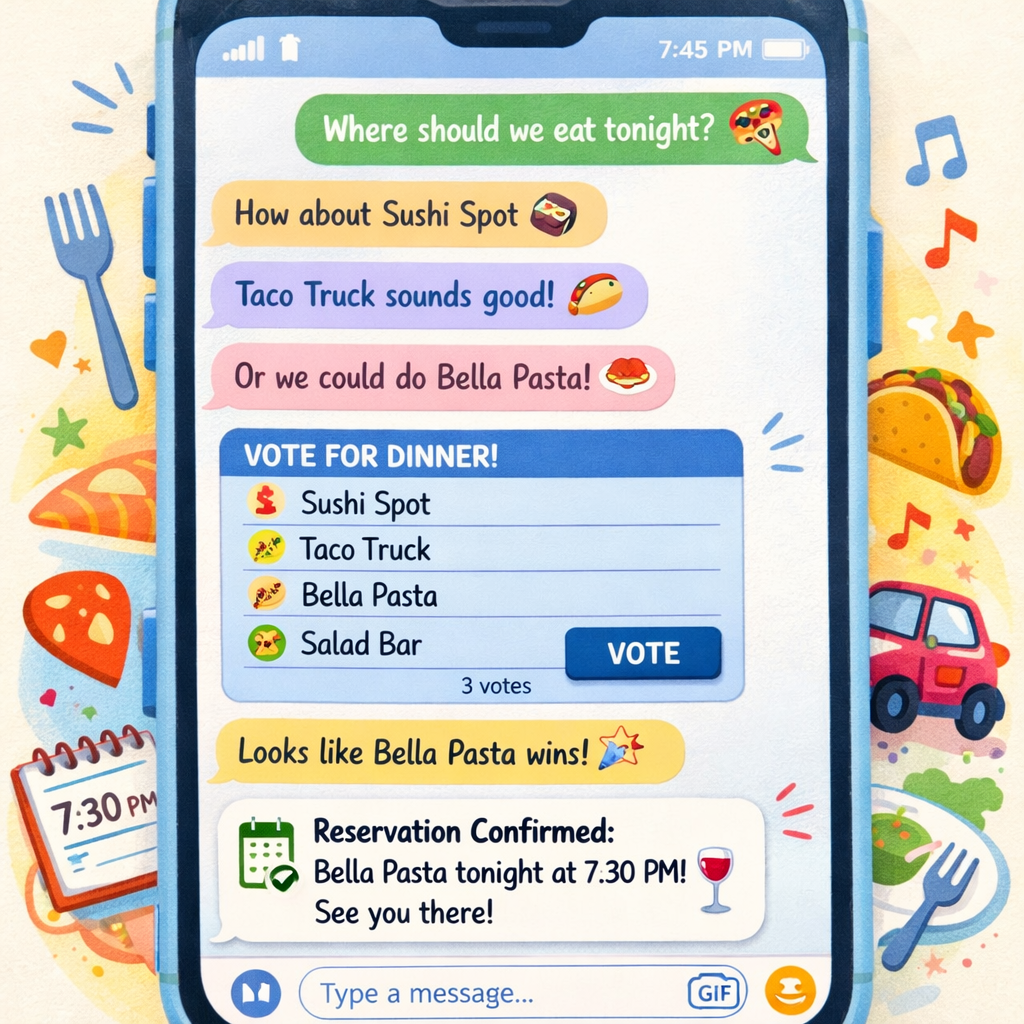
Zest, the restaurant discovery startup launched in early 2026, is expanding how people find and book dining options—by bringing its concierge right into text messages. Its new “restaurant concierge” AI agent handles restaurant suggestions and booking via text, reducing the need to open an app. Hopping into group chats? It works there, too—blending preferences and even taking votes to pin down a decision and make a reservation without leaving the conversation.
How Zest’s Text-Based Dining Assistant Works
Zest’s model is built around learning your food preferences via your credit card. The app connects through Plaid to track food and drink purchases, so it knows where you’ve eaten in the past—cutting down on guesswork and long onboarding questionnaires. It uses that history, plus data from friends, to make restaurant recommendations tailored to what you already seem to like.
To use the concierge, you text it at a dedicated number. Once you reach out, you can request restaurant suggestions by cuisine, neighborhood, dietary restrictions, or occasion. You can also get extra info like menus, whether there’s Wi-Fi, or how busy a place is. When you find something you like, Zest checks availability through services like OpenTable, Resy, or SevenRooms to lock in the reservation.
Group Chats, Reservations, and Revenue
Zest dug into group dynamics in its tests. The concierge can participate in group threads, gather everyone’s tastes, run polls in the chat, and then reserve a spot based on the voting outcome—all without everyone bouncing around between apps.
What’s the business model? Zest earns when you book through its partner platforms. It already supports OpenTable and Resy, with food ordering being built. The founder argues that this approach lets Zest learn your tastes more accurately and quicker than generic assistants, because it starts with your actual behavior instead of hypothetical preferences.
Broader Context and What’s Next
Zest, founded in November 2024 with $1.8 million in pre-seed funding, is betting on conversational agents being more than just fancy assistants. It sees the future as one where users don’t open apps—they interact via familiar channels like text messaging. By rolling out booking features after user feedback, Zest is positioning itself to expand beyond restaurants to other discovery verticals like shopping and services.
This shift could test an assumption in tech: that mobile apps are primary. If people prefer to text for recommendations and booking, that changes how discovery, reviews, and local commerce might be built. But operationally, this model depends heavily on integrations—with reservations platforms, financial data, group decision-making tools—as well as trust around privacy and data security. It’ll be worth watching how Zest scales, how well it handles edge cases (like last-minute availability or conflicting group preferences), and whether this becomes a broader pattern across the hospitality and local discovery space.