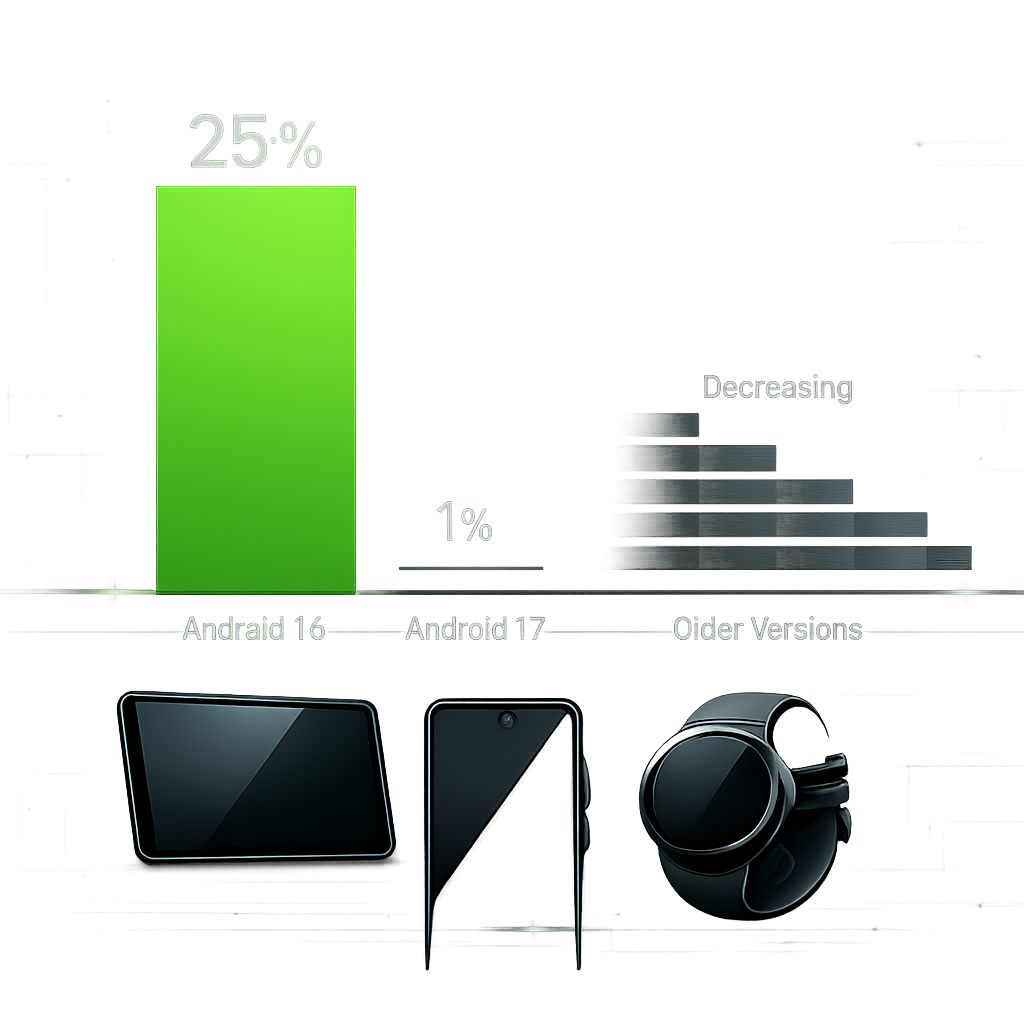
Google’s latest figures for Android version distribution—updated as of October 19, 2026—show that only about 1 % of active Android devices are running Android 17, four months after its release to Pixel phones in mid-June. Meanwhile, Android 16 has jumped to account for over a quarter of devices in use. These numbers paint a picture of the slow initial uptake for Android 17 and the surprising momentum behind its predecessor.
Current Adoption: Android 17 vs. Android 16
Android 17, released around June 2026 for Google Pixel series devices, has been available to users for roughly four months but remains in just 1 % of Android devices globally. In contrast, Android 16—launched the previous year—now powers more than 25 % of devices. That’s a significant increase from when Android 16 reached roughly 7.5 % usage at a similar point in its lifecycle back in early 2026.
Why Adoption Seems Slow for Android 17
Several factors contribute to Android 17’s sluggish start. Key manufacturers like Samsung only recently began widespread rollouts of Android 17 firmware, meaning many devices haven’t yet received the update. Because Google’s distribution data reflects all active devices, those just updating now are unlikely included in the 1 % figure.
On the older versions’ front, Android 5 (Lollipop) has been dropped from recent stats as its 5.1 variant now makes up only about 0.2 % of active devices—so few it’s no longer tracked in core Android distribution updates. Android 11 still holds a strong share above 10 %, while Android 12 has declined to around 9.6 %.
What’s Rewinding and What’s Rolling Forward
Android 16’s swift leap to over 25 % usage is notable. Historically, newer Android versions take longer to gain traction, as hardware variety, carrier delays, and manufacturer priorities tend to slow distribution. That Android 16 has consolidated its presence so rapidly suggests tight competition below Android 17, along with broader Android device lifecycle dynamics favoring upgrades when possible.
It’s also worth noting the removal of Android 5 from core reporting—an indication that very old versions are finally fading to negligible levels in the Android ecosystem. Still, versions like Android 11 persist, occupying double digits in share, even as newer releases try to gain ground.
What this means: Android 17 is off to a modest start; Android 16 remains the de facto leading version for now. Over the next months, adoption of Android 17 depends heavily on OEM and carrier speed. For users, delayed stability or features across non-Pixel devices may be one cause. For Google, the rollout shows the familiar challenge of bringing the latest Android version into widespread use amidst a fragmented hardware and update environment.